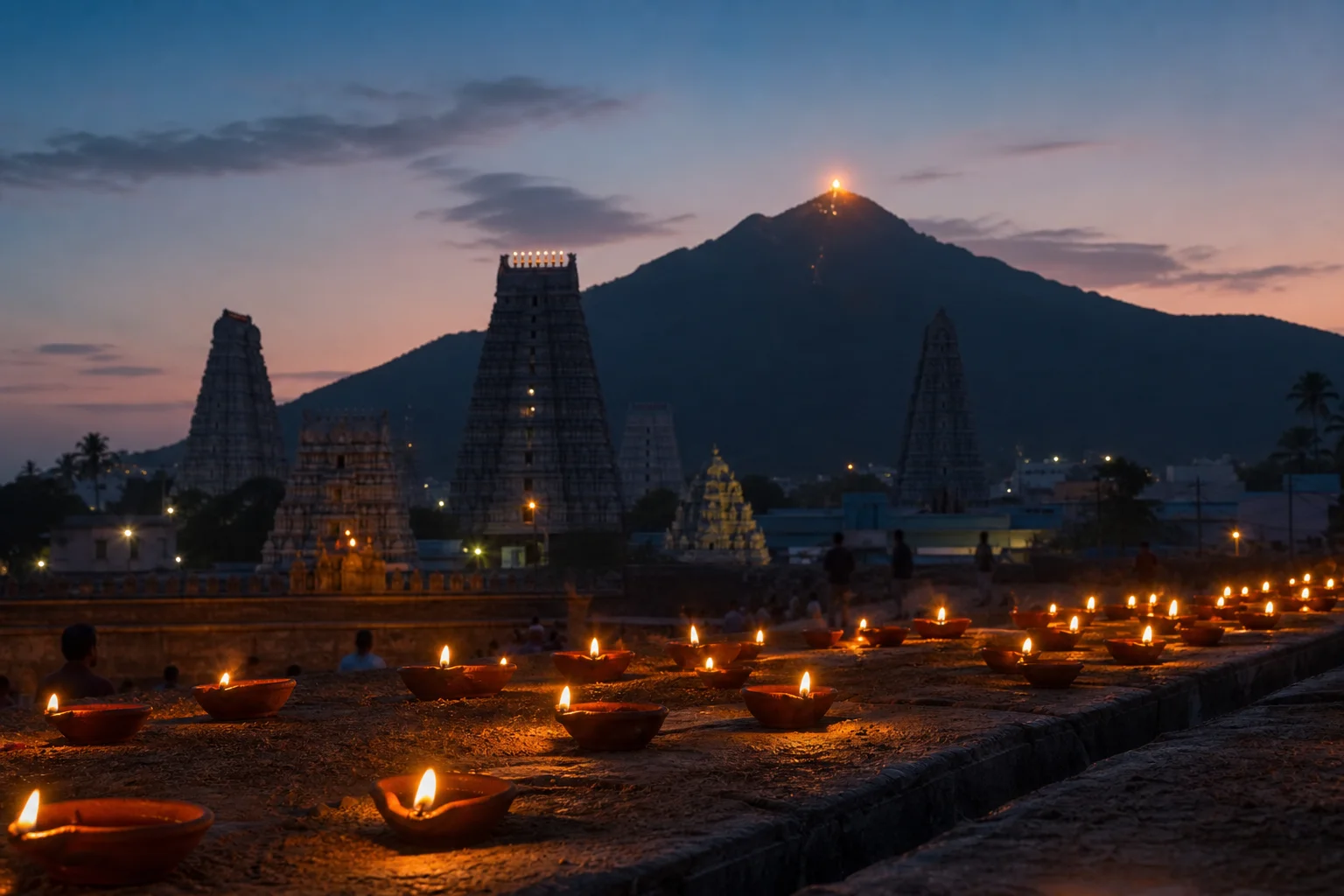
A Tamil festival of light with a Tiruvannamalai centre
Karthigai Deepam is observed through lamps in homes, temples and communities across Tamil Nadu. At Tiruvannamalai, the festival takes on a distinctive scale because the light is read through Arunachala itself. The district administration's festival account connects the hill with Shiva as an immeasurable column of fire and describes the lighting of a great beacon as the public focus of the observance.
Religious narratives should be presented as sacred tradition, not converted into geology or universal historical proof. The district page also notes literary references associated with early Tamil tradition, but a visitor does not need to flatten every source into one chronology. The important first step is to see why lamp, hill and worship belong together here.
Karthigai is also wider than the major beacon. Small earthen lamps, thresholds and temple observances create intimate forms of participation elsewhere. Keeping that scale in view resists a common travel mistake: reducing a living religious festival to the single image most likely to circulate online.
Sources for this section: Karthigai Festival.
Read hill, temple and town as one sacred geography
Arunachaleswarar Temple stands at the foot of Arunachala in Tiruvannamalai. The HR&CE temple portal describes a long architectural history involving Chola, Hoysala and Vijayanagara-Nayaka periods, with multiple enclosures, towers, mandapas and shrines. Those built layers are significant, but the festival cannot be understood as architecture alone because the hill is itself central to devotion.
The surrounding town carries transport, accommodation, commerce, residents and pilgrim services. During a major observance, ordinary urban space becomes part of the sacred journey. Treating lanes, water points and waiting areas as merely logistical misses their human importance; treating them as unrestricted festival scenery ignores residents, workers and the authority of temporary controls.
Approach the temple as a functioning religious institution, not a monument that happens to contain worship. Architecture can orient a visitor, but queues, ritual sequences and restricted areas are governed by present practice. A beautiful gopuram view does not give access to every enclosure or ceremony.
Sources for this section: Official temple portal, District temple updates.
Girivalam is devotion, not a casual distance target
The district administration describes the road circuit around Arunachala as about 14 kilometres and notes that large numbers undertake girivalam on full-moon and festival days. Walking the circuit is a devotional act for many participants. Visitors should not frame it as a race, fitness badge or unrestricted trekking route, especially when movement is dense and temporary directions are in force.
Anyone considering the circuit should honestly assess walking ability, heat, rain, hydration, medication and crowd tolerance. Follow the current route, pedestrian separation and prohibited-item instructions issued for that year. Do not leave the public path to seek a shortcut or summit viewpoint. A person can engage respectfully with the festival without completing girivalam.
Footwear practice, road surfaces and rest opportunities can affect different people in different ways. Do not pressure a companion to continue because the remaining distance appears small on a map. Use designated support and exit arrangements, and recognise that stopping can be the responsible decision.
Sources for this section: Girivalam, District temple updates.
Every year's public arrangements are temporary
The district portal maintains an information-updates area and links year-specific Deepam schedules. That is the correct pattern: festival dates, vehicle restrictions, bus stands, parking, hill access, medical arrangements, crowd routes, temple entry and permitted items can change. A previous year's PDF is historical evidence, not permission for the next festival.
Before departure, check the Tiruvannamalai district administration and official HR&CE temple channels. Recheck close to travel because a weather event, public-safety decision or capacity measure may alter the plan. Avoid forwarding cropped notices without their issuing authority and date. This article deliberately omits a timetable, peak-lighting time, gate plan and traffic map.
Make screenshots only after confirming that a notice belongs to the current year, and keep the full heading visible. Festival information is often copied into messages after its context disappears. The safest sequence is source, date, affected area and required action, not whichever fragment reaches a group chat first.
Sources for this section: District temple updates, Official temple portal.
Respect is practical in a dense pilgrimage setting
Keep temple clothing and conduct respectful, follow queues, and never photograph where the institution prohibits it. Do not block a worshipper to compose an image or raise a phone above a moving crowd. Open flames require distance and attention; lamps should not be relocated for photography. Follow fire, footwear, baggage and security instructions even when they differ from an earlier visit.
Agree on a meeting method if travelling with others, especially children, older adults or anyone who may need assistance. Mobile networks can become unreliable in dense gatherings. Carry only what authorities permit, keep essential medication accessible and know how to seek official help. If crowd density feels unsafe, step away through the directed route rather than pushing against movement.
Choose a visible meeting landmark authorised for public use, not a narrow gate or emergency access point. Write essential contact details on paper as well as storing them on a phone. These small preparations matter more than trying to hold a group together by blocking the flow of others.
Sources for this section: Official temple portal, Girivalam.
The festival can be understood beyond the peak moment
A first visit does not have to depend on reaching one crowded viewpoint. The relationship among hill, temple, lamps and town can be learned through the permanent guides, a responsible visit at another time and reading from official institutions. Household Karthigai practices also remind us that the festival's meaning is not confined to one public spectacle.
If you do travel for the festival, leave flexibility around arrival and departure and choose accommodation only after understanding that year's transport plan. Verify weather and road information shortly before travel. The aim is not to promise an unobstructed flame or instant darshan; it is to participate without making personal access more important than worship, safety and the town's capacity.
A meaningful visit can include waiting, distance and an incomplete view. Avoid treating those limits as a service failure when they arise from safety or the scale of participation. The festival is not staged around one traveller's camera position, and responsible planning begins by accepting that fact.
Sources for this section: Karthigai Festival, District temple updates.
Sources & Further Reading
These authoritative references support the historical, geographic, or seasonal context in this story. Current conditions and operating details still require a fresh official check.
- Karthigai Festival · Tiruvannamalai District Administration
- Arulmigu Arunachaleswarar Temple · Tiruvannamalai District Administration
- Full Moon Day · Tiruvannamalai District Administration
- Arulmigu Arunachaleswarar Temple, Tiruvannamalai · Hindu Religious and Charitable Endowments Department, Tamil Nadu
Related Stories
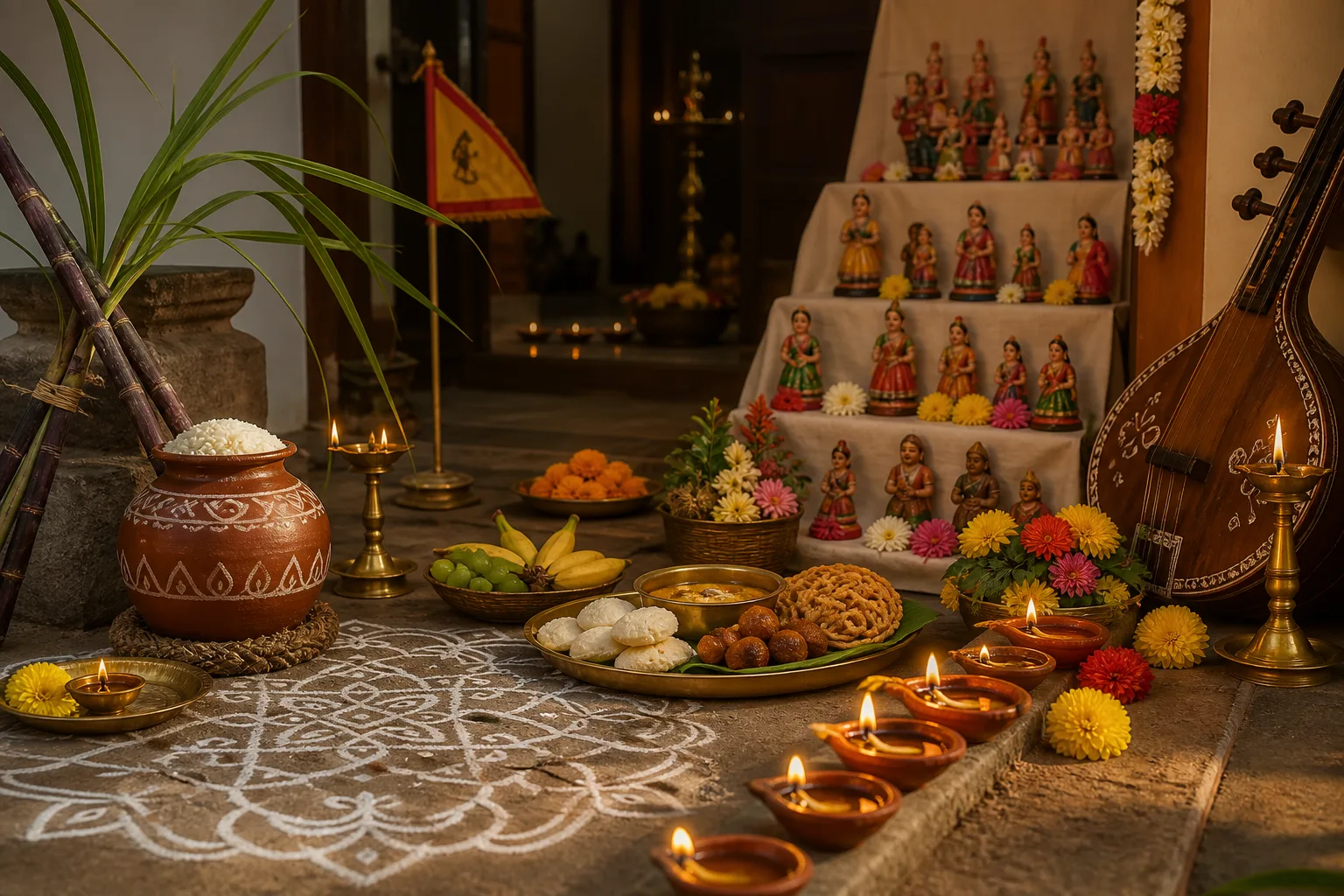
Beyond Pongal: How to Read Tamil Nadu's Festival Calendar
A cultural guide to the many clocks behind Tamil Nadu's festivals, from harvest and household practice to temple calendars and pilgrimage.
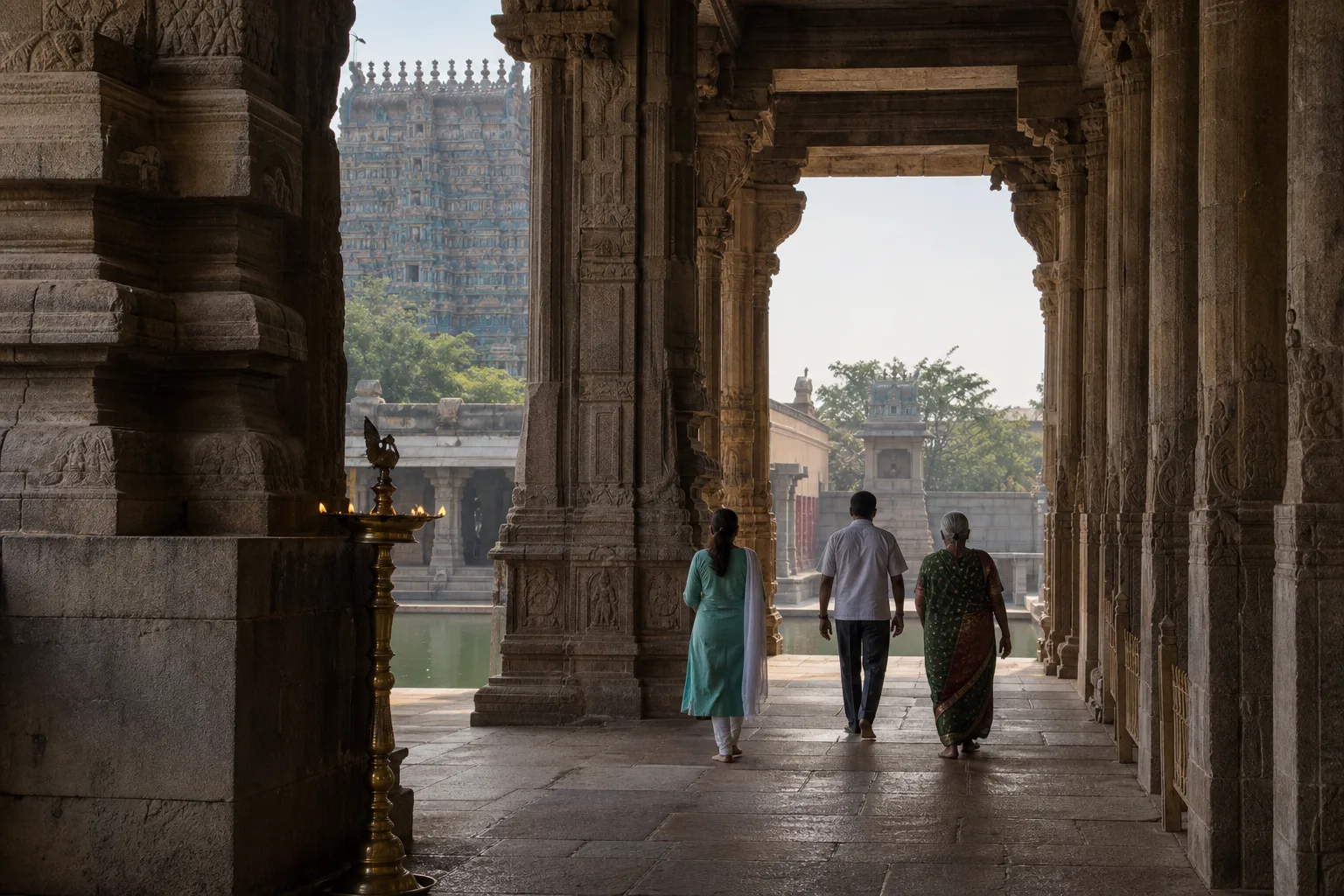
How to Read a Tamil Nadu Temple: Architecture, Ritual Space and Respectful Travel
A visitor's guide to reading temple architecture and ritual space without forgetting that the monument is also a living sacred place.
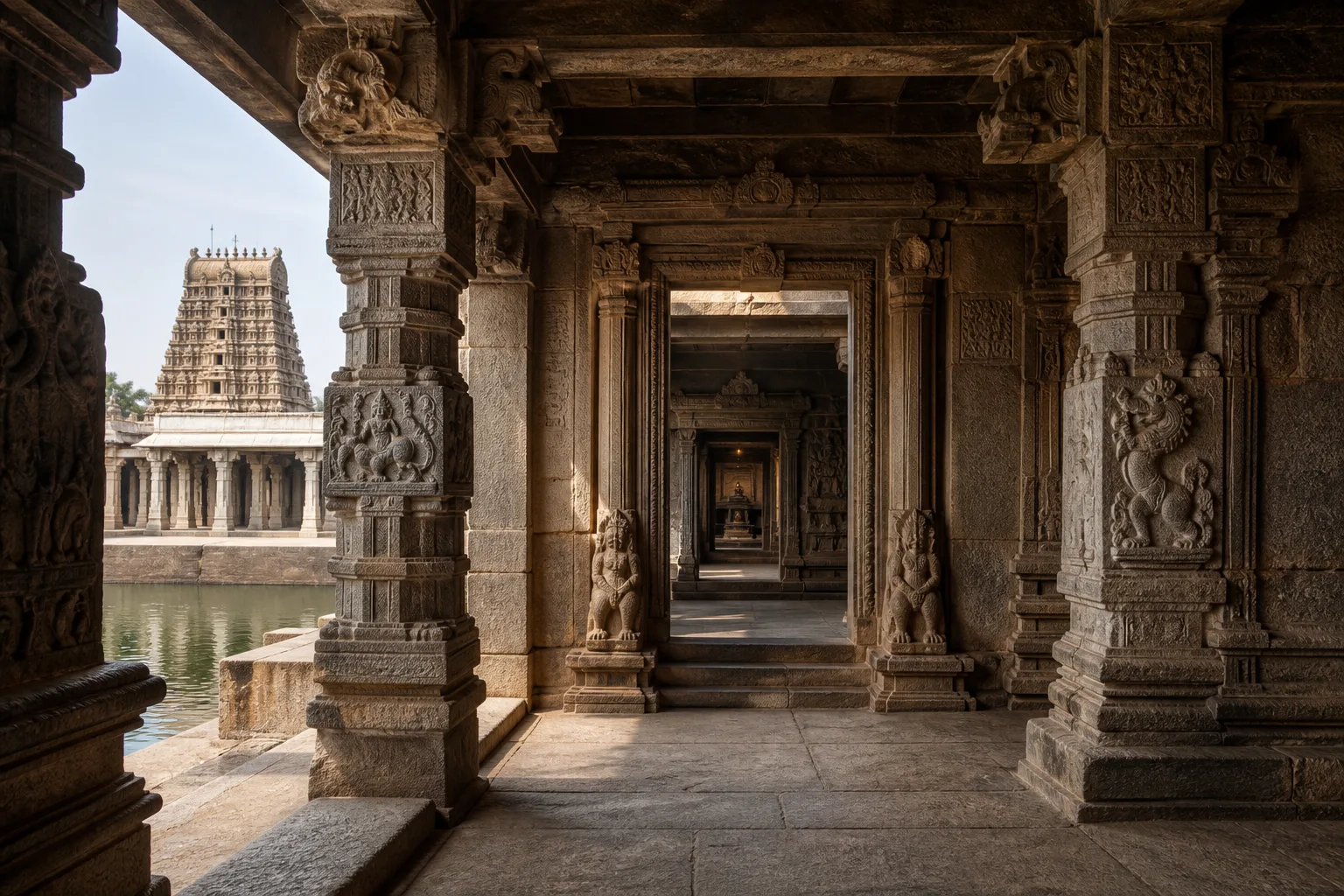
How to Read a Tamil Nadu Temple: Gopurams, Mandapams, Prakarams and Sacred Space
An architectural reading guide to gateways, halls, enclosures, sanctuary towers, tanks, sculpture and inscriptions, grounded in the fact that temples remain living sacred places.
Frequently asked questions
Is the Karthigai Deepam date the same every year?
No. Confirm the current year's date and programme with Tiruvannamalai district administration and the official temple portal.
Is girivalam required for every visitor?
No. It is a devotional practice, and participation should reflect health, crowd conditions, current controls and personal faith.
Can this guide confirm hill access or the best viewing point?
No. Hill access, movement controls and safe public areas are current official decisions; the article does not recommend an unofficial viewpoint.
Editorial attribution
Prepared and reviewed by My Tamil Nadu Editorial Desk. Modified 28 August 2026.