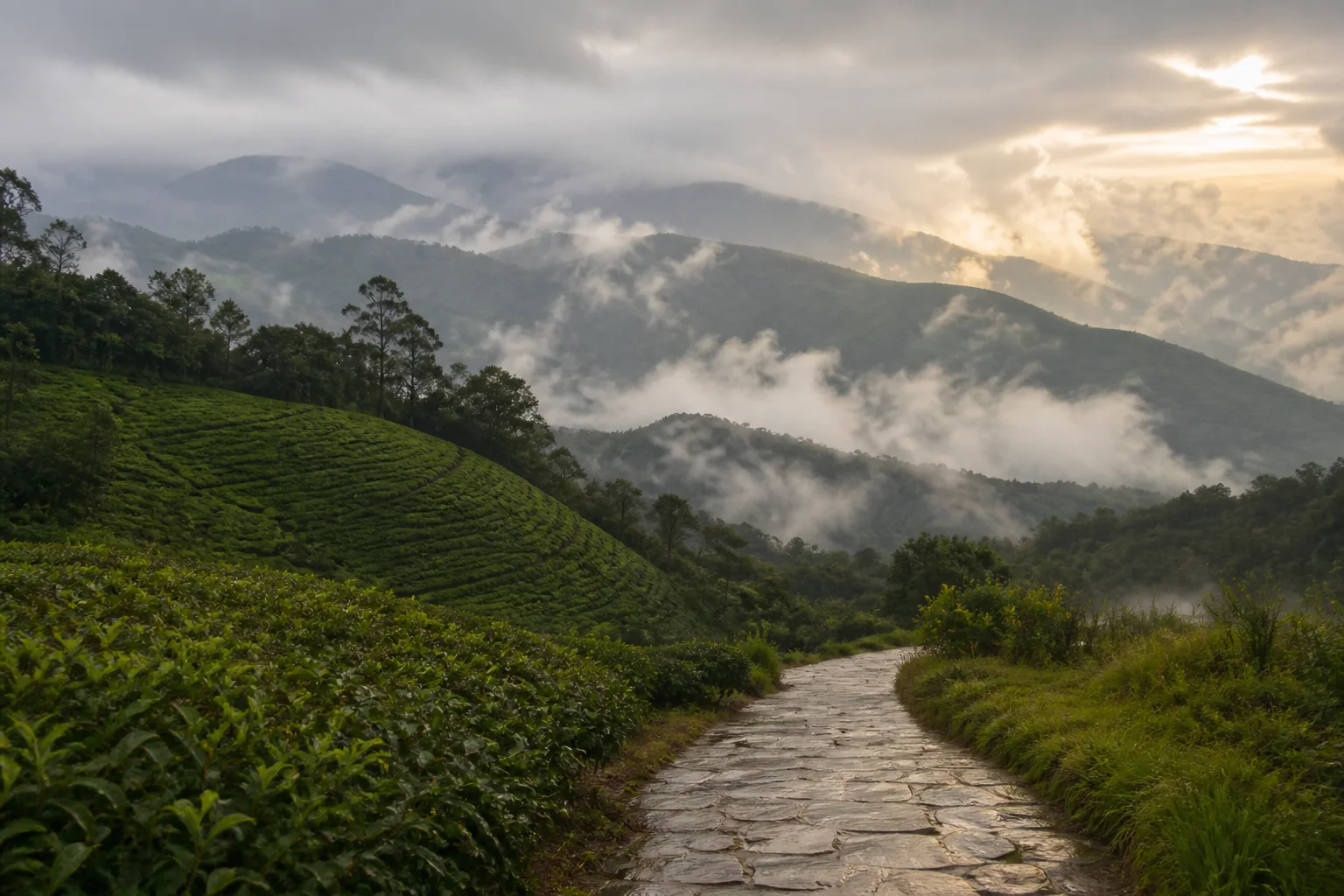
Read the season as a pattern, not a promise
August and September sit within the southwest monsoon period used by the India Meteorological Department, but Tamil Nadu does not receive that season in one uniform way. The Western Ghats intercept moisture, interior districts can sit in a rain-shadow relationship to that mountain wall, and short-lived weather systems can rearrange an otherwise familiar pattern. A photograph of cloud over a hill station, a rainfall average, or a friend's trip from another year cannot tell you what a particular road or town will be like on your dates.
That is why this story treats the late southwest monsoon as a planning context. August can retain a settled wet-season feel in exposed western highlands, while September may begin to feel more transitional in some places, but neither month comes with a guarantee of rain, clear views, cool days, waterfall flow, or easy access. Use the permanent month guides for broader seasonal orientation, then replace every assumption with a current official check close to departure.
Sources for this section: IMD monsoon reports, IMD Monsoon FAQ, Tamil Nadu rainfall study.
Choose by weather tolerance before choosing a pin on the map
Start with the experience you can still enjoy when conditions are imperfect. A hill trip built only around a distant viewpoint becomes fragile when cloud closes in. A coast trip built only around a long open-air afternoon becomes fragile in heat, humidity, wind, or showers. A heritage trip can be more adaptable, but temple courts, streets, and archaeological landscapes still involve outdoor time. The strongest late-monsoon plan has several kinds of reward rather than one visual moment on which the whole journey depends. Ask whether you would still value the place without its ideal photograph, and keep a lower-exposure alternative ready.
The Nilgiris and Ooty: plan for atmosphere, not a guaranteed view
The Nilgiris rise within the Western Ghats and offer a layered landscape of high ground, wooded slopes, grassland remnants, settlements, and cultivated areas. In late southwest monsoon conditions, cloud and rain can become part of the experience rather than an interruption. That can suit travellers who enjoy muted light, cool-feeling outdoor pauses, gardens, town walks, and slow observation. It is a poor fit for anyone whose satisfaction depends on every viewpoint being clear at a scheduled hour.
Ooty works best as a base rather than a checklist race. Keep space between activities, avoid building the day around a single exposed edge, and treat any rail, garden, forest, or viewpoint operating detail as current information. The Nilgiris are also a lived and ecologically important mountain region, not a scenic stage. Stay on permitted routes, reduce litter and noise, and resist stopping where a vehicle or crowd would obstruct local movement.
Sources for this section: UNESCO Western Ghats, Nilgiris district tourism.
Kodaikanal and the Palani Hills: build a compact, flexible day
Kodaikanal occupies high ground in the Palani Hills, with a town-and-lake pattern that makes a compact base possible. Cloud, drizzle, and wet surfaces can change the rhythm of a day quickly. Instead of tying several viewpoints into a strict sequence, group nearby activities, preserve time to return to shelter, and decide on each exposed stop only after checking the local situation. A slow lake-area walk and a town-based cultural pause can be more resilient than a long chain of outlooks.
The same restraint applies to photographs and social posts that describe a trail or viewpoint as easy. Surface condition, visibility, maintenance, and access controls can change independently of the weather in your hotel area. The district administration is a useful official starting point for stable place context, but current entry, road, and safety information should be confirmed through the authority responsible on the day.
Sources for this section: Dindigul district Kodaikanal.
Valparai and Anamalai: a more weather-sensitive choice
Valparai lies in the Anamalai hills of the Western Ghats, where plantation landscapes meet forested country. That combination can be visually compelling in wet weather, but it also asks more from a plan: longer winding-road exposure, fewer sensible reasons to hurry, and a greater need to respect wildlife, estate, forest, and traffic boundaries. Late southwest monsoon travel here should be considered only with current road and weather awareness, not selected because a reel promises mist or dramatic water flow.
Do not stop on bends, enter plantation land without permission, seek wildlife at roadside locations, or use sensitive sightings shared online as a route plan. Wildlife is never guaranteed and responsible travel does not turn an animal encounter into an objective. A visit can instead focus on the broad relationship among highland cultivation, forest edges, settlement, and the Anamalai landscape, with every nature activity kept to an authorised public setting.
Sources for this section: Coimbatore district Valparai, UNESCO Western Ghats.
Waterfalls: let current access decide, not seasonal expectation
Waterfall travel needs the clearest separation between seasonal possibility and present reality. Rainfall in a catchment can affect flow and risk far from the place where you are standing. A sunny morning near a viewpoint does not prove that an approach is safe, while a wet month does not guarantee an impressive or accessible fall. Barriers, local instructions, flow conditions, slippery surfaces, and transport restrictions are all current facts that an evergreen article cannot certify.
Treat a waterfall as one optional component of a district visit. Never cross a barrier, enter fast water, stand beneath unstable slopes, or follow an unofficial path because another visitor did so. If an authority closes an approach, replace it with a town, temple, museum, food, or landscape stop rather than searching for an unregulated alternative. This is not a lesser trip; it is the planning discipline that makes nature travel responsible.
Sources for this section: IMD monsoon reports.
Heritage cities are not merely rainy-day substitutes
Thanjavur, Madurai, Tiruchirappalli, Chennai, and other city or heritage bases give a late-monsoon itinerary more than shelter. They allow a traveller to shift between architecture, worship, museums, markets, food, and neighbourhood observation without making every hour dependent on a distant view. Rain and heat still shape these visits, and large temple or fort precincts can involve extensive outdoor walking, but the range of experiences makes the day easier to adapt.
Choose fewer places and spend longer reading them. At a living religious site, dress and behave for worship rather than treating the monument as a weatherproof attraction. At a museum or protected monument, confirm its current opening arrangements with the responsible institution. A heritage-led route can also pair well with one hill or nature base, giving the journey two distinct modes instead of six rushed stops that all depend on the same forecast.
Coast or hills? Compare the experience, not the colour of a forecast icon
The hills can offer cooler-feeling, cloud-rich conditions but bring visibility limits, wet roads, and localised access questions. The coast can reduce winding-road exposure and connect easily with major cities, yet humidity, strong sun between showers, wind, rough sea conditions, and weather warnings remain relevant. Neither landscape is automatically safer, drier, or better in August and September. The right comparison is between the activities you plan and the current conditions that affect them.
For a coast-based trip, keep swimming, boating, and other marine activity conditional on local rules and official advice. A beach can still be meaningful as a cultural and geographic landscape without entering the water. For a hill trip, keep panoramas conditional and value town, garden, architecture, food, and close landscape detail. In both cases, move photography lower on the priority list than safe access and respect for working communities.
Sources for this section: IMD Monsoon FAQ, Tamil Nadu rainfall study.
How August and September change the planning conversation
For August, begin with the assumption that western highland moisture and rain interruptions may be material to your plan, then look for evidence that conditions are suitable. Keep daily travel modest, protect one open block of time, and avoid reserving an entire journey for one exposed nature experience. In a city or eastern heritage base, prepare for heat and humidity as well as showers; monsoon language should not be mistaken for uniformly cool weather across the state.
For September, do not assume that transition means settled weather. Seasonal averages may shift, but individual systems, local rainfall, and road conditions still determine the day. The practical advantage is conceptual: you can compare hill, heritage, and coast options as a portfolio, then hold the most sensitive decision until closer to travel. Anyone moving toward October should also remember that Tamil Nadu's major northeast monsoon context belongs to a different seasonal conversation.
Sources for this section: IMD monsoon reports, Tamil Nadu rainfall study.
Pack for transitions between wet, cool-feeling, warm, and humid
A compact rain shell, quick-drying layers, a light warm layer for high ground, sun protection, and footwear with dependable grip are more useful than packing for a single temperature label. Carry a dry pouch for medicines and electronics, a reusable water bottle, and a small cloth for wet surfaces. An umbrella can be helpful in towns but is not a substitute for a hands-free rain layer in wind or on uneven ground.
Keep essential medication in your day bag and allow for travel disruption without stating that disruption will occur. Families may benefit from a complete change of clothing that is reachable without unpacking everything. For temples and other religious places, keep suitable modest clothing dry and ready. Leave specialised outdoor equipment at home unless an authorised activity provider explicitly requires it and current conditions allow the activity.
- Separate wet and dry items rather than relying on one large bag cover.
- Carry traction-minded everyday footwear; do not treat sandals as universal wet-surface gear.
- Keep identity documents, bookings, emergency contacts, and necessary prescriptions available offline.
- Pack patience into the schedule: a flexible hour is often more useful than another attraction.
Build a two-layer itinerary
Layer one is the trip that works under ordinary seasonal variability: one primary base, a small number of meaningful stops, and enough time to change sequence. Layer two is the fallback that removes the most exposed activity without forcing a new district. In Ooty, that may mean replacing a viewpoint sequence with town, garden, food, or heritage time. Around Thanjavur, it may mean rearranging outdoor temple observation and museum time. The fallback should be enjoyable in its own right, not an apology.
Use the Trip Planner to organise interests, pace, and bases, but keep live conditions outside the evergreen recommendation engine. Avoid treating generated order as a current road endorsement. Before departure and again before a sensitive day, compare the plan with official weather information, district notices, transport-provider messages, and the rules of the place you intend to enter. If one link in a multi-base route looks uncertain, simplify rather than compress the rest of the trip.
What to verify close to travel
Check the India Meteorological Department for forecasts and warnings, then look for notices from the relevant district administration, forest or protected-area authority, monument or museum operator, transport provider, and accommodation. Use a reliable map for live routing, but remember that a route line does not establish road condition, permission, or safety. For boating, trekking, bathing, safari, rail, or timed-entry activities, obtain confirmation directly from the responsible operator or authority.
My Tamil Nadu Today can bring selected current-information handoffs into one place, but it should be treated as an orientation layer rather than the final authority. Note when a source was updated, distinguish a statewide warning from a district-specific notice, and keep screenshots only as a record, not as proof that information remains current. Seasonal travel becomes easier when the final decision is made with fresh evidence instead of confidence borrowed from an evergreen page.
Sources for this section: IMD Chennai.
Sources & Further Reading
These authoritative references support the historical, geographic, or seasonal context in this story. Current conditions and operating details still require a fresh official check.
- Regional Meteorological Centre Chennai · India Meteorological Department
- Southwest and Northeast Monsoon Reports · India Meteorological Department, Chennai
- Frequently Asked Questions on the Monsoon · India Meteorological Department
- Rainfall Characteristics of Tamil Nadu · Regional Meteorological Centre Chennai / Indian Meteorological Society
- Western Ghats World Heritage property · UNESCO World Heritage Centre
- Tourist Information and Places of Interest · Nilgiris District Administration
- Kodaikanal · Dindigul District Administration
- Valparai Hill Station · Coimbatore District Administration
Related Stories
A Heritage Weekend from Chennai: How to Choose a Meaningful Route
A practical way to shape a heritage weekend from Chennai around one good question, a measured pace, and a choice between city and nearby extensions.
From the Western Ghats to the Coast: Reading Tamil Nadu's Connected Landscapes
Follow water and habitat from the Western Ghats through forests, wetlands and deltas to Tamil Nadu's eastern coast and marine shallows.
The Western Ghats of Tamil Nadu: Through Hills, Forests and Living Landscapes
A mountain journey through the Nilgiris, Anamalai and Palani Hills, reading elevation, forest, water, wildlife habitat and human settlement as one connected landscape.
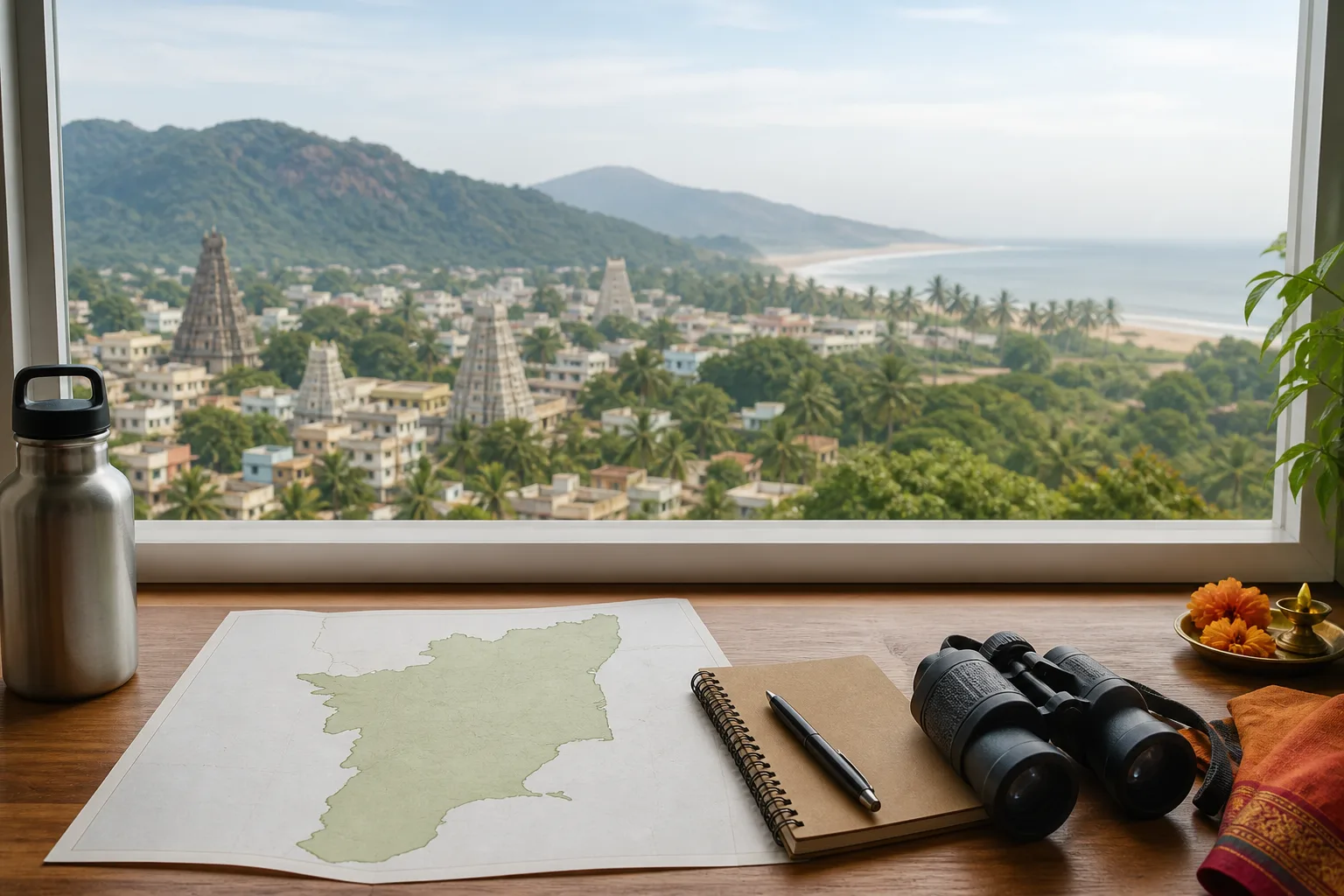
Tamil Nadu for First-Time Visitors: Choose a Base, Then a Direction
A base-first decision method for matching Chennai, Madurai, Coimbatore or Tiruchirappalli with one realistic outward direction.
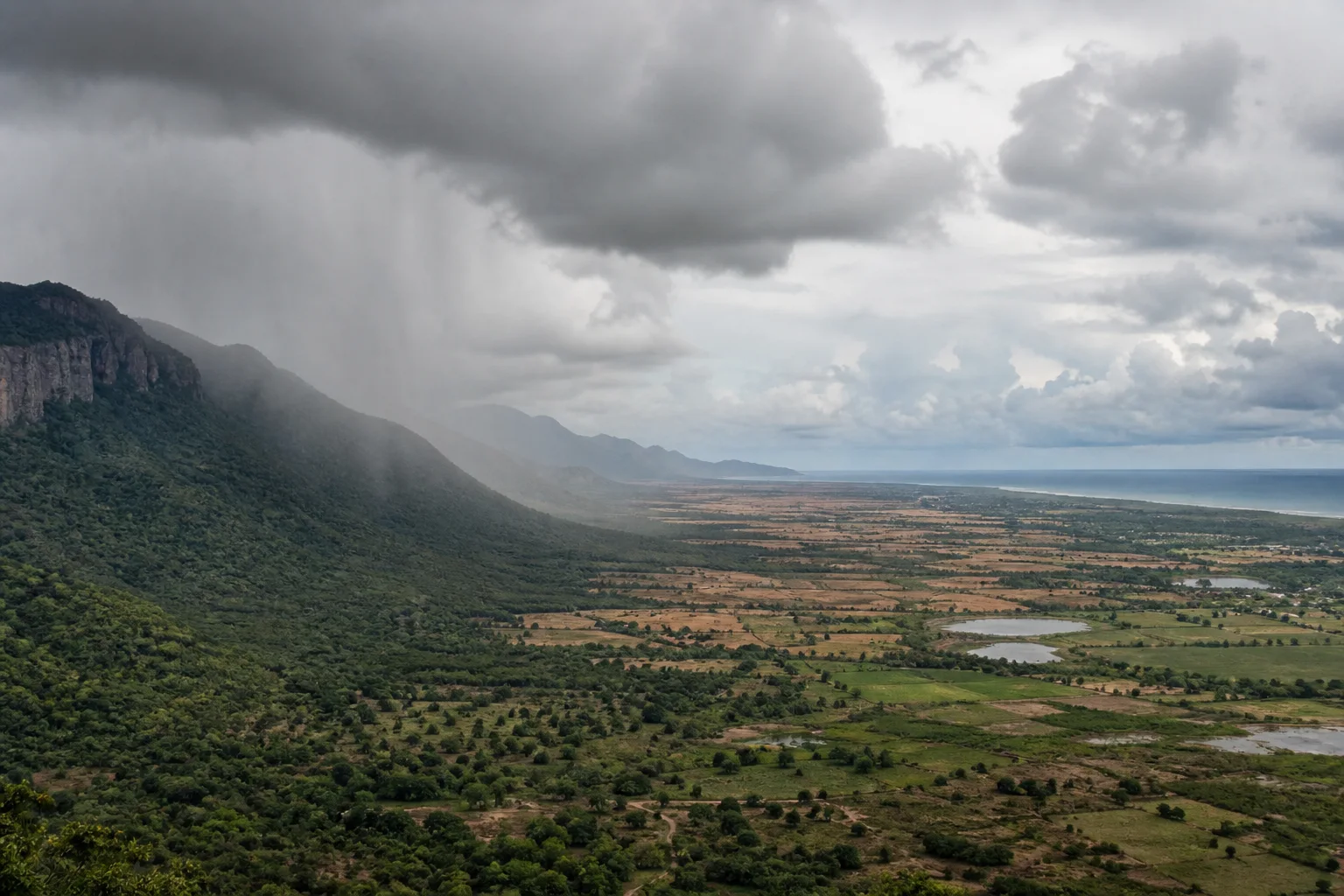
Why Tamil Nadu Has Two Monsoon Seasons: Southwest and Northeast Rain Explained
A geographic explanation of why Tamil Nadu's rain story differs from much of India, and why coast, interior and western hills cannot share one seasonal rule.
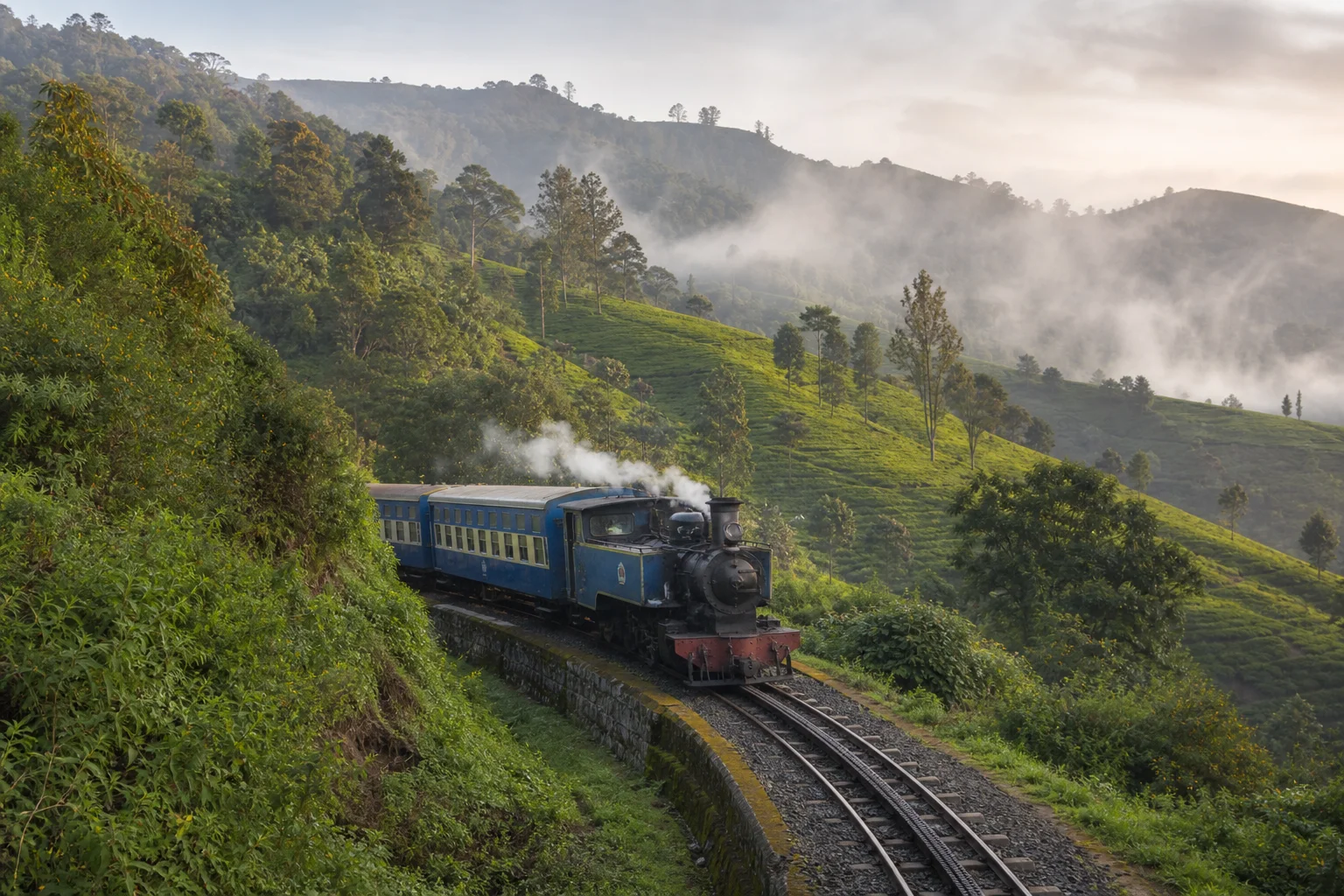
Nilgiri Mountain Railway: Read the Line, Not Just the View
A practical heritage journey from the plains toward Udagamandalam that treats the railway as working engineering, a regional connection and a changing service.
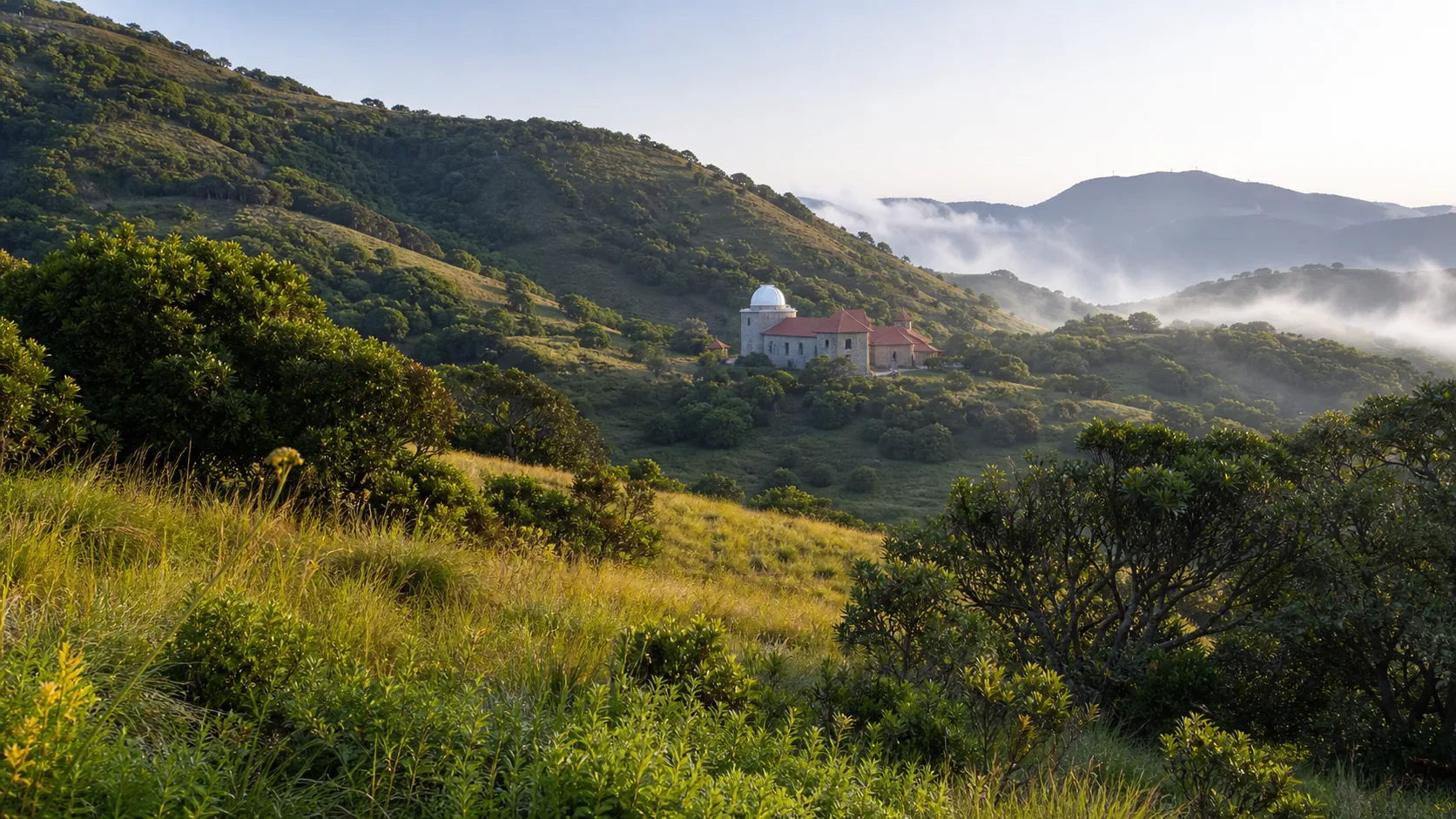
Kodaikanal Beyond the Lake: Shola, Grassland and Solar Science
A hill-station guide that connects Kodaikanal's familiar town landscape with Palani Hills ecology and more than a century of solar observation.
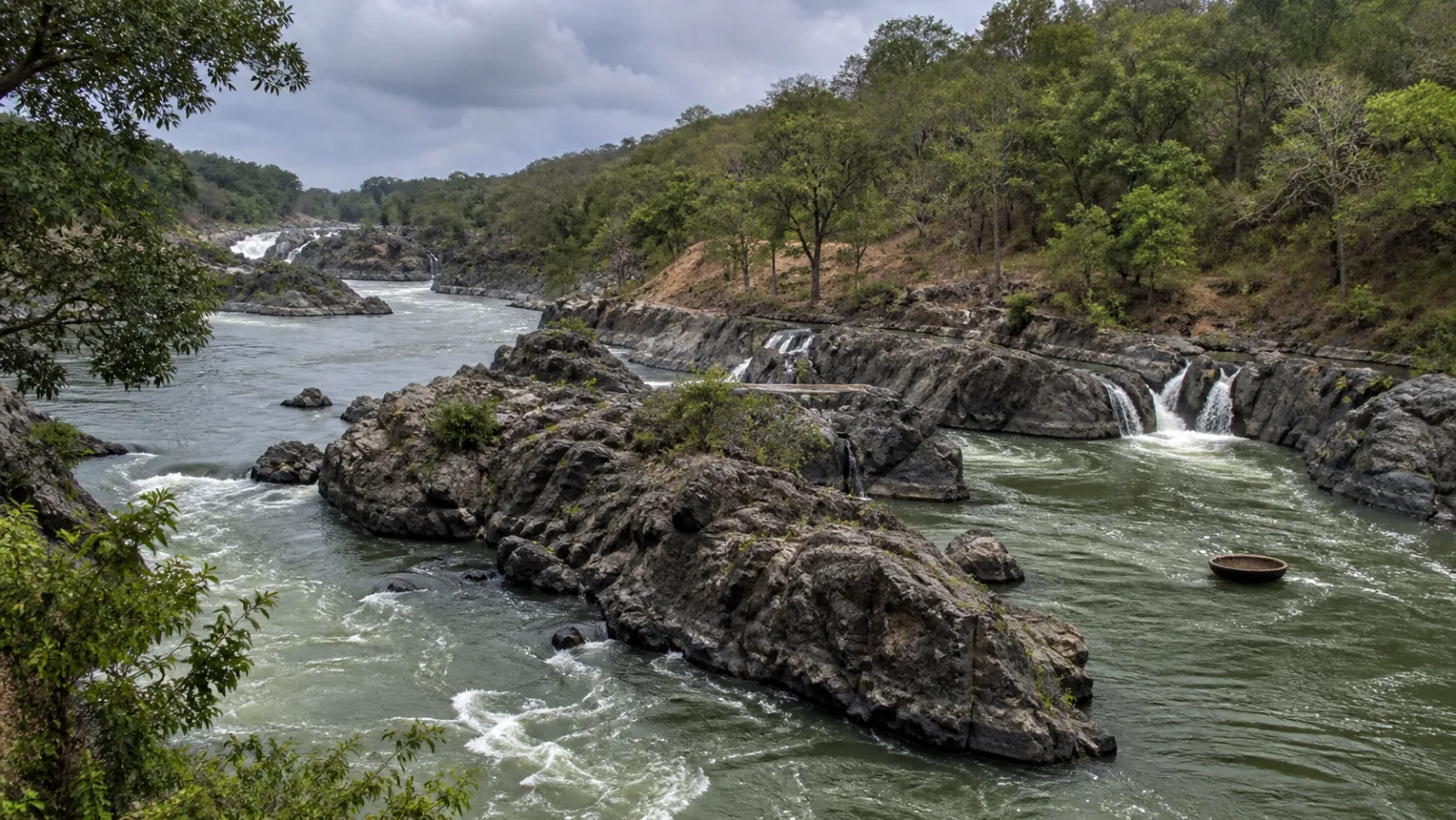
Hogenakkal: Read the Cauvery Before Chasing the Falls
A condition-led guide to Hogenakkal that begins with the Cauvery, its rocky channels and local livelihoods rather than promising a fixed waterfall experience.
Frequently asked questions
Is August a good time to visit Tamil Nadu?
It can suit travellers who plan for regional variation and changing weather, but there is no statewide yes-or-no answer. Match the destination to your tolerance for rain, humidity, mist, and altered plans, then check current official information.
Will hill stations definitely be misty or rainy?
No. Seasonal context cannot guarantee rain, mist, cool conditions, or clear views on particular dates. Use current forecasts and local notices close to travel.
Are waterfalls open in August and September?
This article does not certify current access. Waterfall approaches can be restricted because of flow, weather, maintenance, or local safety decisions. Check the responsible district or site authority and obey barriers.
Should I choose the coast instead of the hills?
Choose according to the activities you can enjoy under variable conditions. The coast has its own heat, humidity, wind, sea-state, and warning considerations; it is not an automatic dry-weather substitute.
Editorial attribution
Prepared and reviewed by My Tamil Nadu Editorial Desk. Modified 15 August 2026.