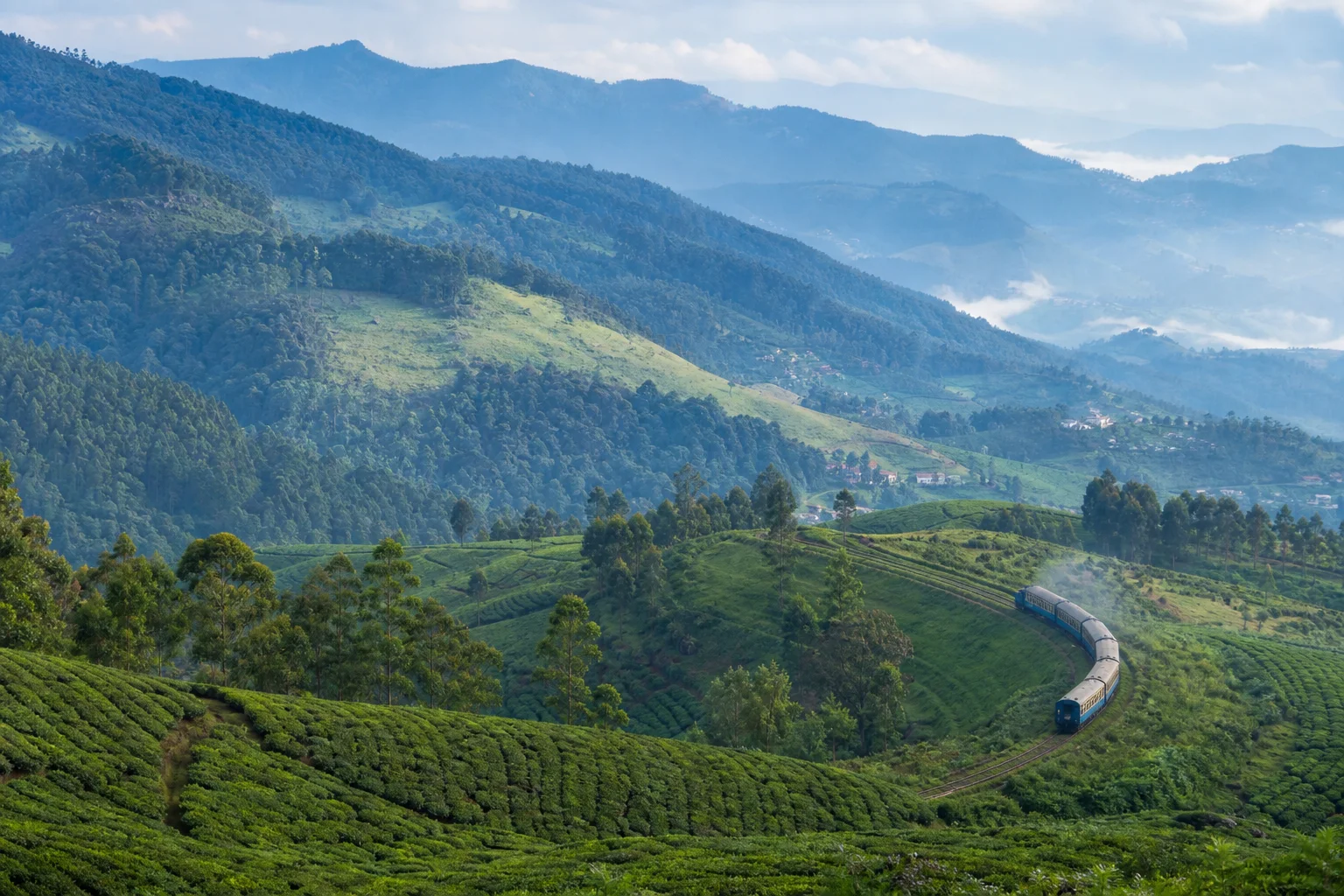
One district does not mean one hill-station experience
The Nilgiris District Administration identifies Ooty, Coonoor and Kotagiri as the district's three principal hill stations. They share a highland setting but differ in scale, transport role and the way a visitor encounters the surrounding landscape. Ooty is the largest and most service-rich base. Coonoor sits along the historic mountain railway and major road approach. Kotagiri offers a smaller-town starting point for travellers whose plans do not depend on Ooty's concentration of attractions.
These are broad planning distinctions, not permanent guarantees. Traffic, road rules, accommodation supply, weather and public transport change. The purpose of comparison is to choose a workable centre and reduce daily transfers. It should not create a simplistic busy-versus-quiet ranking that ignores residents, working landscapes and seasonal variation.
Sources for this section: The Nilgiris District, Nilgiris places of interest.
Choose Ooty for the broadest first-visit infrastructure
Ooty, officially Udhagamandalam, works well when a traveller wants a recognized town base with gardens, civic heritage, transport connections and a wider choice of services. It can support a first visit where different interests need to coexist: heritage, accessible town stops, family pacing and one carefully selected outer landscape. Its popularity also means that crowding and road movement can shape the day.
Do not use Ooty as shorthand for the whole Nilgiris. Tea estates, shola-grassland contexts, forest boundaries and smaller towns extend far beyond its urban limits. A better Ooty plan spends less time collecting distant viewpoints and more time comparing town, cultivated slope and permitted natural landscape. Current vehicle controls, e-pass systems or road restrictions must come from district authorities, not an evergreen Blog article.
Sources for this section: The Nilgiris District, Nilgiris tourism.
Choose Coonoor when rail and slope transitions lead the trip
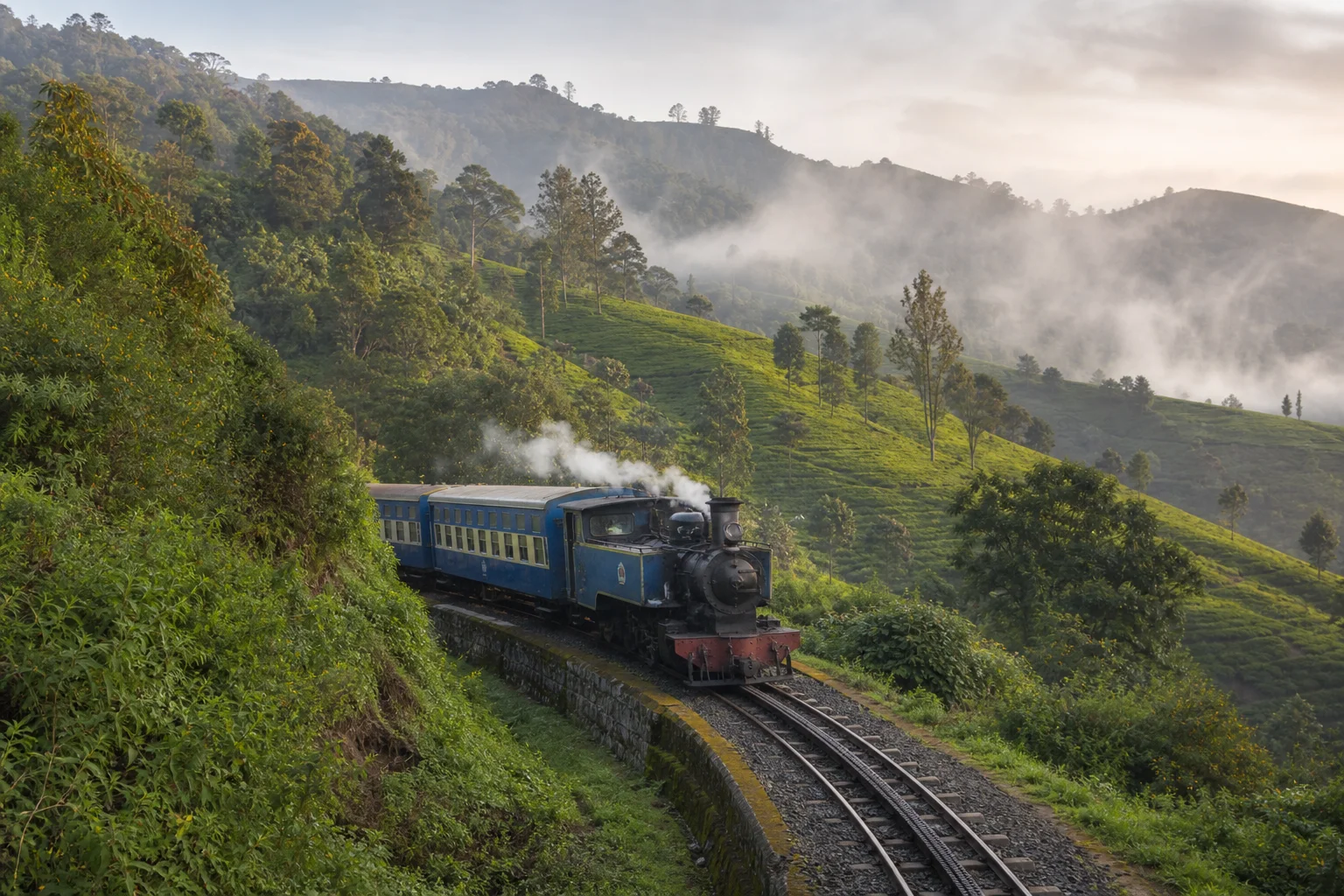
Coonoor sits lower than Ooty on the Nilgiri Mountain Railway corridor and road approach from the plains. This position makes it useful for travellers interested in how elevation, transport and cultivated slopes meet. The town can anchor a journey that gives more attention to the railway's engineering landscape and to the transition between lower ghat slopes and the upper plateau.
The Nilgiri Mountain Railway is a component of UNESCO's Mountain Railways of India property. Its significance includes engineering responses to steep terrain and its continuing function as a railway. That status does not guarantee a tourist seat or a particular locomotive. Service, booking, disruptions and station access must be verified through Indian Railways. Never enter tracks, tunnels or restricted railway land for photographs.
Sources for this section: Nilgiri Mountain Railway, The Nilgiris District.
Choose Kotagiri for a smaller-base approach
Kotagiri can suit travellers who prefer a smaller town and are comfortable with fewer assumptions about transport frequency or attraction density. It should not be marketed as an empty alternative to Ooty. People live and work here, tea landscapes are productive land, and nearby roads or trails are not automatically public visitor space. A slower base is valuable only when the itinerary also becomes slower.
The district's official places material connects Kotagiri with the wider Nilgiris while also showing how visitor names can overlap: some well-known points are associated with the Coonoor side even when grouped in broader tourism pages. Confirm exact geography before planning a loop. Avoid entering estates without permission, stopping on narrow roads or using private settlements as scenic shortcuts.
Sources for this section: Nilgiris places of interest, Nilgiris tourism.
Match the base to the trip, not to a ranking
For a first family trip or mixed interests, Ooty often offers the simplest concentration of services. For railway history and a stronger sense of the climb from the plains, Coonoor can be a useful centre. For a slower small-town stay where the traveller is prepared to verify transport and permissions, Kotagiri may fit. None is universally best, and a clear-weather viewpoint should never be the sole reason for choosing one.
Do not split every night among all three. Repacking and road transfers can erase the slower observation that makes a hill journey worthwhile. Choose one primary base, add one carefully bounded day direction and keep a weather-independent option. The Hill Stations guide and By Month pages help frame seasonal questions, but only a current forecast and district notices can describe the actual travel day.
Sources for this section: The Nilgiris District, IMD weather.
Travel as a guest in a lived mountain landscape
The Nilgiris are not only hill stations. The district includes long-established indigenous communities, later settlements, plantations, farms, forests, protected areas and transport infrastructure. Visitors should learn through responsible institutions and community-attributed work without seeking private settlements or treating people as an attraction. Indigenous-community interpretation needs careful editorial review and should never be reduced to costume or generalized identity claims.
Keep wildlife encounters accidental, stay within authorized visitor areas and do not publish sensitive locations. Tea fields are workplaces, railway lines are operational infrastructure and forest roads may have specific rules. A useful Nilgiris trip leaves room for ordinary town life and changing weather. The measure of a good base is not how many pins it reaches, but how well it supports attentive, lawful travel.
Sources for this section: The Nilgiris District, Nilgiri Mountain Railway.
Sources & Further Reading
These authoritative references support the historical, geographic, or seasonal context in this story. Current conditions and operating details still require a fresh official check.
- The Nilgiris District · The Nilgiris District Administration
- Places of Interest · The Nilgiris District Administration
- Tourism · The Nilgiris District Administration
- Mountain Railways of India · UNESCO World Heritage Centre
- India Meteorological Department · India Meteorological Department
Related Stories
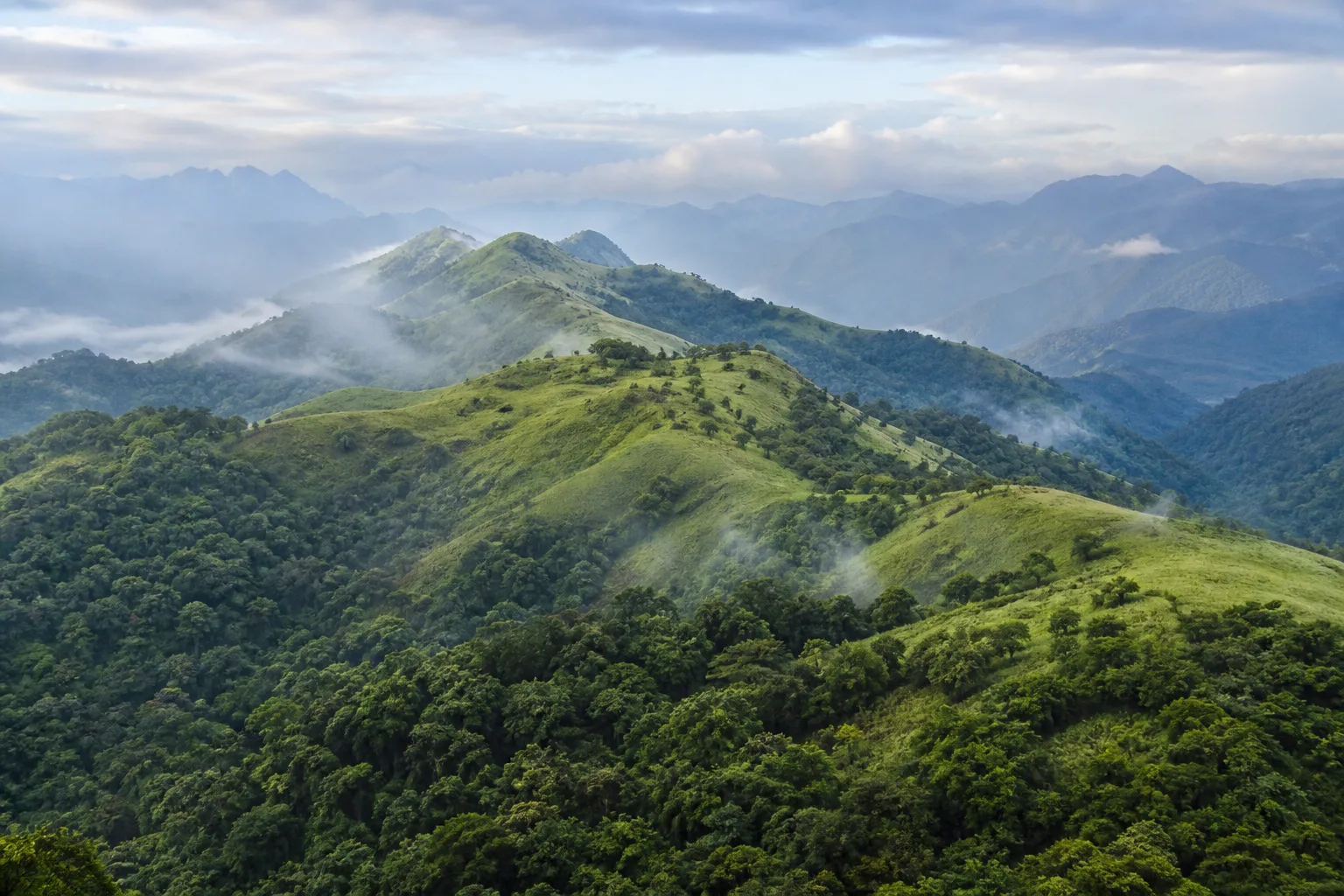
The Western Ghats of Tamil Nadu: Through Hills, Forests and Living Landscapes
A mountain journey through the Nilgiris, Anamalai and Palani Hills, reading elevation, forest, water, wildlife habitat and human settlement as one connected landscape.
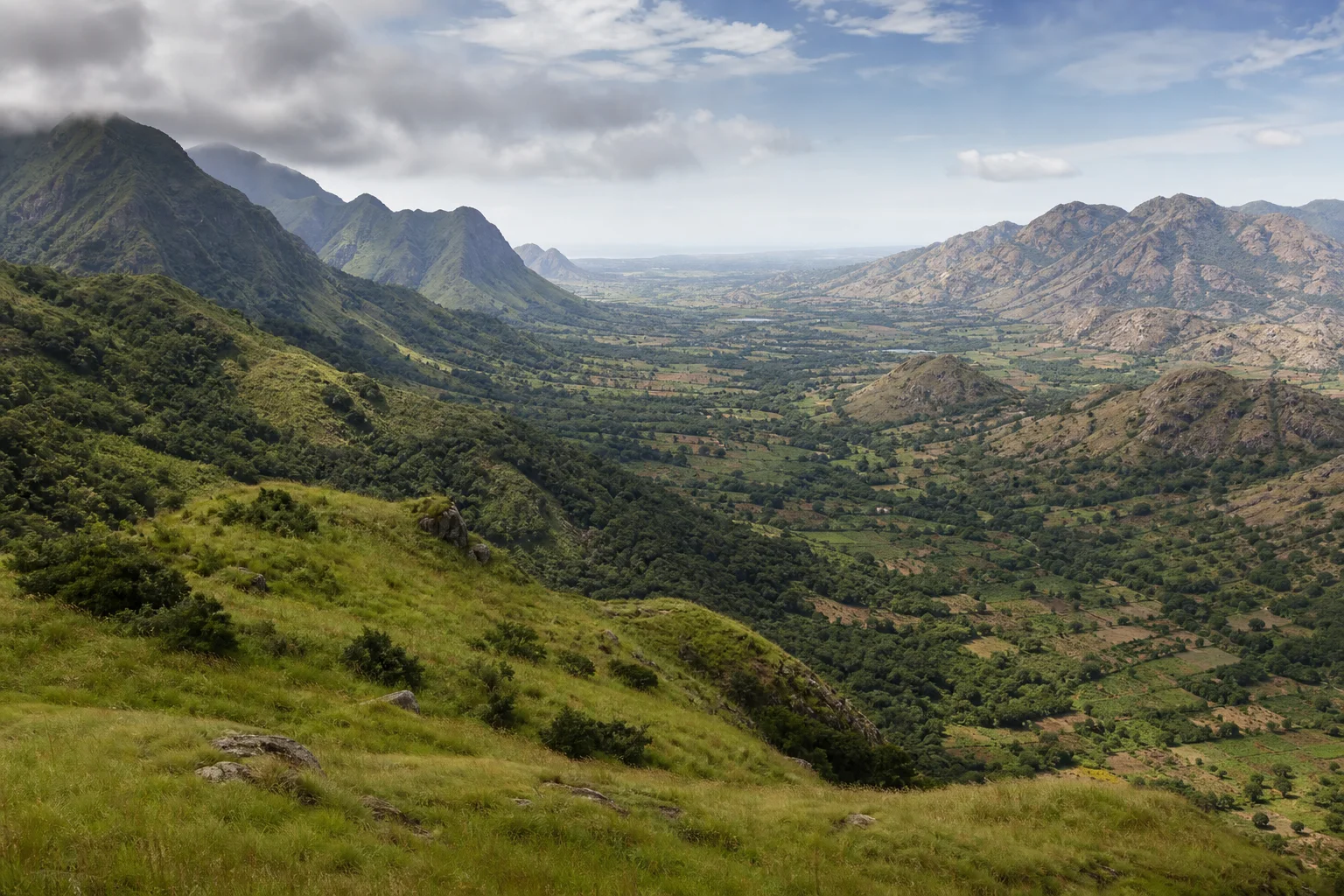
From the Western Ghats to the Eastern Ghats: Reading Tamil Nadu's Mountain Landscapes
A comparative journey through Tamil Nadu's high western wall and broken eastern ranges, connecting mountains with monsoon, habitats, settlement and travel.
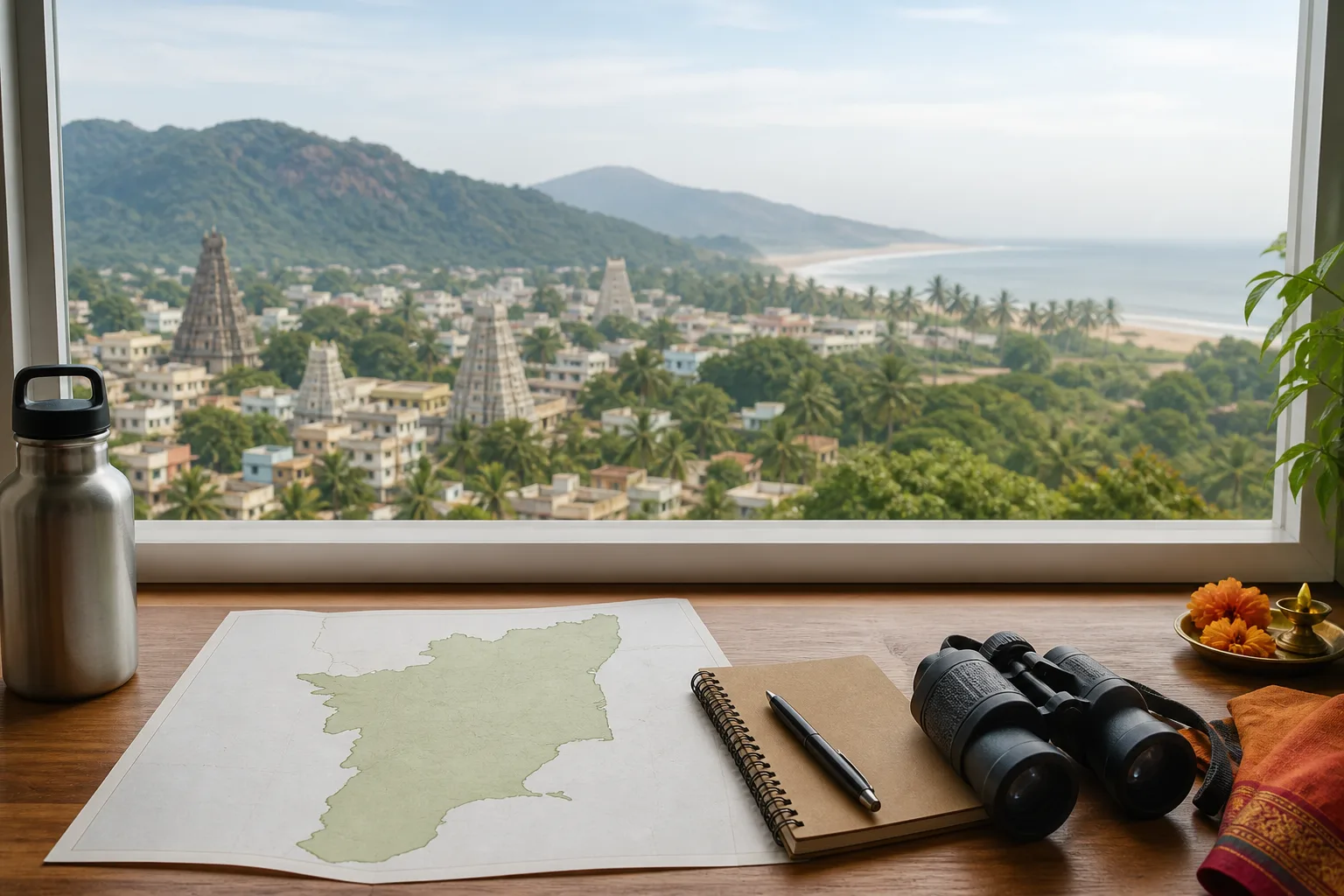
Tamil Nadu for First-Time Visitors: Choose a Base, Then a Direction
A base-first decision method for matching Chennai, Madurai, Coimbatore or Tiruchirappalli with one realistic outward direction.
Nilgiri Mountain Railway: Read the Line, Not Just the View
A practical heritage journey from the plains toward Udagamandalam that treats the railway as working engineering, a regional connection and a changing service.
Frequently asked questions
Which is best: Ooty, Coonoor or Kotagiri?
There is no universal winner. Ooty generally suits broad first-visit infrastructure, Coonoor supports rail-and-slope interest, and Kotagiri can support a smaller-base plan.
Is the Nilgiri Mountain Railway guaranteed?
No. Check Indian Railways for current service, seats and operational changes.
Can visitors walk through any tea estate?
No. Tea estates are working property; enter only with permission or through a legitimate visitor programme.
Editorial attribution
Prepared and reviewed by My Tamil Nadu Editorial Desk. Modified 25 August 2026.