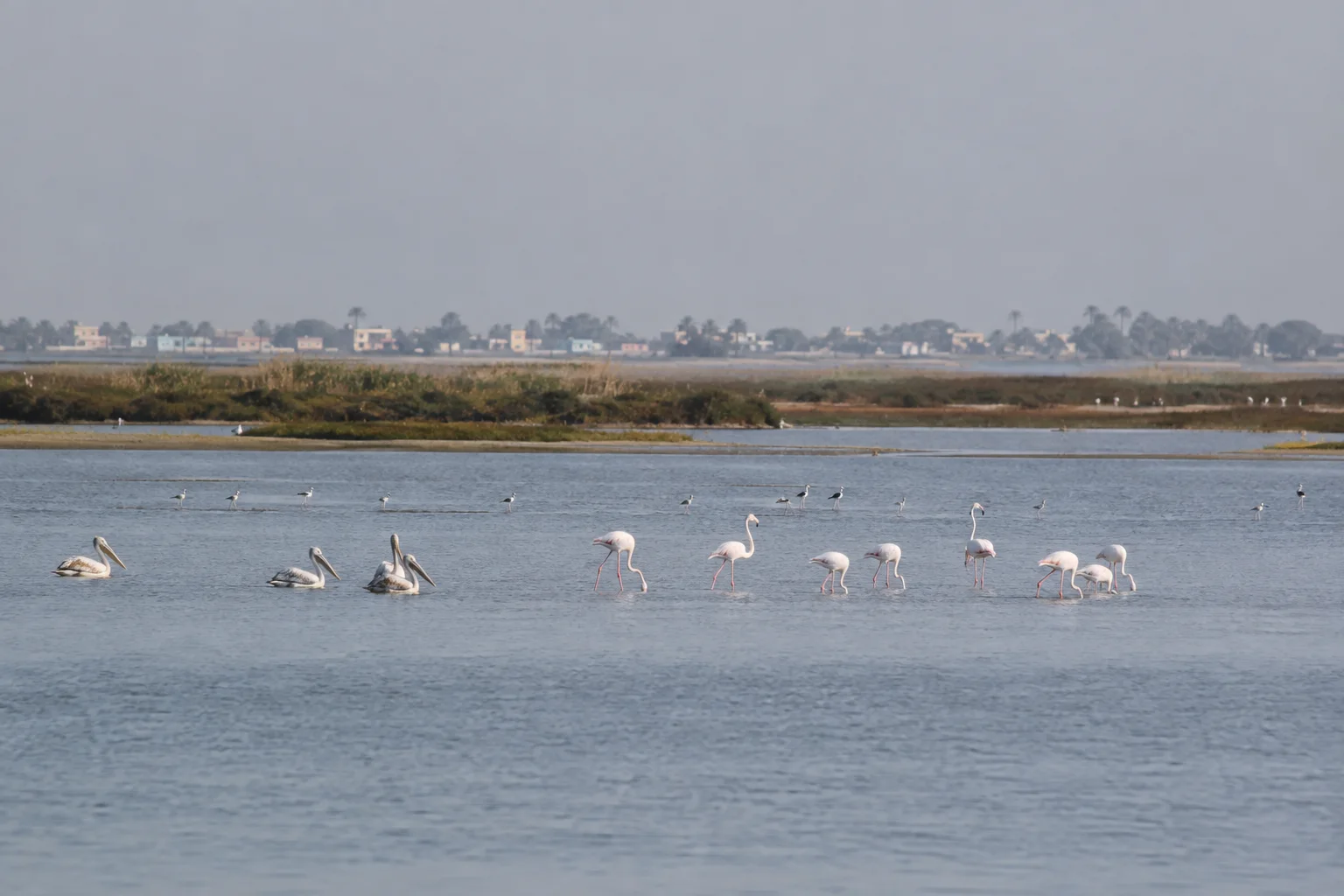
Begin with a lagoon, not a bird list
Pulicat is a brackish-water lagoon extending across Tamil Nadu and Andhra Pradesh. The Tamil Nadu Wildlife Division describes water, swamps, marshes, islands, mangroves and littoral vegetation as parts of the system. Birds respond to that habitat mosaic rather than arriving for a visitor timetable.
Brackish does not mean static. Sea exchange, freshwater inflow, salinity, depth and exposed feeding areas vary. A place that supported birds on one visit may look different after rain, drought, inlet change or disturbance. Observation begins by noticing water and substrate before counting species.
The Union Budget 2026 tourism announcement included birdwatching trails at Pulicat Lake. That is a policy and development signal, not evidence that a finished trail, booking system or visitor facility is operating today. Current implementation must be checked separately.
Sources for this section: Pulicat Lake, Budget 2026 tourism.
Use the protected-area language carefully
The Tamil Nadu State Wetlands Authority's May 2026 list records Pulicat Lake Bird Sanctuary in Tiruvallur district with an area of 15,367 hectares and cites Section 18(1) of the wildlife law. That is the appropriate current state source for the Tamil Nadu listing used here.
The lagoon itself crosses a state boundary, while the cited sanctuary entry describes the Tamil Nadu side. Do not extend one state's notification, management rule or area figure across the entire water body without the corresponding Andhra Pradesh record.
Protected status does not guarantee a tourism zone everywhere within view. Shore access, boating, photography, research and entry may be controlled differently by location. Follow the responsible forest, fisheries, local and coastal authorities rather than relying on an unverified map label.
Sources for this section: Tamil Nadu bird sanctuaries, Forest policy note.
Treat season as guidance, never a promise
The Wildlife Division's Pulicat page identifies October to March as a broad period associated with migratory birds. Use that as historical seasonal orientation, not a guarantee that flamingos, pelicans or any named species will be visible at a chosen hour or shore.
Bird distribution changes with water conditions, food, weather and disturbance. Morning light can help observation, but wind, haze and distance may still limit identification. A responsible plan allows a rewarding wetland visit even when a hoped-for species is absent.
Before travel, check current weather, access notices and recent information from the responsible authority or a credible local naturalist. Avoid circulating precise counts from another date as today's abundance. The 2025 synchronized estimate is a dated state exercise, not a live sightings feed.
Sources for this section: Pulicat Lake, 2025 wetland bird estimate.
Observe with distance, silence and patience
Use binoculars or a spotting scope and remain on established access. If birds repeatedly lift their heads, bunch together, move away or take flight as you approach, increase distance. The goal is not the closest photograph; it is observation that does not change the birds' behaviour.
Do not feed wildlife, play calls, pursue a flock by boat or push guides to cross shallow feeding areas. Keep voices low and groups compact. Never publish nest locations or other sensitive coordinates, and remove location metadata when an image could expose a vulnerable site.
Photography ethics apply to people too. Fishing, net repair and boat movement are livelihoods, not automatic cultural content. Ask before photographing individuals or work at close range, and do not block landing places while waiting for birds.
Sources for this section: Tamil Nadu bird sanctuaries, Pulicat Lake.
Read salt, channels, fishing and lighthouse history together
A lagoon visit becomes richer when birds are connected to hydrology and human use. Look for the transition among open water, mudflat, marsh and settlement; note where channels connect areas; and ask how freshwater and sea exchange shape the day without claiming a complete ecological diagnosis from one viewpoint.
Pulicat also has a working lighthouse and navigation history. DGLL explains that the station marks a coastal shoal and includes modern navigation systems. The lighthouse and sanctuary are related through geography, but they are managed for different primary purposes and may have separate access rules.
This layered reading prevents a single-species tourism story from erasing the lagoon. Flamingos may be a powerful seasonal signal, yet fish, invertebrates, vegetation, sediments and local knowledge sustain the wider ecological and social system.
Sources for this section: Pulicat Lake, Pulicat Lighthouse.
Make a flexible, low-impact plan
Choose one legal observation area rather than trying to circle the lagoon. Carry drinking water, sun and rain protection, neutral clothing and optics. Tell someone your route, retain enough daylight for the return and avoid isolated shore access that has not been locally verified.
Do not assume a boat mentioned in an old guide is licensed, safe or appropriate for wildlife watching now. Verify operator, weather, life-jacket, passenger and sanctuary requirements. Decline any route that approaches birds closely or enters a restricted area.
Leave with a field note rather than a trophy list: date, general observation area, water condition, weather, habitat, species confidence and disturbance noticed. That record keeps uncertainty visible and makes the next visit more useful without turning sensitive wildlife locations into coordinates.
Sources for this section: Pulicat Lake, Tamil Nadu bird sanctuaries.
Sources & Further Reading
These authoritative references support the historical, geographic, or seasonal context in this story. Current conditions and operating details still require a fresh official check.
- Union Budget 2026-27 Boost to Tourism, Culture and Heritage · Press Information Bureau, Ministry of Tourism
- Bird Sanctuaries in Tamil Nadu as on 14 May 2026 · Tamil Nadu State Wetlands Authority
- Pulicat Lake Bird Sanctuary · Wildlife Division Chennai, Tamil Nadu Forest Department
- Tamil Nadu Forest Department Policy Note 2024-25 · Tamil Nadu Forest Department
- Tamil Nadu Synchronised Bird Estimate 2025: Wetland Birds · Tamil Nadu Forest Department
- Pulicat Lighthouse and DGPS Station · Directorate General of Lighthouses and Lightships
Related Stories
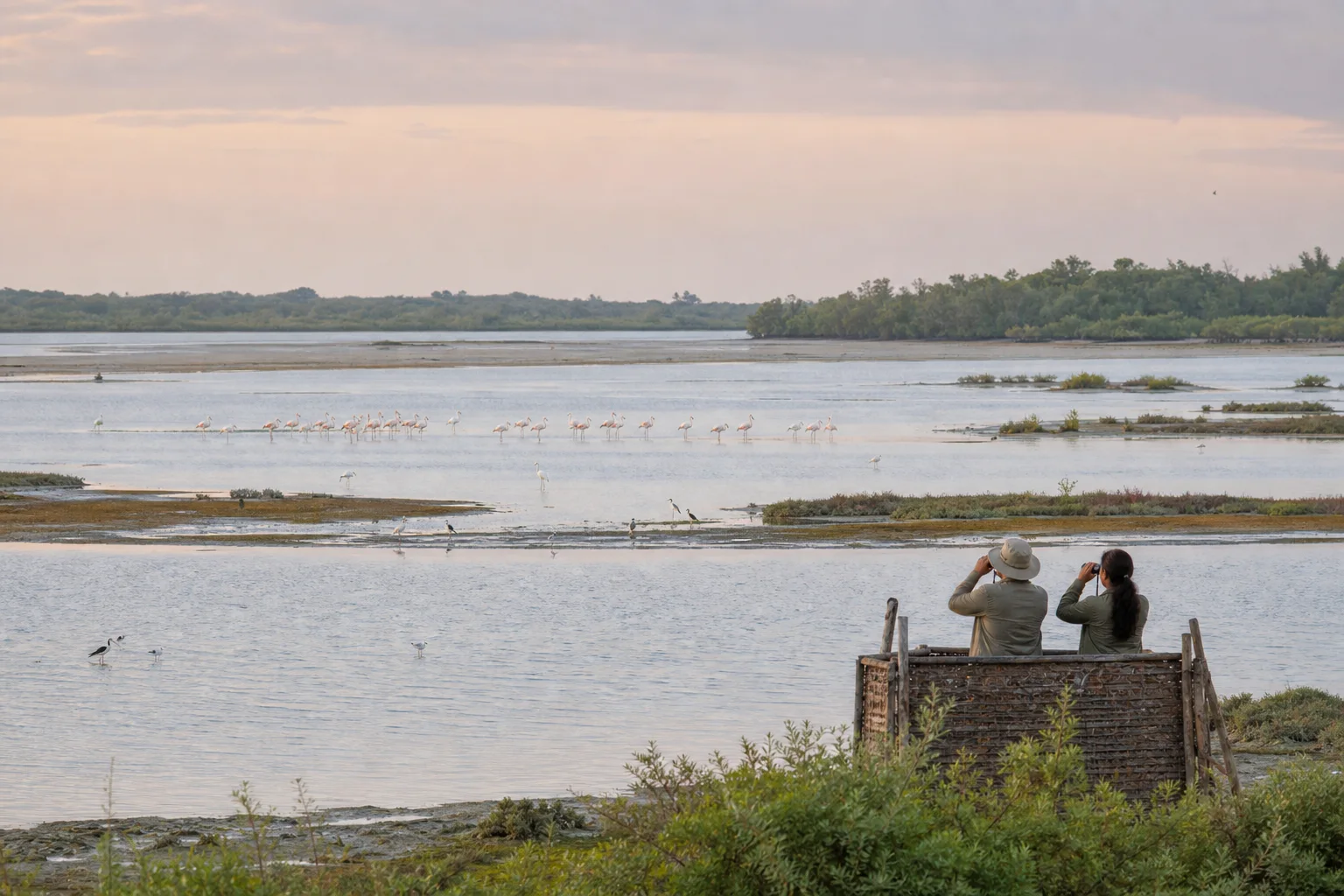
Point Calimere: A Wetland-First Birdwatching Journey
How to read mudflats, saline lagoons, forest, salt pans and coast before looking for a species list at Kodikkarai in Nagapattinam district.
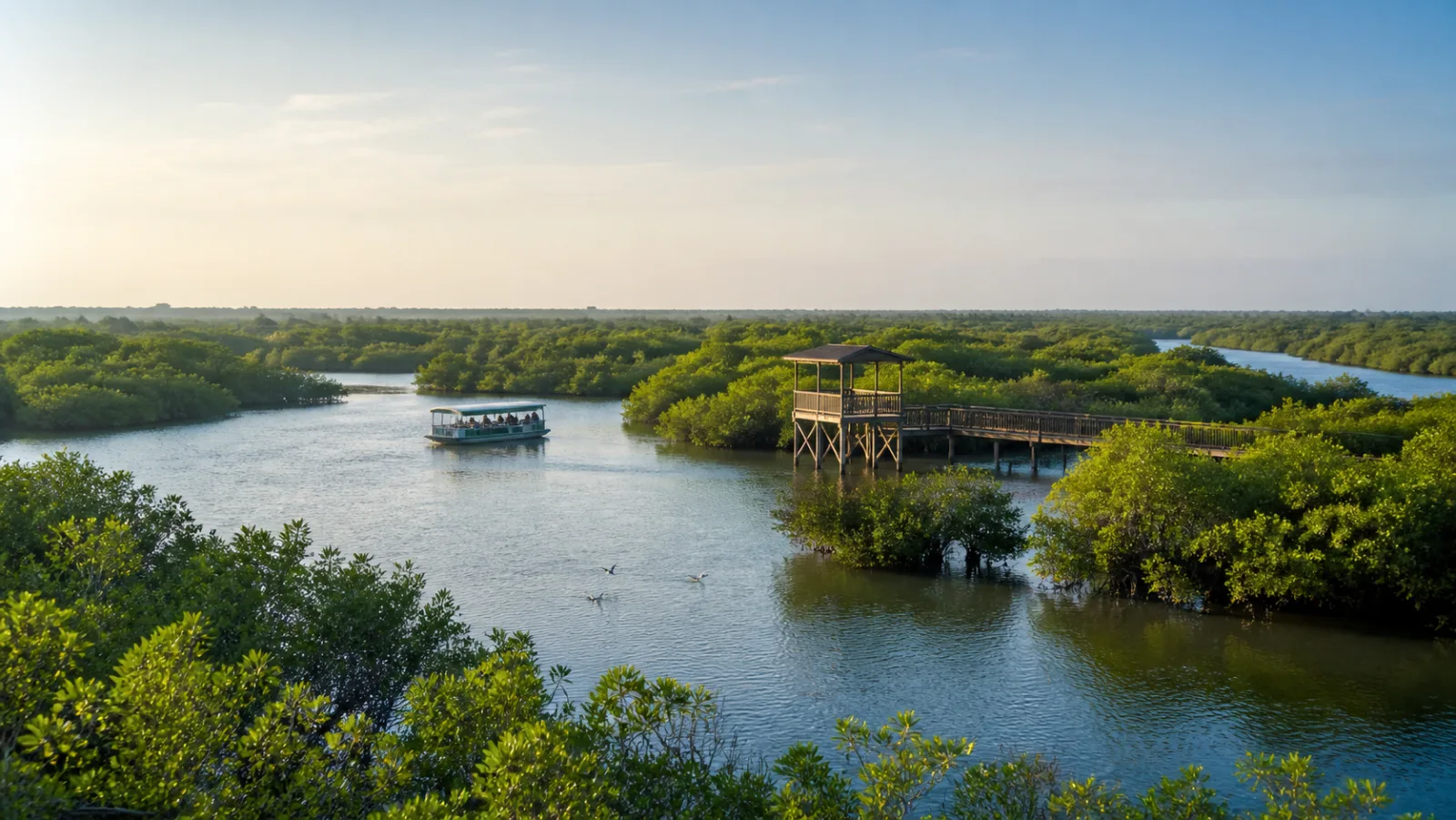
Muthupet Mangroves: Read the Lagoon Before Taking the Trail
A wetland-first guide to Muthupet's mangroves, lagoon, tidal channels, bird observation and the limits of any current boating or access promise.
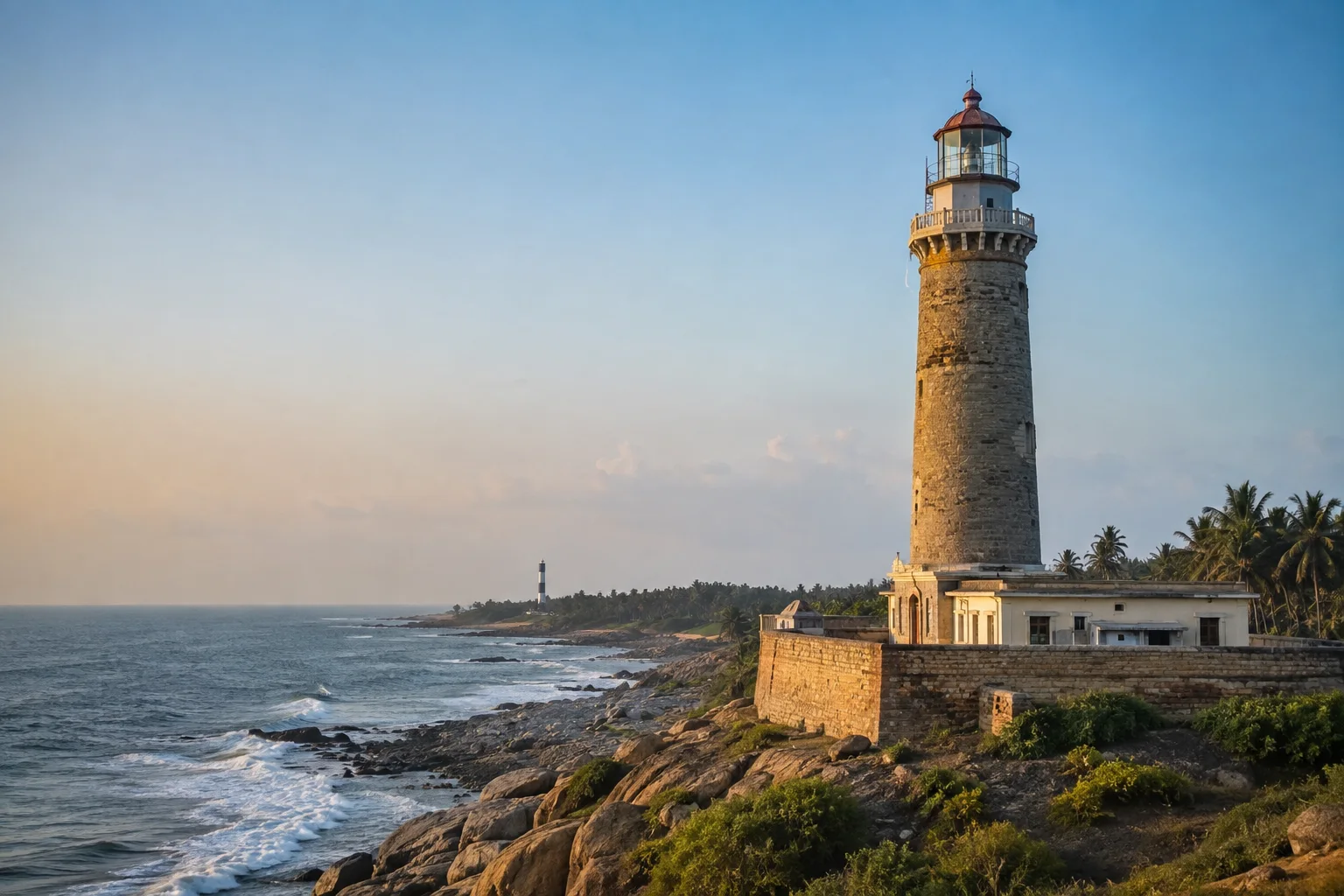
Tamil Nadu's Lighthouse Trail: Read the Coast Through Navigation
A coast-spanning guide to lighthouses as working navigation infrastructure, historical evidence and responsible places of maritime learning.
Frequently asked questions
Will I definitely see flamingos at Pulicat?
No. Season, water, weather and disturbance affect bird presence and visibility. No species sighting is guaranteed.
Is the announced Pulicat birdwatching trail already open?
The 2026 announcement establishes policy attention, not current completion or operation. Verify implementation with the responsible authority.
Can I take any boat into the sanctuary?
Do not assume so. Verify current licensing, safety, sanctuary and local access requirements, and avoid any trip that disturbs wildlife.
Editorial attribution
Prepared and reviewed by My Tamil Nadu Editorial Desk. Modified 4 September 2026.