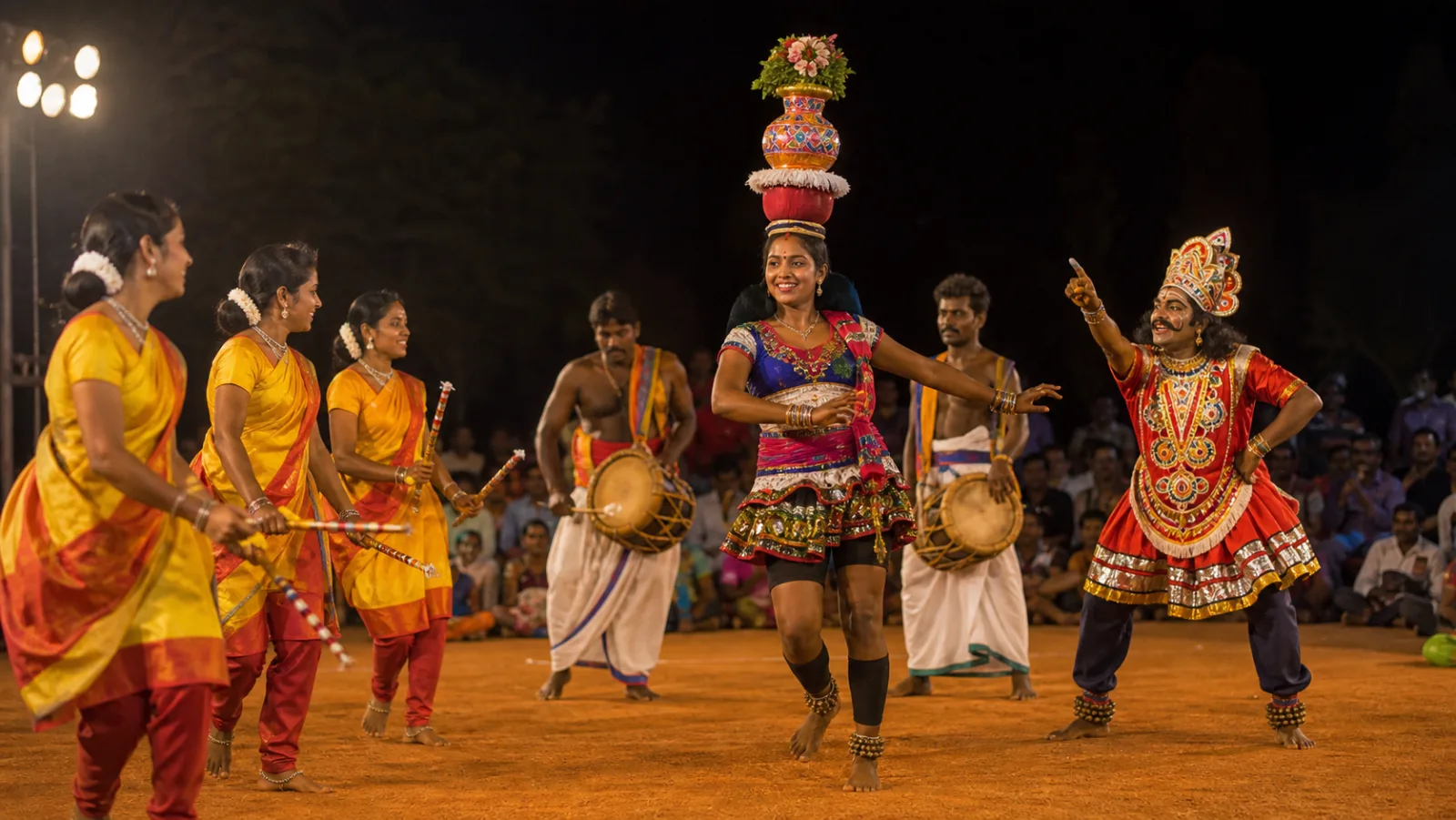
Begin by refusing one box called folk
Tamil Nadu's performance landscape includes dance, theatre, song, storytelling, percussion, ritual association and community celebration. Official cultural programmes list forms such as karagattam, therukoothu, villupaatu and thappattam in different district contexts. Sharing a festival stage does not make their histories, structures or meanings identical.
The label folk can be administratively useful while also hiding difference. Ask what the organiser and artists call the form, where the troupe works, what language or story is used and whether the presentation is ritual, competition, training demonstration, tourism showcase or a shortened stage adaptation.
Do not identify a form from costume colour alone. Festival lighting, mixed programmes and contemporary choreography can alter appearance, while similar instruments or movements may occur in more than one context. Use the programme announcement and artist explanation before publishing a label.
Sources for this section: Tamil Nadu Art and Culture, South Zone folk-art training.
Watch structure before collecting spectacle
In a balance form, look beyond the visible object to footwork, rhythm, posture and ensemble support. In a line or group dance, notice repeated patterns, spacing and response to percussion. In story performance, listen for narration, dialogue, song, humour and the relationship between performer and audience.
Therukoothu is identified by the Sangeet Natak Akademi's intangible-cultural-heritage inventory as a Tamil Nadu street performance form. That brief description is a starting point, not permission to call every brightly costumed theatre scene therukoothu. Story, music, dialogue, makeup and performance context must be considered together.
A short tourism-stage excerpt may present only one movement or song from a much longer form. Describe it as the programme presents it and avoid claiming that a ten-minute segment explains the complete tradition. Ask whether the artists have a fuller public performance or documented introduction.
Sources for this section: Intangible cultural heritage inventory, South Zone folk-art training.
Listen to musicians as performers, not background
Percussion, melody, voice, spoken text and rhythmic cues organise movement and story. A drummer may signal a transition, support balance, answer a dancer or shape audience response. When musicians stand behind a central performer, they remain part of the artistic event rather than anonymous accompaniment.
Instrument names should be confirmed rather than guessed by shape. The same broad label can cover different construction, tuning or performance practice, and an event may combine traditional and contemporary amplification. Loudness is not evidence that a form is crude or simple.
Protect your hearing without insulting the artists: choose a seat at a comfortable distance, use neutral ear protection where needed and do not demand that an acoustic community performance match studio sound. Avoid talking over narrative passages merely because you do not understand every word.
Sources for this section: Tamil Nadu Art and Culture, Intangible cultural heritage inventory.
Credit artists, troupes and labour
Tamil Nadu's Department of Art and Culture describes institutions, regional centres, training, cultural programmes and a Folk Artistes Welfare Board. That administrative framework is a reminder that performers are working artists with training, travel, costume, rehearsal and livelihood needs, not free atmosphere for a visitor's video.
Record the troupe and artist names exactly as announced. When sharing a clip, identify the event, date and form only when verified, and tag an official artist account if invited. Do not remove credit while keeping the performance, or imply that a tourism board, venue or photographer created the art.
Payment and consent matter. Buy a ticket where required, use official donation channels and ask before commissioning a private demonstration. A performer accepting public stage photography does not automatically consent to commercial advertising, facial recognition, remixing or a decontextualised meme.
Sources for this section: Tamil Nadu Art and Culture, Regional cultural centres.
A festival stage is a context, not the whole tradition
The 2026 Suttrulaa Kalai Vizha in Madurai was presented by official tourism channels as a district cultural festival featuring classical and folk traditions. Such events can make artists visible to a broad public, but programming, time limits, sound systems and mixed audiences also shape what is performed.
Do not infer that a form originated in the city simply because it appears there. Troupes travel, departments coordinate across districts and a programme may deliberately assemble several regions. Distinguish performance location, artist base, form history and story setting instead of collapsing all four into one pin.
Event dates, entry, venue rules and line-ups are live information. This article does not carry a future schedule. Use the organiser's current notice and accept substitutions, weather changes or cancellation without pressuring artists or staff to reproduce an older programme.
Sources for this section: Suttrulaa Kalai Vizha 2026, Regional cultural centres.
Use a simple first-audience practice
Before the event, read the organiser's description and learn the announced form names. On arrival, choose a lawful place that does not block performers, musicians, residents or emergency access. During the programme, watch one complete item before raising a phone and keep flash or additional lighting off unless explicitly allowed.
Afterward, write down three observations: one movement or dramatic structure, one musical relationship and one question about context. Check that question against an artist statement or authoritative source. This produces a more accurate memory than a folder of unlabelled clips.
Return the experience to people. Credit the artists, support a legitimate programme and avoid language that calls a living form primitive, disappearing or authentic merely because it looks unfamiliar. Tradition can be old, adaptive, professional, community-based and contemporary at the same time.
Sources for this section: Tamil Nadu Art and Culture, Suttrulaa Kalai Vizha 2026.
Sources & Further Reading
These authoritative references support the historical, geographic, or seasonal context in this story. Current conditions and operating details still require a fresh official check.
- Department of Art and Culture · Government of Tamil Nadu
- Regional Cultural Centres · Tamil Nadu Department of Art and Culture
- Intangible Cultural Heritage · Sangeet Natak Akademi, Ministry of Culture
- Annual Report 2020-21 · South Zone Cultural Centre, Ministry of Culture
- Suttrulaa Kalai Vizha 2026 · Incredible India, Ministry of Tourism
Related Stories
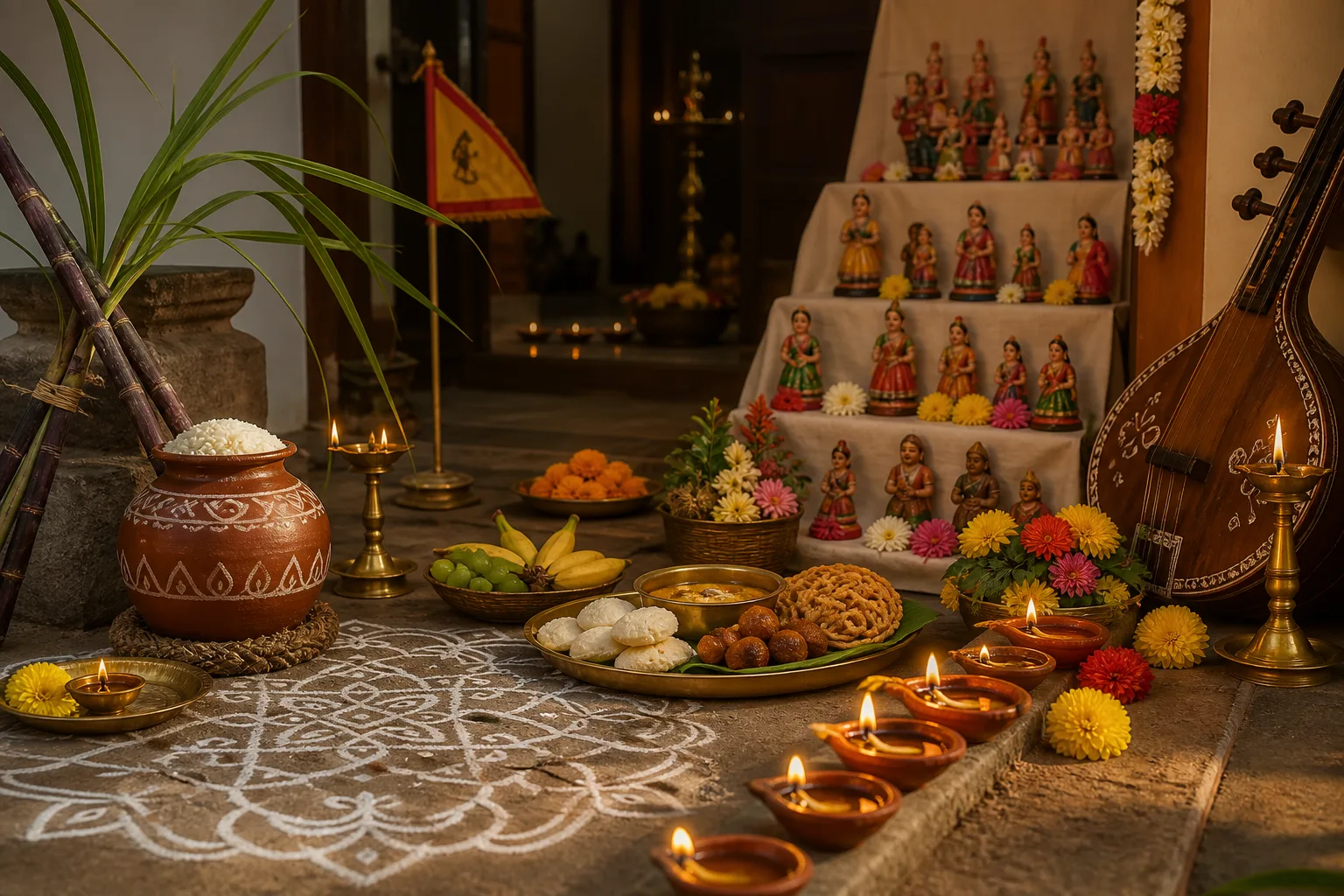
Beyond Pongal: How to Read Tamil Nadu's Festival Calendar
A cultural guide to the many clocks behind Tamil Nadu's festivals, from harvest and household practice to temple calendars and pilgrimage.
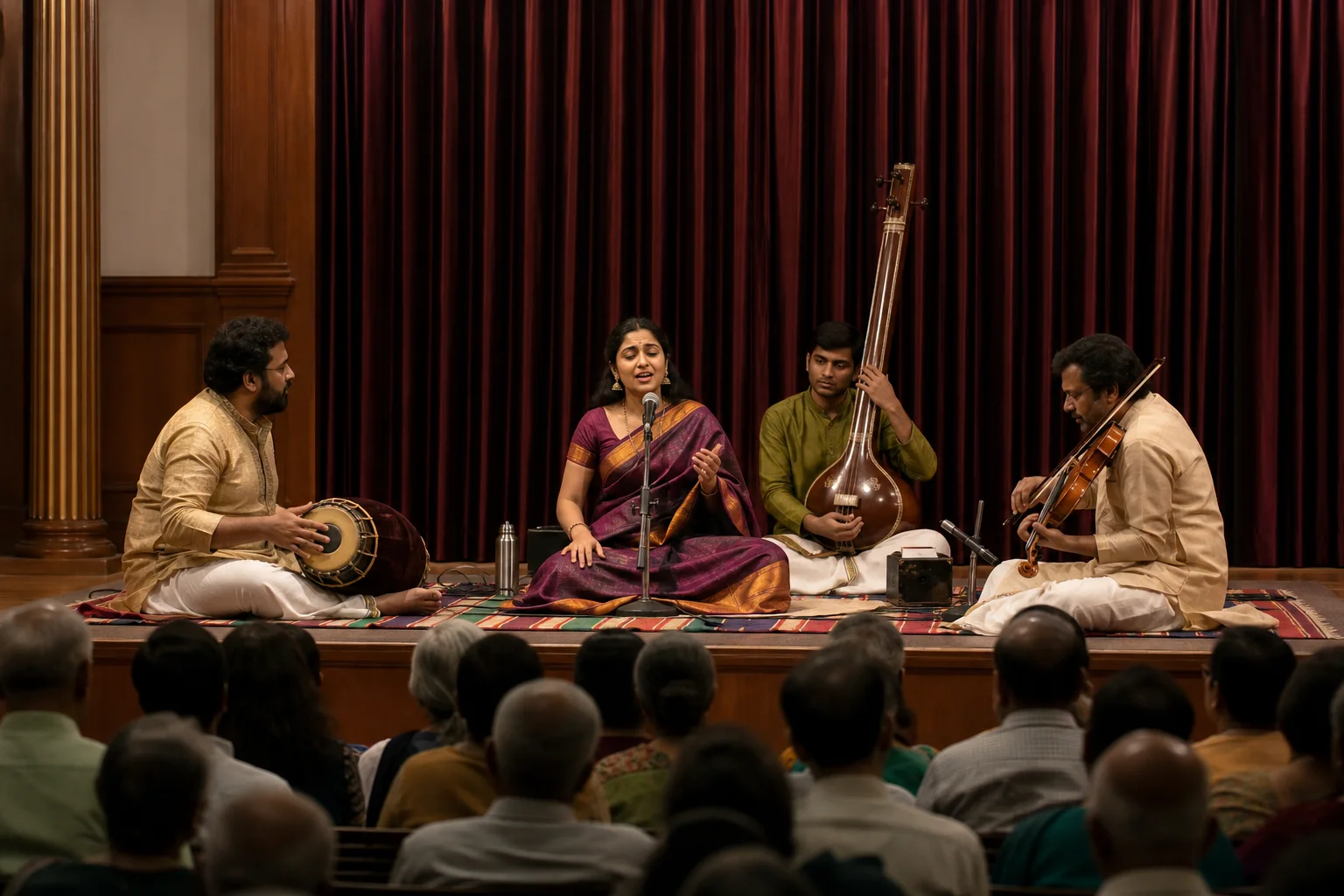
Chennai Music Season: A First Listener's Way In
A calm way to enter Chennai's distributed December concert season without trying to understand every raga, artist or sabha at once.
Frequently asked questions
Can costume alone identify a Tamil folk-art form?
No. Confirm the announced name and consider music, movement, story, troupe and performance context together.
May visitors photograph every public performance?
Not automatically. Follow organiser rules, avoid flash and obstruction, and seek consent for close, commercial or decontextualised use.
Does a short festival excerpt represent the complete tradition?
Usually not. Describe it as a staged excerpt unless the artists or programme provide fuller context.
Editorial attribution
Prepared and reviewed by My Tamil Nadu Editorial Desk. Modified 1 September 2026.