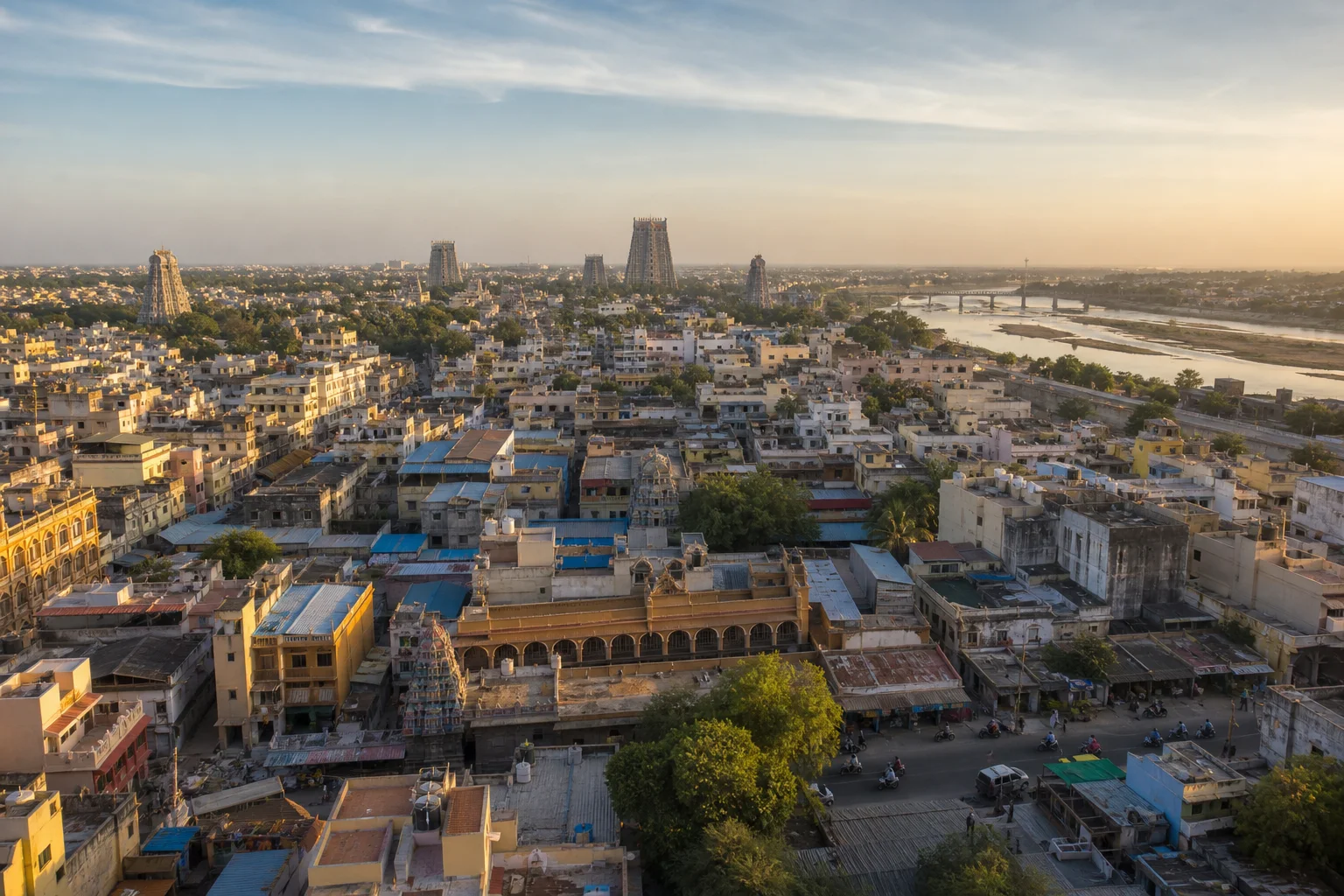
Begin with a city, not a single monument
Madurai is often introduced through the gopurams of Meenakshi Amman Temple. That is an understandable first image, but it can reduce a living city to one monument. The more revealing view begins with relationships: a major sacred complex at the old urban core, streets that organize movement around it, trading areas that have served residents as well as visitors, and a river corridor that belongs to the city's environmental and civic history. Madurai is not simply a temple with a city attached. It is a city whose sacred, commercial and public worlds have continually reshaped one another.
The district administration's history page preserves the traditional account of a city planned around the temple. That account belongs to Madurai's sacred memory and should be identified as tradition rather than treated as a modern survey record. Even with that distinction, the present urban pattern makes the centrality of the temple easy to perceive. A visitor who looks outward from the complex can read successive streets, gateways, market activity and neighbourhood life as parts of an urban structure rather than as unrelated stops on a sightseeing list.
Sources for this section: Madurai District history, Meenakshi Temple.
The streets form an urban archive
The old core is commonly understood through concentric streets associated with the temple precinct. Their value is not only geometric. They show how ritual circulation, commerce, access and residence can occupy the same urban fabric. A procession route may also be a working street; a gateway approach may hold shops, transport and ordinary errands; a building line may preserve an older scale even when uses have changed. Reading the city this way requires attention to edges, crossings and daily movement, not only to architectural facades.
Street names and festival associations can carry historical memory, but their meanings should not be simplified into one fixed plan that has survived unchanged. Madurai has experienced Pandya, Sultanate, Vijayanagara-Nayaka, colonial and post-independence phases, along with major modern growth. Roads have been widened, traffic patterns altered and commercial uses intensified. The visible city is therefore layered. Some relationships are old, some were rebuilt, and some are contemporary adaptations to a dense regional centre.
Sources for this section: Madurai District history, Madurai protected monuments.
The temple and public realm are connected, not identical
Meenakshi Amman Temple is a place of worship before it is a visitor attraction. Its towers, enclosures and halls also influence how the surrounding city is navigated and imagined. The official district page describes the temple complex and its position in Madurai, while the dedicated My Tamil Nadu guide separates historical evidence, sacred tradition and changeable visitor information. That separation matters: the urban story can acknowledge the temple's central role without treating ritual space as a public museum or presenting every traditional narrative as archaeological fact.
Outside the controlled sacred precinct, the surrounding streets work as a public realm shared by residents, workers, worshippers and travellers. Respectful observation means keeping entrances clear, following photography rules, dressing for the place and allowing daily activity to continue without turning people into scenery. It also means recognizing that congestion and noise are not defects in an otherwise perfect heritage composition. They are signs of competing urban needs that require management rather than romantic description.
Sources for this section: Meenakshi Temple, Madurai District history.
Markets reveal the everyday city
Madurai's commercial identity cannot be reduced to souvenir shopping. Markets and trading streets connect food, flowers, textiles, household goods, transport and service work to the sacred core and wider region. Their exact mix changes with time, regulation and demand, so an editorial account should avoid presenting one stall, price or opening hour as permanent. What endures is the role of exchange: the central city draws together agricultural hinterlands, neighbourhood consumption, ritual requirements and visitor spending.
A slower walk can reveal how commerce occupies thresholds. Goods move between wholesale and retail spaces; food appears at different times of day; flower and textile trades carry meanings beyond their visual appeal. Visitors should ask before photographing workers, avoid blocking narrow passages and treat food recommendations as personal rather than universal. The regional food guide provides a better framework for dishes and culinary context, while the city itself shows how foodways live within work, migration and market rhythms.
Sources for this section: Madurai District history, Madurai tourist information.
The Vaigai is a corridor, not a scenic backdrop
The Vaigai crosses Madurai as a physical and civic corridor. Bridges, roads, neighbourhoods and public projects connect to it, while the river also belongs to a larger basin beyond the city. Water visible at one point or season cannot represent the whole river system. Flow, sediment, rainfall, releases, drainage and urban use change conditions over time. A travel article should therefore resist describing the Vaigai as permanently full, dry or restored on the basis of a photograph or brief visit.
Reading the river responsibly means noticing both connection and constraint. It divides and joins parts of the city, provides open space in a dense urban environment and carries environmental pressures generated upstream and within Madurai. Current water levels, flood risk and access require dated official information. The river's deeper editorial value is that it breaks the illusion of an isolated temple core: Madurai is also a basin city whose future depends on water management, mobility and the quality of its shared urban landscape.
Sources for this section: Madurai District history, Madurai Smart City progress.
Madurai's history extends beyond the centre
The old city is only one layer of the Madurai region. The Tamil Nadu Department of Archaeology lists protected monuments, inscriptions, Jain beds and other remains across the district, demonstrating that historical evidence is distributed through hills, villages and peripheral landscapes. Keezhadi, in neighbouring Sivaganga district and close to Madurai, has added an important archaeological dimension to discussions of early historic urbanism and literacy in the wider Vaigai region. It should not be casually folded into Madurai city or used to prove every later tradition.
This wider frame changes how a visitor understands the centre. Pandya associations, literary memory, Nayaka architecture, colonial institutions and modern civic expansion are not one continuous visual style. They are different kinds of evidence and memory that occupy overlapping geography. The district guide helps connect Madurai with Tirupparankundram, Alagar Koyil and other regional places, while the archaeology pages show why the surrounding landscape deserves more than a day-trip label.
Sources for this section: Madurai protected monuments, Keezhadi excavation.
Read Madurai in layers and verify the present
A useful Madurai visit can be organized as a sequence of readings rather than a checklist. Begin with the temple's exterior relationship to the old streets, move through a market area without treating it as a staged attraction, cross or observe the Vaigai from a lawful public route, and then compare the core with a later palace, civic building or district landscape. This approach makes differences visible. It also leaves room for worship, work and transport instead of assuming every space exists for tourism.
Operational details belong to the day of travel. Temple entry arrangements, museum hours, road controls, festival diversions and riverfront access can change. Verify them with the responsible authority and use the Maps hub for broad orientation rather than assuming a generated route is suitable. Madurai becomes richer when the visitor stops asking for one definitive image. It is a temple city, market city, river city and regional centre at once, held together by relationships that are still changing.
Sources for this section: Madurai tourist information, Meenakshi Temple.
Sources & Further Reading
These authoritative references support the historical, geographic, or seasonal context in this story. Current conditions and operating details still require a fresh official check.
- History · Madurai District Administration
- Sri Meenakshi Sundareswarar Temple · Madurai District Administration
- Tourist Information · Madurai District Administration
- Monuments - District wise · Tamil Nadu Department of Archaeology
- Keezhadi · Tamil Nadu Department of Archaeology
- Madurai Smart City Progress · Madurai Corporation
Related Stories
Tamil Nadu for First-Time Visitors: Choose a Base, Then a Direction
A base-first decision method for matching Chennai, Madurai, Coimbatore or Tiruchirappalli with one realistic outward direction.
A Food Journey Through Tamil Nadu's Regional Cuisines
Travel across Tamil Nadu through the relationships among region, crop, technique, household memory, migration, worship, and changing city life.
A Journey Through Chola Heritage in Tamil Nadu
Follow a thoughtful route through three living Chola temple landscapes, learning to read architecture, inscriptions, patronage, and place without rushing.
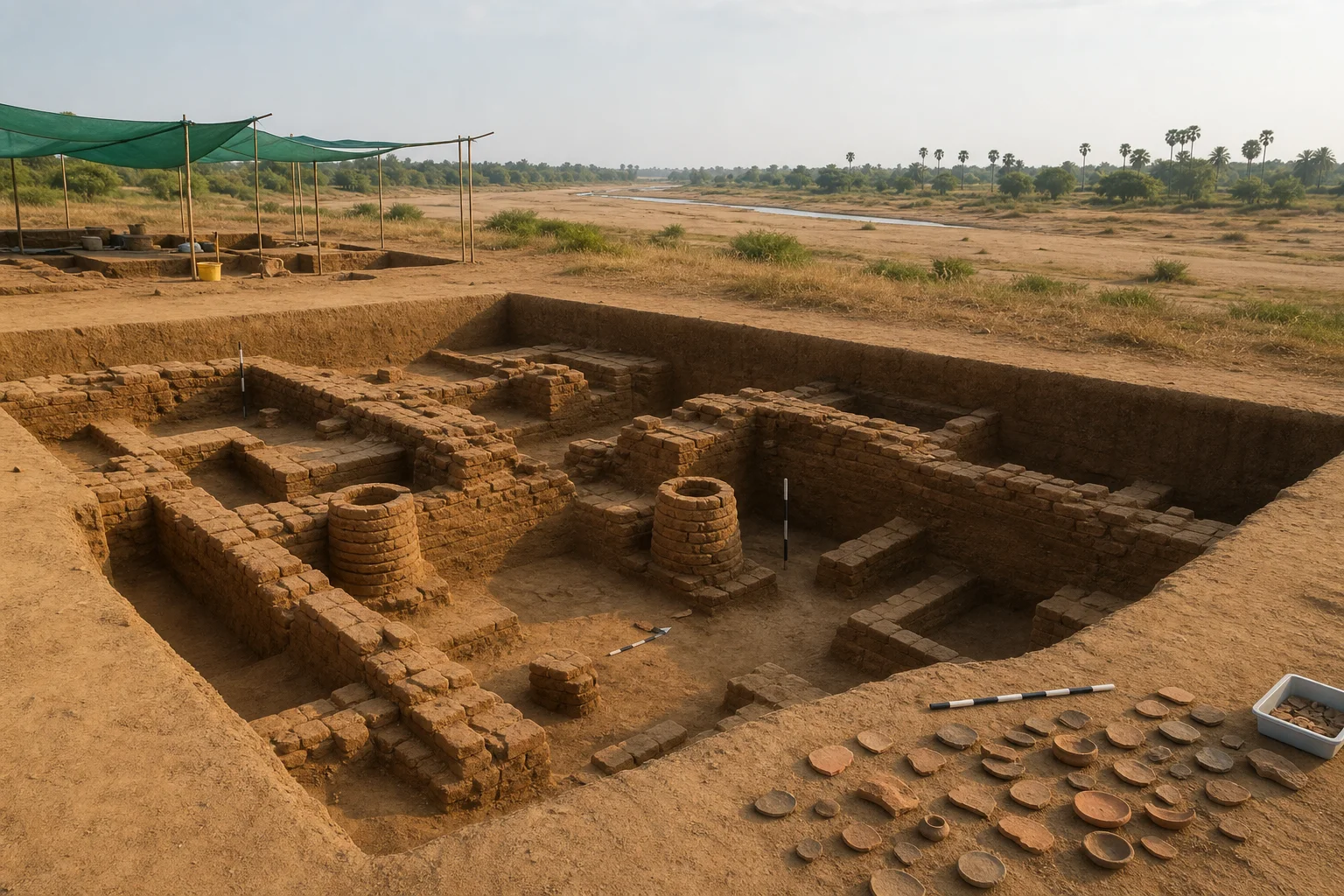
Keezhadi Beyond the Headline: How to Read an Excavation
A practical guide to what excavated walls, pottery, ring wells, inscriptions and laboratory dates can tell us, and where interpretation must remain cautious.
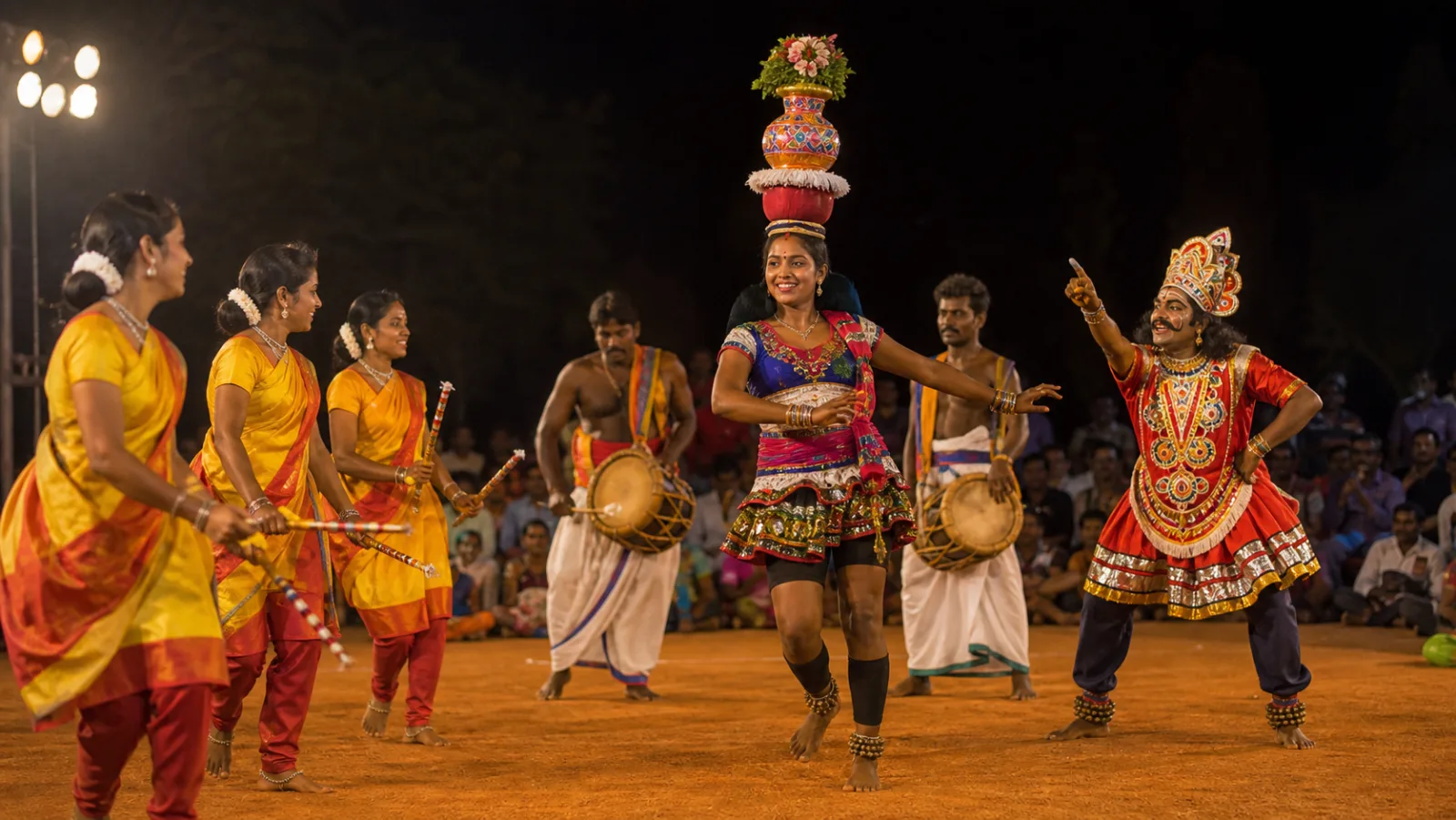
Tamil Folk Arts: How to Watch a Performance with Context
A first-audience guide to recognising form, music, story and artist labour without flattening Tamil folk performance into festival spectacle.
Editorial attribution
Prepared and reviewed by My Tamil Nadu Editorial Desk. Modified 24 August 2026.