Understand what a Golu display is before arriving
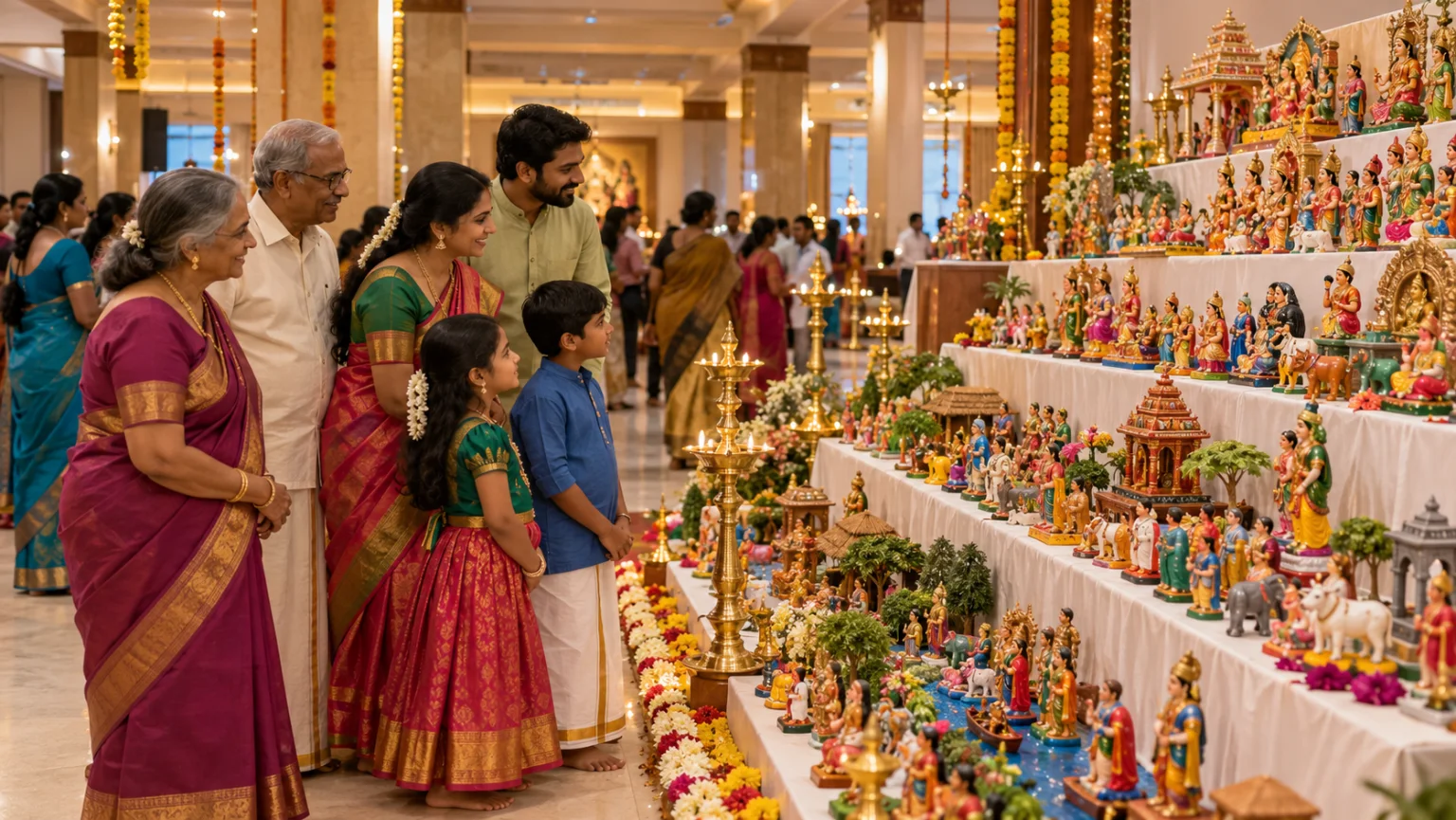
Golu is a seasonal arrangement of dolls and figures on steps, often assembled through years of collecting, gifting and family memory. Displays may include divine narratives, saints, musicians, wedding scenes, village life, animals, crafts and contemporary themes. The steps create a visual sequence, but there is no single mandatory interpretation for every display. Ask the host or guide what matters in that particular arrangement instead of announcing a universal meaning after a quick internet search.
Many families exchange visits, songs and small offerings during Navaratri. Sundal, a seasoned preparation commonly made with legumes, may be shared with guests, but food customs vary. Visitors should not expect a performance, meal or gift simply because another household follows that practice. At a public display, remain behind barriers, keep children close and avoid touching figures. At a private home, follow the invitation, remove footwear where requested and ask before photographing people or rooms.
A respectful visit also leaves time to look. The best displays reward attention to the relationship between figures, hand-painted details, inherited pieces and new social themes. Instead of trying to record every step, choose a few scenes and ask one thoughtful question. Buying dolls from recognized makers can support the living craft, but do not reduce the tradition to shopping. The display is part devotion, part storytelling and part social continuity.
Sources for this section: Navaratri overview.
Use a five-point check before a public Golu visit
First, confirm the organizer and exact venue on an official page. Similar event names, reposted posters and map pins can point to different entrances. Second, check whether registration is required for every visitor, including children. Third, record the selected date and time slot. A successful form submission is not useful if the group arrives outside the allotted window or cannot show the confirmation requested by the organizer.
Fourth, check the visitor rules. Government premises, temples, museums and private halls can have different identity, bag, footwear, food and photography requirements. Carry only what you need and never photograph security arrangements. Fifth, ask about step-free access, seating and toilets when anyone in the group needs them. An accessible entrance in a photograph does not prove that the entire visitor route is accessible.
Take a screenshot or printed copy of the confirmation, but re-open the official page before departure. Do not publish booking codes or identity details. If a free public event is full, avoid paying an unknown person who promises entry. Choose another verified display or cultural program instead. Capacity limits protect visitors and the display; they are not a challenge to negotiate at the gate.
- Confirm the organizer and entrance.
- Check whether every visitor needs registration.
- Save the date, slot and confirmation securely.
- Read identity, bag, footwear and photography rules.
- Confirm accessibility directly when it is essential.
Sources for this section: Lok Bhavan Navaratri 2026.
Approach temple programs as worship first
The HR&CE festival calendar is a useful discovery tool because it connects dates with named temples and events. It is not a substitute for the temple's current notice. A calendar entry may describe a ritual rather than a staged visitor program, and the most important moments may be crowded. Contact the temple through official details where possible, then confirm timing locally. Never assume that a listing grants photography access to a sanctum or ritual.
Dress modestly, follow footwear and queue arrangements, and allow worshippers to move without becoming part of a photograph. Keep phones silent. If a temple restricts a space, ritual or image, accept the rule without argument. Avoid blocking circumambulation paths or holding a group discussion at a threshold. Donations should use authorized counters or clearly identified boxes, and visitors should be cautious about unsolicited guides or claims of guaranteed special access.
Navaratri programs can include decorated forms of the goddess, music, recitation and processions, but practices differ by temple. Let the local institution describe its tradition. A traveler does not need to master every theological detail to behave well: observe before moving, ask a staff member when uncertain, and keep the schedule loose enough that a long queue does not turn reverence into impatience.
Sources for this section: HR&CE festival calendar, Tamil Nadu HR&CE.
See Ayudha Puja and Vijayadashami in their real context
Near the close of Navaratri, Ayudha Puja gives special attention to tools, instruments, books, vehicles and workplaces. Across Tamil Nadu, the observance can be visible in factories, shops, buses, homes, studios and offices. It expresses gratitude for the means through which people learn and work. A decorated vehicle or closed workshop is not automatically a public photo opportunity; it belongs to the people observing the day.
Vijayadashami is associated with auspicious beginnings, including learning. Music and dance schools may welcome new students, and some families mark a child's introduction to letters through vidyarambham. Visitors should not stage or interrupt another family's ceremony. If a school advertises a public program, confirm whether it is a demonstration, enrollment event or private ritual and whether observation is permitted.
The practical travel effect can include changed business hours, busier shopping areas and demand for flowers, fruit and festival supplies. Purchase early and avoid building a tight itinerary around businesses that may close for worship. If your driver or guide needs time for the observance, agree on the schedule in advance. Participating respectfully means allowing the festival to shape working life rather than expecting local people to keep a normal tourist timetable.
Sources for this section: Navaratri overview, HR&CE festival calendar.
Example 1: a rain-aware public Golu evening in Chennai
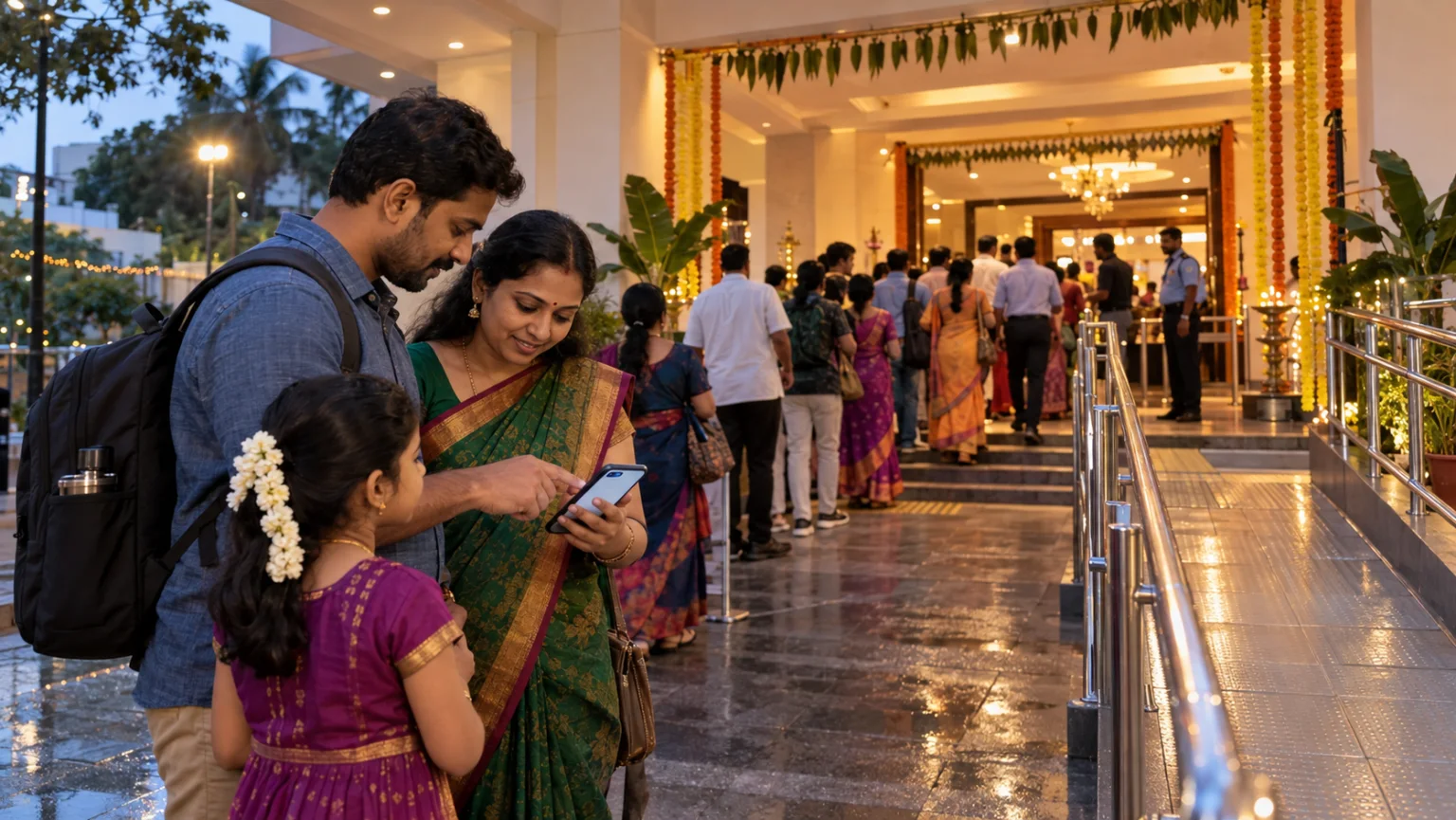
A family of four wants a first Golu experience during a short Chennai stay. They choose one officially listed public display and complete the required booking with the organizer. They save the confirmation, check the allowed arrival window and select a hotel-to-venue route with a simple return. Because October can bring changing rain conditions, they avoid combining the visit with a distant outdoor attraction on the same evening.
On the day, they review the latest weather and local travel information, recheck the event page and carry compact rain protection. The adults explain to the children that the dolls are not toys and that photography must follow the venue rule. They arrive early enough for security and use the designated accessible route for a grandparent rather than assuming that the front steps are the only entrance.
After the display, they choose dinner close to their transport connection. If rain, capacity or an organizer notice changes the plan, their fallback is an indoor cultural stop or a quiet meal, not an attempt to force entry elsewhere. The experience remains successful because the family planned around one meaningful visit, not a collection of festival checkboxes.
Sources for this section: Lok Bhavan Navaratri 2026, RMC Chennai.
Example 2: a temple morning and doll-shopping afternoon
Two friends choose a temple program from the HR&CE calendar and verify the current timing with the institution. They arrive in modest clothing with minimal luggage, follow the queue and keep cameras away until a staff member confirms where photography is allowed. They allow more time than the listed ritual start because festival traffic and temple crowds can make a precise exit unrealistic.
In the afternoon, they visit an established craft market to look for Golu figures. They ask about material, maker and care rather than bargaining immediately. A hand-painted clay figure may vary slightly from another because it is not an industrial duplicate. They request secure packaging, keep the receipt and consider whether the object can travel safely. They do not buy protected antiquities or accept invented claims of extreme age.
The day links worship and craft without treating either as a spectacle. If the temple becomes too crowded, they step away rather than pushing toward a ritual. If the desired doll is unavailable, they choose a smaller locally made piece rather than a poorly packed imitation. Their purchases support the visit, but attention and conduct remain the center of the experience.
Sources for this section: HR&CE festival calendar.
Sources & Further Reading
These authoritative references support the historical, geographic, or seasonal context in this story. Current conditions and operating details still require a fresh official check.
- Festival Calendar, October 2026 · Hindu Religious and Charitable Endowments Department, Government of Tamil Nadu
- Hindu Religious and Charitable Endowments Department · Government of Tamil Nadu
- Regional Meteorological Centre Chennai · India Meteorological Department
Related Stories
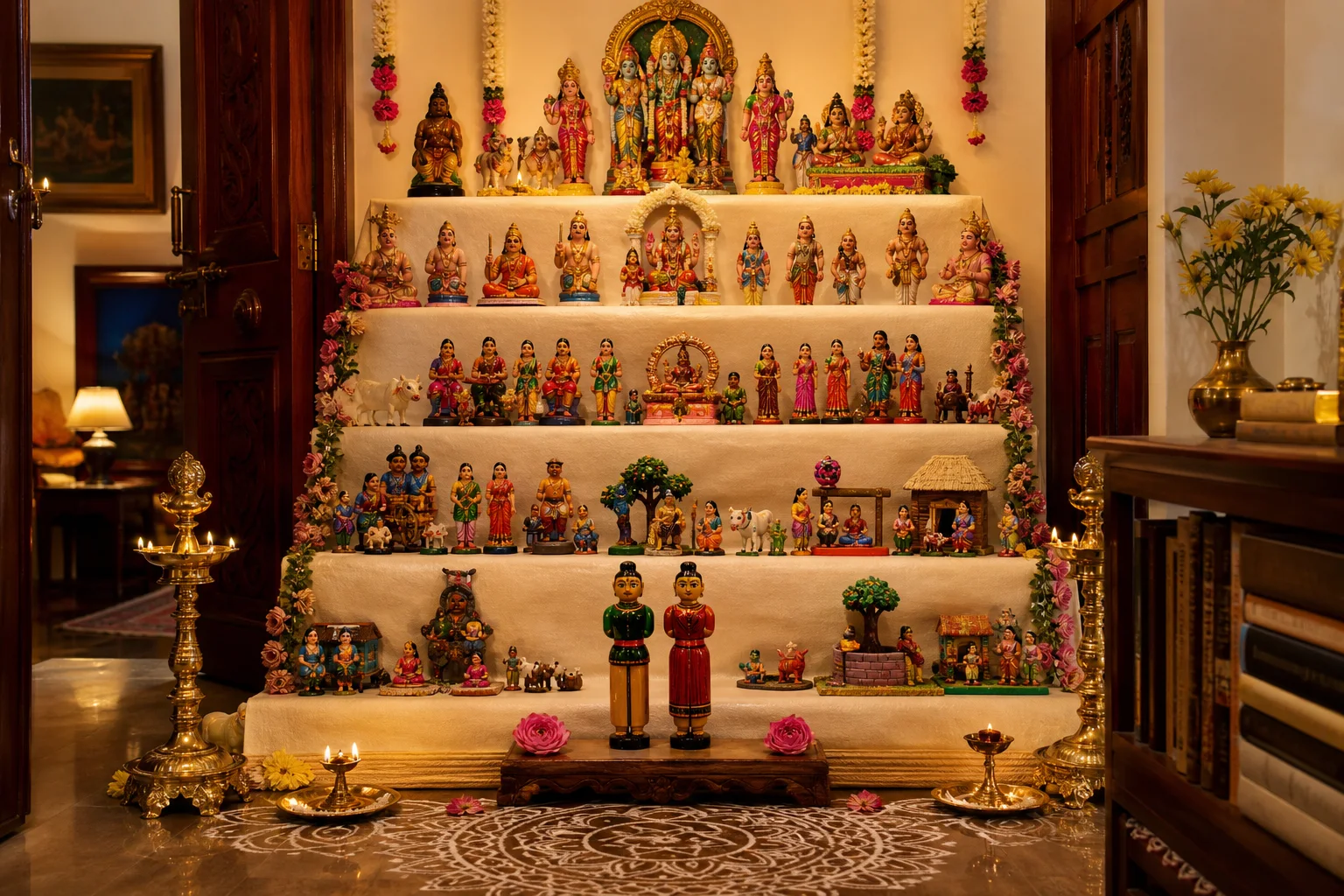
Navaratri Golu in Tamil Nadu: Reading the Stories on the Steps
A respectful guide to the dolls, household creativity, visits, music, food and changing narratives that make Golu more than a decorative display.
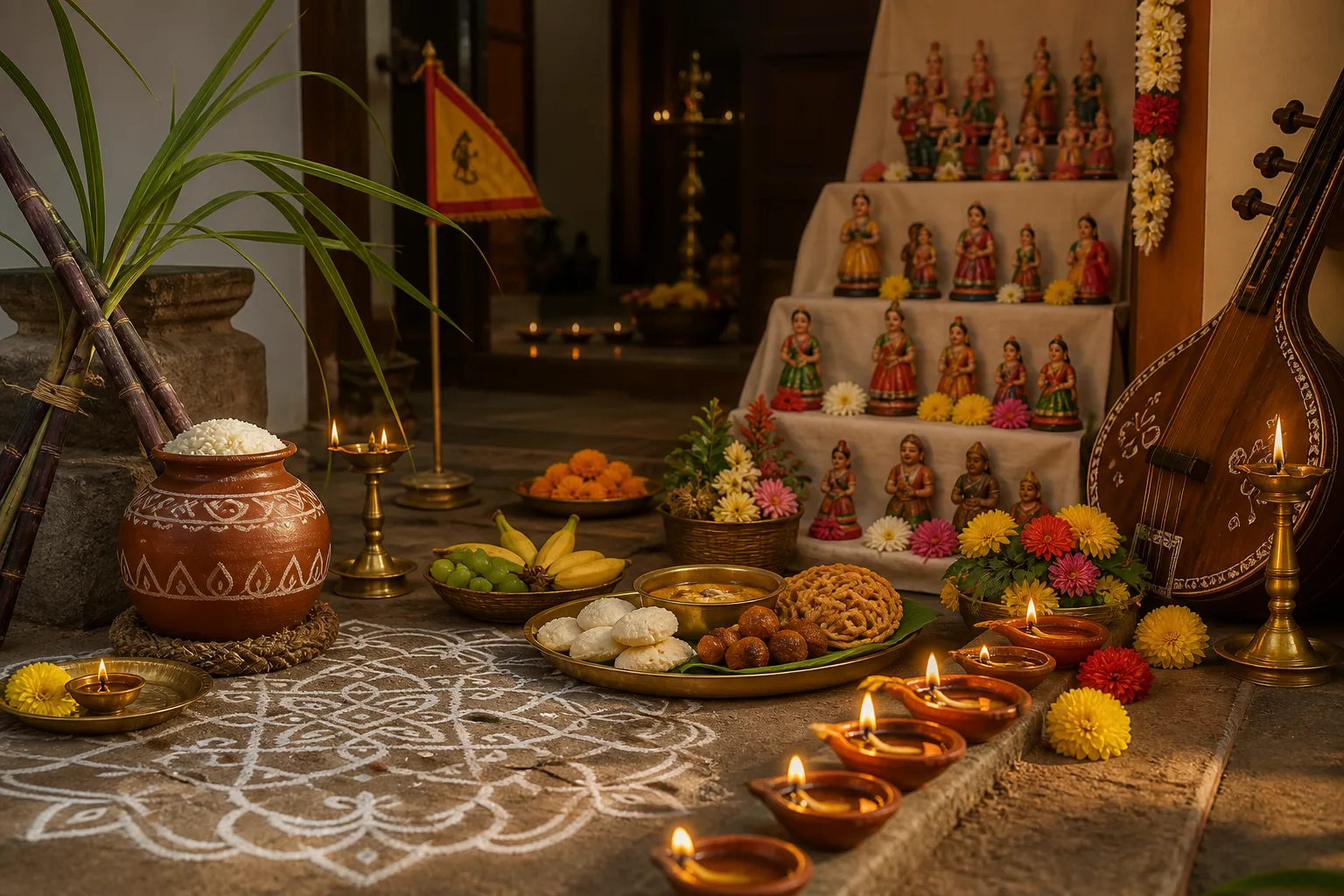
Beyond Pongal: How to Read Tamil Nadu's Festival Calendar
A cultural guide to the many clocks behind Tamil Nadu's festivals, from harvest and household practice to temple calendars and pilgrimage.
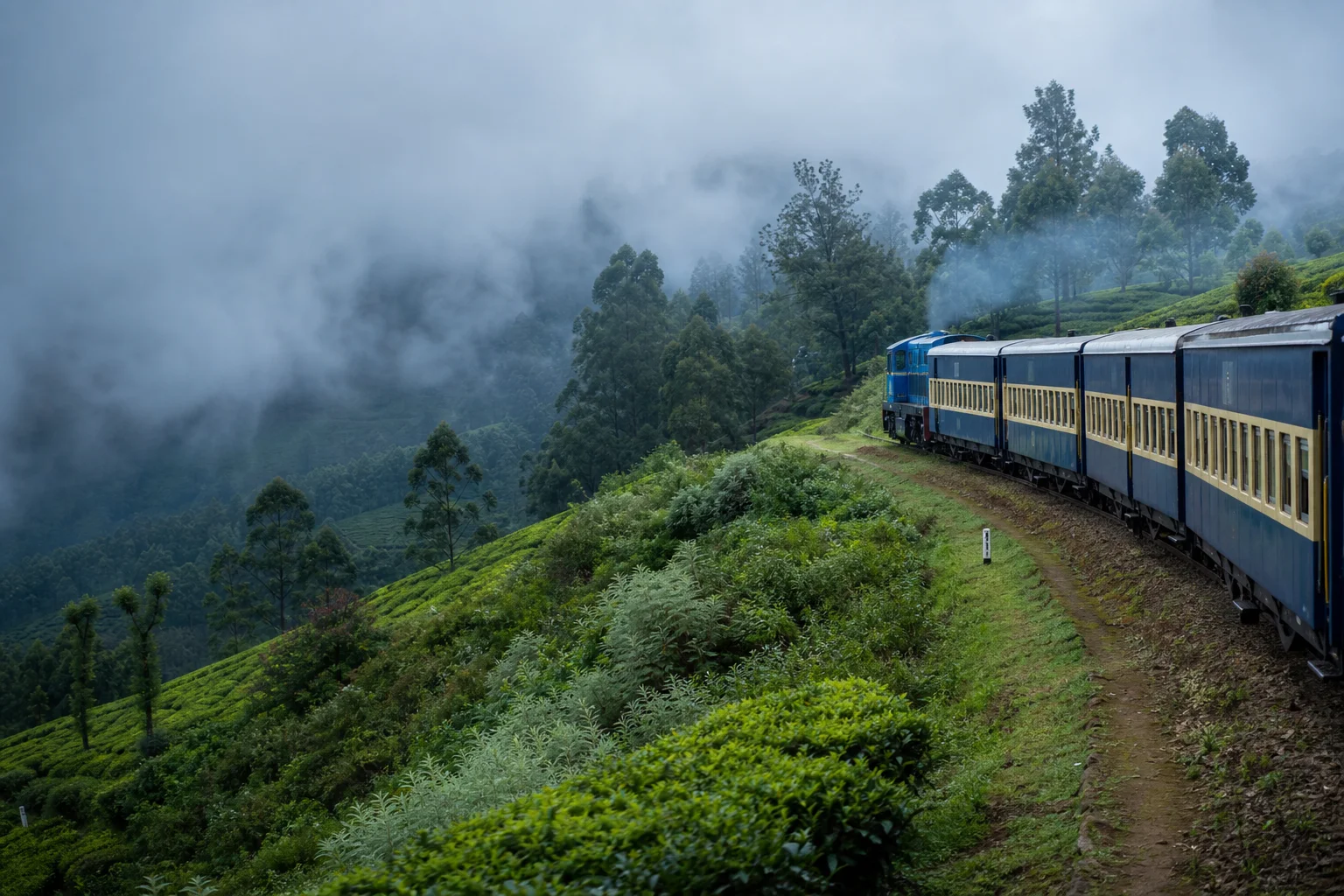
Tamil Nadu Festival Travel 2026: How to Plan Trains, Buses and Return Trips
A practical guide to Tamil Nadu's festival travel rush, with train, bus, Chennai-return, family and temple-event planning examples.
Frequently asked questions
When are the Tamil Nadu Lok Bhavan Navaratri celebrations in 2026?
The official booking page announced celebrations from 11 to 20 October 2026. Check that page again before traveling because entry, slots and visitor requirements can change.
Do I need a ticket to see a Golu display?
It depends on the host. A public institution may use free registration or timed entry, a cultural venue may issue tickets, and a household Golu requires an invitation. Verify with the organizer.
Can tourists visit temple Navaratri programs?
Many temple spaces welcome respectful visitors, but individual rituals, areas and photography may be restricted. Check the temple's current notice and follow staff directions.
What should I wear to a Golu or temple visit?
For a public cultural display, neat modest clothing is appropriate. Temples may have more specific expectations. Choose clothing that covers shoulders and knees and can accommodate footwear removal.
Is photography allowed at Golu displays?
Rules vary. Ask the host or venue, avoid flash near delicate displays and obtain consent before photographing people, children, rituals or private interiors.
What is Ayudha Puja?
It is an observance honoring tools, instruments, books, vehicles and the means of work and learning. Practices vary across households, institutions and workplaces.
How should I plan for October rain?
Keep one main event, use a simple return route, check the latest official weather and organizer notice, and choose an indoor fallback. Never treat an old event poster as a live status update.
Where can I find official temple festival dates?
Tamil Nadu's HR&CE festival calendar is a useful starting point. Confirm the current time and access rules with the named temple because the calendar is not a live operating-status guarantee.
Editorial attribution
Prepared and reviewed by My Tamil Nadu Editorial Desk. Modified 18 October 2026.