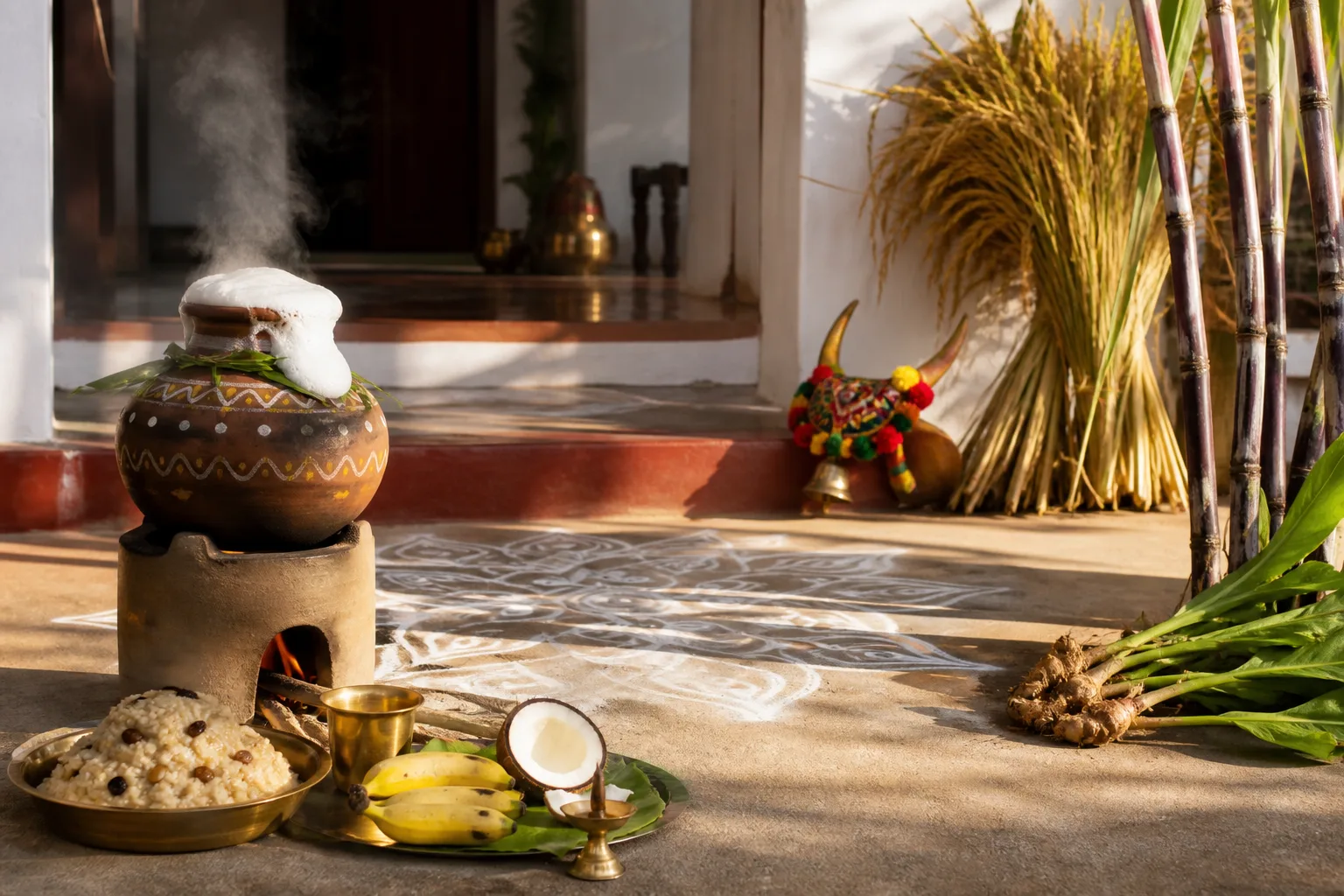
One festival name, several connected observances
Pongal is widely introduced as Tamil Nadu's harvest festival, but the singular label can hide a sequence. Official cultural summaries commonly describe Bhogi, Thai Pongal, Mattu Pongal and Kaanum Pongal as connected observances. Each shifts attention: renewal, the harvest and boiling pot, cattle and agricultural relationships, then visiting or gathering. A family may emphasise all four, combine practices, observe only some days or give them different names and meanings. The sequence is a useful map, not a rulebook for Tamil identity.
Timing is usually described in relation to January and the Tamil month of Thai, with Bhogi immediately before Thai Pongal. Exact Gregorian dates must be checked for the particular year because calendar relationships and official schedules are annual information. This article deliberately does not publish a future timetable. The permanent Festivals & Events hub and By Month system provide the right handoff for verified dates, while the cultural story can remain useful from one year to the next.
Sources for this section: Official Pongal overview, Tamil Nadu Pongal note.
Harvest gives the festival its vocabulary, not one uniform reality
Rice, sugarcane, turmeric, cattle, sunlight and the boiling pot recur in Pongal imagery because they connect food with cultivation and seasonal gratitude. Yet Tamil Nadu contains different soils, crops, irrigation systems, occupations and household economies. Even within an agricultural district, the timing and meaning of harvest may not fit one ceremonial picture. Some families work directly in farming; others inherit memories of cultivation, buy festival ingredients in a city market or understand Pongal primarily through family and Tamil cultural belonging.
Calling Pongal a harvest festival should therefore open questions rather than close them. Who grew the rice? Who cut and transported sugarcane? Who cleaned the house, drew the kolam, prepared fuel, cooked and served? Celebration depends on labour that is often made invisible in a polished photograph. Respectful interpretation acknowledges that agricultural gratitude, household work, market systems and modern migration can coexist. It avoids presenting a prosperous field and a full pot as the experience of every family.
Sources for this section: Official Pongal overview, Tamil Nadu rice cultivation.
Bhogi: renewal without romanticising smoke
Bhogi is commonly associated with the close of an old cycle and preparation for what follows. Homes may be cleaned, repaired or reorganised; thresholds may be washed and decorated; families may discard worn objects or mark renewal through prayer and gathering. Public descriptions often foreground bonfires. That image should not be converted into a requirement, especially where burning mixed waste creates smoke, toxic emissions or neighbourhood risk. Cultural continuity does not depend on repeating every visible practice in every setting.
A visitor can understand Bhogi through preparation rather than spectacle. Notice the work of making a threshold ready, the arrival of sugarcane or new pots, and the way ordinary domestic space becomes ceremonial. Do not photograph cleaning workers, household interiors or a private fire without permission. Follow current municipal and air-quality instructions rather than advice from an old travel article. Families can express renewal through cleaning, repair, responsible reuse, decoration or worship without one method invalidating another.
Sources for this section: Tamil Nadu Pongal note, Bhogi environmental guidance.
Thai Pongal: watching the pot without reducing the day to a picture
For many households, Thai Pongal centres on cooking newly harvested or newly purchased rice with milk, often in a decorated pot. When the mixture rises and overflows, the moment is associated with abundance and auspicious increase. Sugarcane, turmeric plants, sunlight, offerings and family greetings can frame the scene. Ingredients, vessels, fuel, prayer and location differ. A courtyard pot, an apartment kitchen and a community celebration may all carry meaning without being equivalent performances.
The pot is also a lesson in attention. Someone has measured, washed, lit, stirred, watched and cleaned; others may arrange offerings or prepare the wider meal. Visitors should wait for an invitation before entering the cooking area, tasting food or taking photographs. Do not ask a household to recreate the overflow for a camera. The value of the moment lies in participation and relationships, not in producing the standard image through which outsiders recognise Pongal.
Sources for this section: Official Pongal overview, Tamil Nadu rice cultivation.
The dish called pongal belongs to more than one table
The festival and the food share a name, but there is no single statewide festival menu. Sweet pongal often combines rice, milk and jaggery with ingredients such as ghee, pulses, cashew or dried fruit according to household practice. Ven pongal follows a savoury direction and belongs well beyond the festival calendar as a familiar meal or tiffin preparation. Other vegetables, pulses, sweets and regional dishes may join the meal, shaped by availability, religion, community, health and family history.
Food writing becomes careless when it turns one recipe into an authenticity test. A household using a pressure cooker, plant-based ingredient, smaller quantity or different garnish is not necessarily abandoning tradition; another may hold firmly to a ceremonial vessel and inherited method. Ask what a dish means in that setting instead of grading it. Dietary suitability also requires direct confirmation because names do not guarantee ingredients, cross-contact or preparation practice.
Sources for this section: Official Pongal overview.
Kolam turns the threshold into a changing field of practice
Kolam is a broader Tamil threshold-drawing tradition, not decoration invented for Pongal. During the festival season, designs may become larger or incorporate pots, sugarcane, cattle, sun forms and harvest motifs. Rice flour, stone powder and colour can be used in different contexts. Dots and looping lines can organise remarkably complex patterns, but mathematical interest should not detach the design from the person, household rhythm and threshold for which it was made.
To observe respectfully, stay off the drawing and avoid blocking a doorway while composing a photograph. Ask permission before recording the artist or a private threshold. A design may be renewed after weather or foot traffic; its temporary character is part of the practice, not damage that a visitor needs to prevent. The dedicated kolam guide provides a fuller account of daily practice, transmission and contemporary change than a Pongal story can hold.
Sources for this section: IGNCA Kolam inventory.
Mattu Pongal: cattle, care and agricultural relationship
Mattu Pongal directs attention toward cattle and their place in agricultural life. In some settings animals may be washed, their horns painted or decorated, garlanded, fed special food or included in worship and public procession. Practices vary with region, occupation and household. Mechanisation has changed the daily role of cattle in many places, while dairy, breeding, transport, memory and cultural identity create other relationships. A decorative description should not erase the work of daily feeding, handling and veterinary care.
Jallikattu is associated with the Pongal season particularly in parts of southern Tamil Nadu, but it is not a universal Mattu Pongal practice and should not stand for every community's relationship with cattle. It is governed by current law, regulation and event controls that an evergreen article cannot certify. Visitors should never approach, touch or provoke an animal for a photograph, enter a working enclosure without permission or treat a regulated event as an informal tourist performance.
Sources for this section: Official Pongal overview, Official Jallikattu overview.
Kaanum Pongal: relationships move into public space
Kaanum Pongal is often associated with visiting relatives, meeting friends, exchanging wishes and spending time outdoors. Beaches, riverbanks, parks, temple towns and family homes may become gathering places. The day can make kinship and mobility more visible than the domestic pot. It can also bring large crowds, traffic controls, waste pressure and restrictions around water or public space. A description of common outings is not evidence that a particular site will be open, quiet or safe in a future year.
Plan public-space visits through current municipal, police, transport and weather information. Carry food and water responsibly, use managed facilities and take waste away. Never enter a sea, river or reservoir because a festival photograph shows others doing so. For an invited family visit, ask about timing, footwear, food and photography rather than arriving with a rehearsed idea of what must happen. Kaanum means that Pongal's social geography can extend outward, not that every family follows one itinerary.
Sources for this section: Official Pongal overview.
Regional variation is part of the tradition
A Cauvery delta household, a Kongu-region farming family, a southern town, a Chennai apartment association and a Tamil family abroad may use the same festival name while arranging time, food, prayer and gathering differently. Local crop cycles, cattle traditions, dialect, caste, religion, occupation and migration all matter. Some differences are proudly narrated; others involve unequal histories and should not be flattened into colourful regional types for visitors.
Phrases such as many households, commonly associated and in some regions are therefore evidence controls. They make room for people whose Pongal is quieter, secular, religious in a different way, constrained by work or absent altogether. Cultural writing becomes stronger when it reports patterns without policing belonging. When someone describes their family practice, receive it as situated knowledge rather than asking whether it is the real Tamil version.
Sources for this section: Official Pongal overview, Tamil Nadu Pongal note.
Contemporary celebration carries both continuity and change
School events, office gatherings, apartment courtyards, television programmes, government celebrations and diaspora associations all create contemporary Pongal settings. They may enlarge kolam, stage music and dance, organise shared meals or use symbolic agricultural displays. These events can transmit language and memory, yet they also select which practices appear representative. A public programme is evidence of present cultural life, not a complete model of household or rural observance.
Digital circulation changes the festival too. Recipes, designs and greetings move quickly between regions and countries, while a single dramatic image can become detached from its origin. Sharing can sustain connection, but it can also reward unsafe fires, intrusive animal photography or claims that one date and practice are eternal. Check annual dates, credit creators, protect private family moments and avoid reposting a culturally specific scene as if it described all Tamil people.
Sources for this section: Tamil Nadu Pongal note, IGNCA Kolam inventory.
A respectful visitor follows the host, not a checklist
Pongal is easiest to appreciate when someone has invited you into a household or organised public event. Ask when to arrive, what area is private, whether footwear should be removed and when photography is welcome. Bring curiosity without demanding access to prayer, cooking or cattle. If food is offered, ask about ingredients only as needed and accept that a family may be busy. Paying an artisan, performer or food provider fairly is more respectful than requesting a staged tradition for exposure.
For independent travel, begin with established cultural venues and public information. Use the January guide for broad seasonal context, then verify dates and event details from current official sources. Avoid entering farms, cattle sheds or residential streets to find a more authentic scene. The four-day sequence already offers a richer understanding: renewal, gratitude, food, nonhuman work, kinship and adaptation. The goal is not to witness every element but to recognise why different families choose the elements they do.
Sources for this section: Official Pongal overview.
Language carries celebration without one compulsory script
Greetings, songs and the exclamation associated with the pot rising give Pongal an audible life as well as a visual one. Tamil words can hold associations that an English label such as harvest thanksgiving only partly conveys. Translation is useful for a visitor, but repeating a phrase without understanding the setting does not create participation. Listen first, ask how a host uses a term and accept regional pronunciation or family wording without correction.
Printed cards and social posts often standardise the festival into a few lines. Family conversation may instead move among Tamil, English and other languages, especially in cities and diaspora settings. That mixture is not evidence of cultural loss. Language survives through use, memory and adaptation. Credit a poem, song or design rather than treating shared festival circulation as permission to copy an artist's work.
Sources for this section: Official Pongal overview.
Sources & Further Reading
These authoritative references support the historical, geographic, or seasonal context in this story. Current conditions and operating details still require a fresh official check.
- Pongal Festival · Ministry of Tourism, Government of India
- Government of Tamil Nadu public information on the four-day Pongal festival · Department of Information and Public Relations, Government of Tamil Nadu
- Kolam: Ritualistic Threshold Drawings and Designs of Tamil Nadu · Indira Gandhi National Centre for the Arts
- Jallikattu (Bull Taming) · Ministry of Tourism, Government of India
- Rice Agritech Portal · Tamil Nadu Agricultural University
- Tamil Nadu Pollution Control Board · Tamil Nadu Pollution Control Board
Related Stories
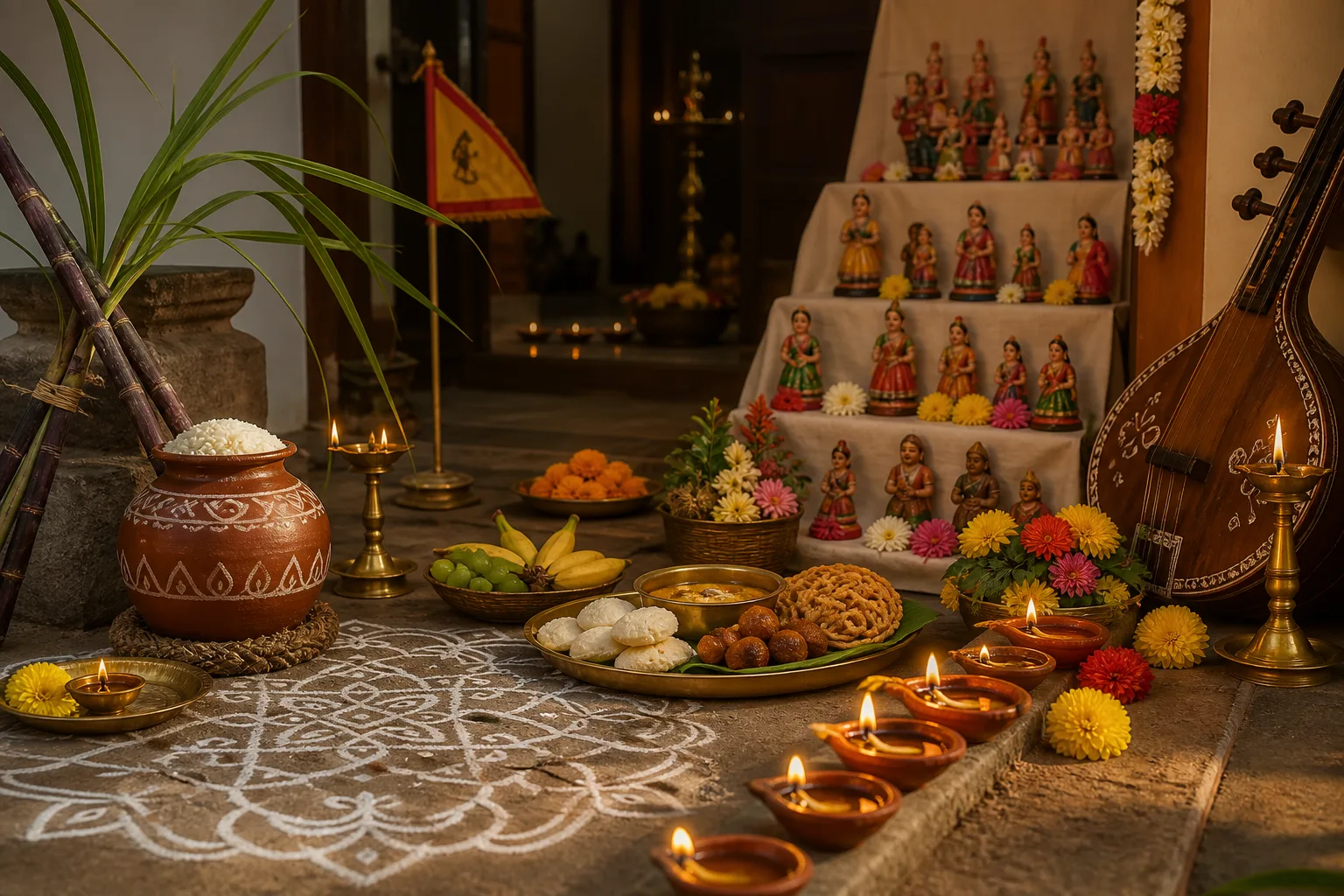
Beyond Pongal: How to Read Tamil Nadu's Festival Calendar
A cultural guide to the many clocks behind Tamil Nadu's festivals, from harvest and household practice to temple calendars and pilgrimage.
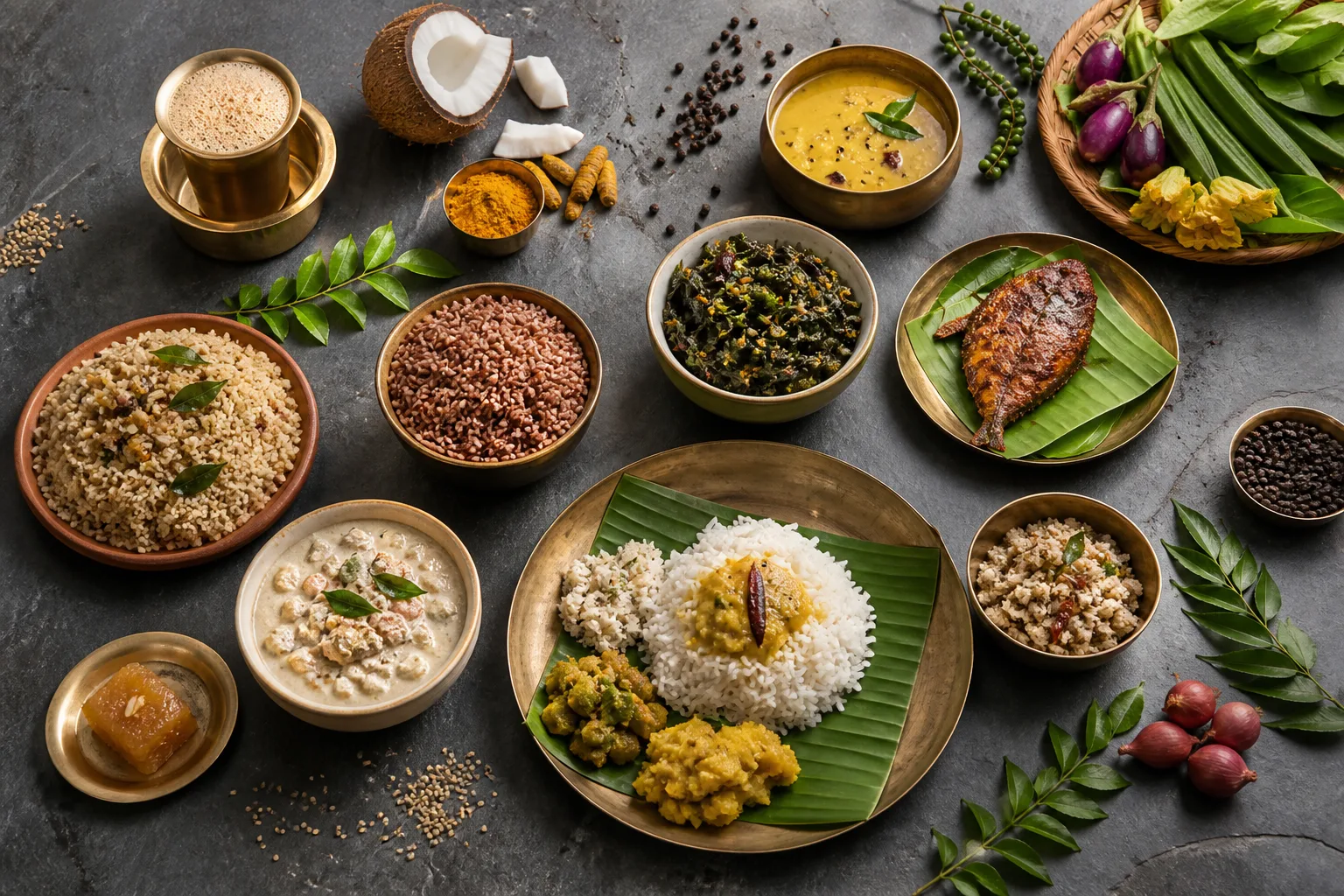
A Food Journey Through Tamil Nadu's Regional Cuisines
Travel across Tamil Nadu through the relationships among region, crop, technique, household memory, migration, worship, and changing city life.
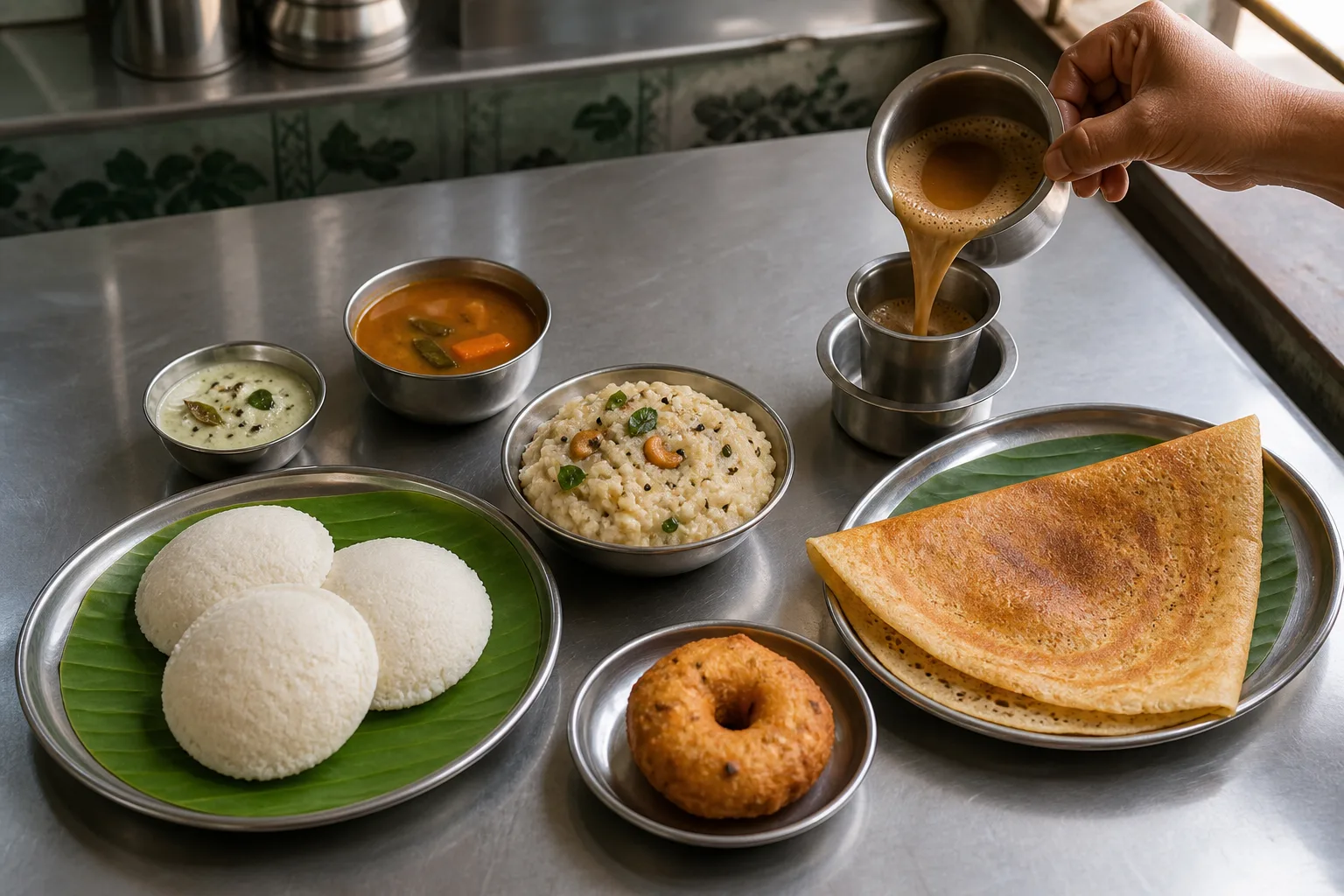
Tamil Nadu Tiffin Culture: Idli, Dosa, Pongal and the Morning Table
Read Tamil Nadu's morning table through fermented batter, quick service, home preparation, public eating and the many meanings of tiffin.
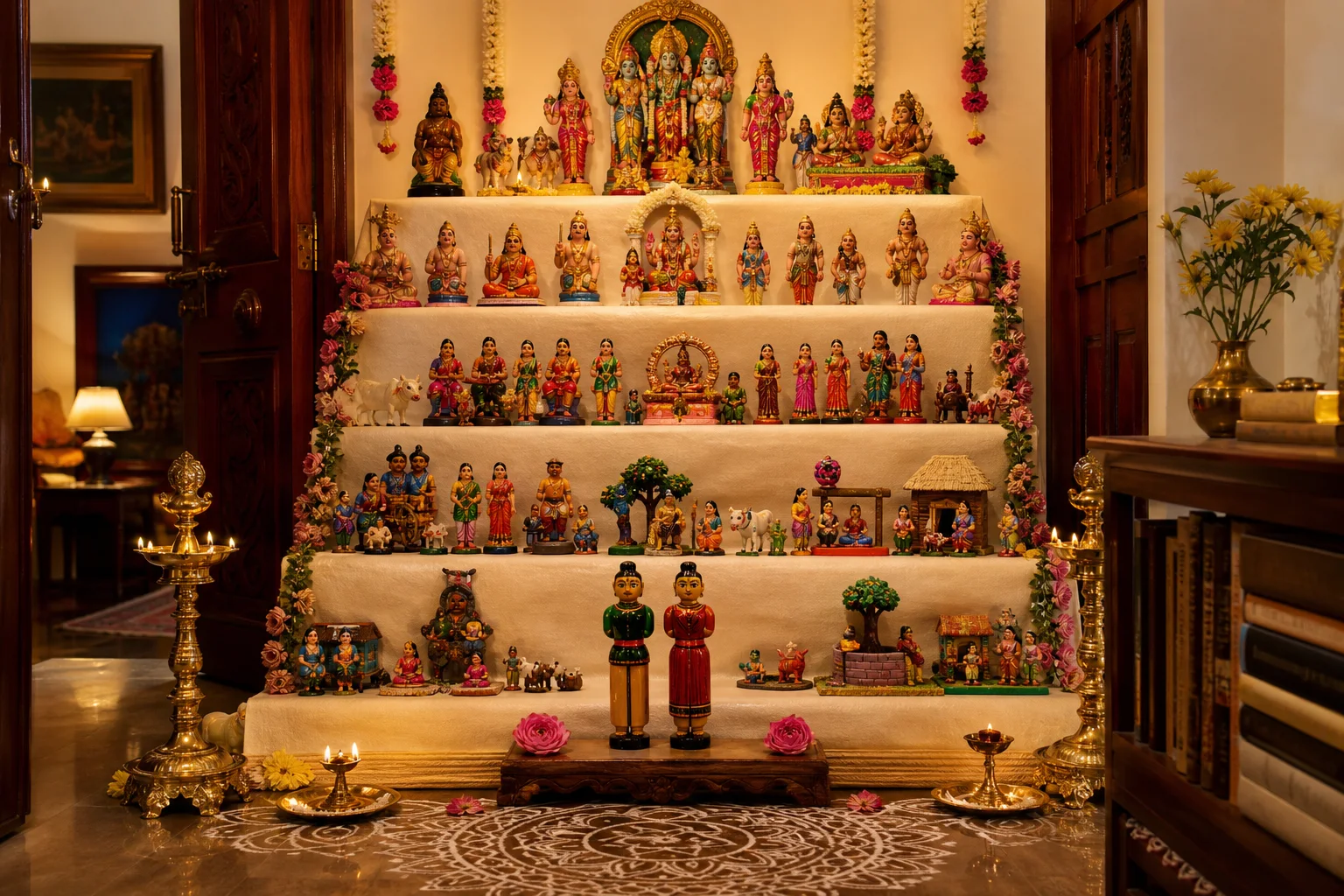
Navaratri Golu in Tamil Nadu: Reading the Stories on the Steps
A respectful guide to the dolls, household creativity, visits, music, food and changing narratives that make Golu more than a decorative display.
Frequently asked questions
Is Pongal always on the same Gregorian dates?
It is typically observed in January around the Tamil month of Thai, but exact Gregorian dates and official schedules should be checked for the relevant year.
Does every family celebrate all four days in the same way?
No. Bhogi, Thai Pongal, Mattu Pongal and Kaanum Pongal provide a common sequence, but emphasis, names, ritual, food and participation vary.
Is jallikattu part of every Pongal celebration?
No. It is regionally associated with the season, especially in parts of southern Tamil Nadu, and is not a universal Mattu Pongal practice.
Can visitors join a household Pongal celebration?
Only by invitation. Follow the host's guidance about timing, footwear, food, prayer, animals and photography.
Editorial attribution
Prepared and reviewed by My Tamil Nadu Editorial Desk. Modified 20 August 2026.