Begin with the campus before choosing an object
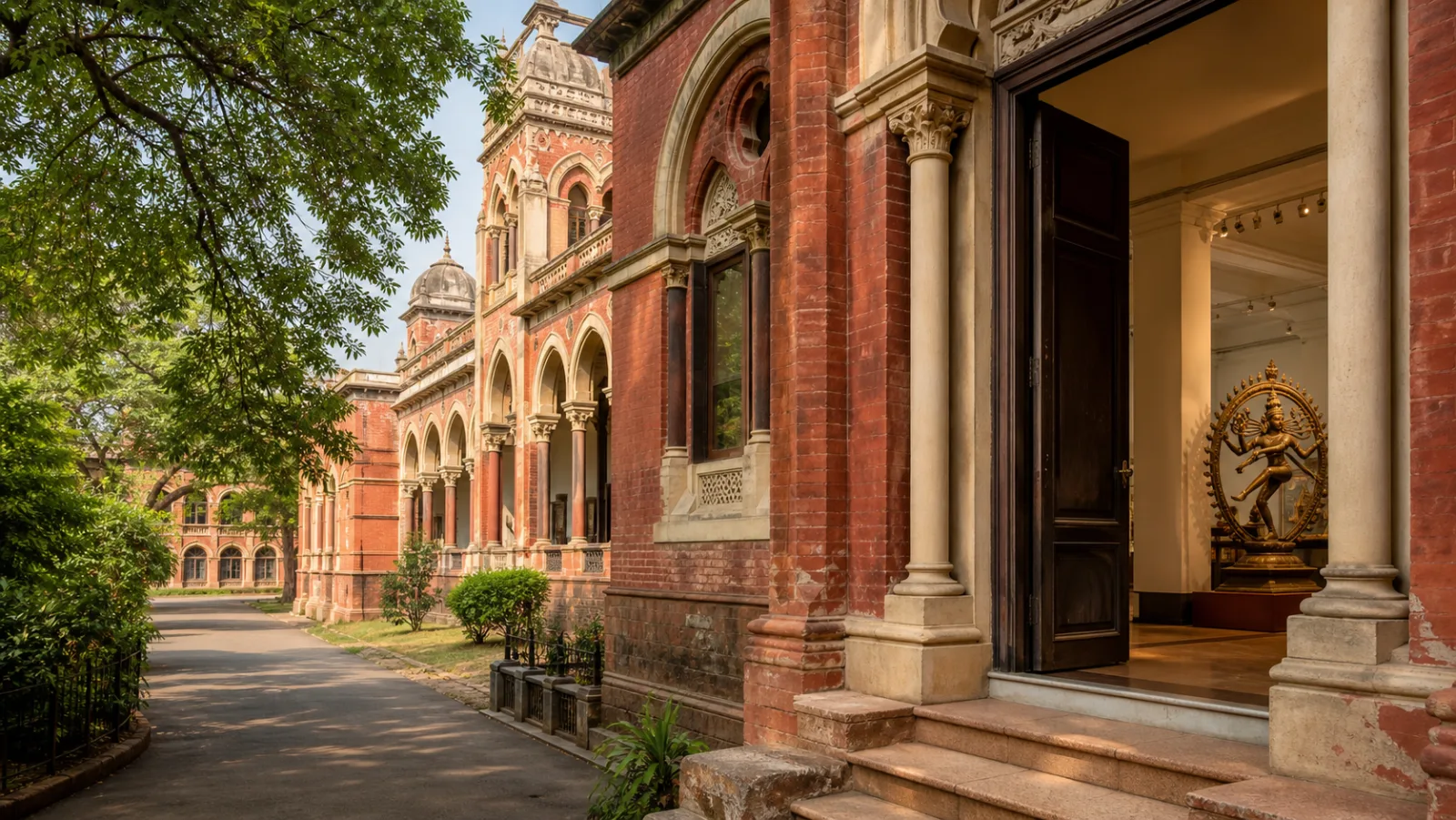
The Government Museum traces its foundation to 1851 and its later move to the Pantheon premises in Egmore. The institution grew through several buildings rather than one purpose-built hall, so the visitor encounters a campus shaped by different dates, architectural decisions and collection needs. The red-brick structures, theatre, gallery blocks and neighbouring library belong to that institutional history.
A museum campus is not a neutral container. Colonial administration, learned societies, state collecting, excavation, transfer and post-independence interpretation all influenced what entered the collection and how it was classified. Architecture can be admired while still asking who commissioned it, which public it originally served and how its use changed.
Pause at the orientation information before walking into the first open door. Gallery availability can change during renovation or conservation, and an old floor plan may no longer describe the visit accurately. Use current museum notices to choose a realistic route rather than treating every listed building as guaranteed access.
Sources for this section: Chennai Museum history, Museum galleries and campus.
Choose a question, not a greatest-hits checklist
The official museum description spans archaeology, numismatics, art, anthropology, geology, botany, zoology and children's collections. A first visit becomes more coherent when it follows a question: how scripts changed, how bronze images were made and used, how excavated objects acquire context, or how a state museum organised knowledge over time.
Trying to see every room can turn important material into visual noise. Select one principal collection and one contrasting section, then leave time to read dates, find-spots, accession information and display notes. The object that answers a question is more memorable than the object reached only because a guide called it famous.
Current official information identifies which galleries are open or temporarily unavailable, but that status remains live. This article does not reproduce an opening list because renovation, safety and conservation needs can change it. Confirm on the museum website or directly with the institution shortly before travel.
Sources for this section: Museum galleries and campus, Museum education.
Read archaeology as context, not treasure
The museum's Archaeological Section describes collections of sculpture, architectural pieces, inscriptions, copper plates and industrial arts. Such objects are evidence only when material, find-place, date, inscription, use and later movement are kept together. Beauty and historical value are not opposites, but beauty alone cannot explain an object.
A carved stone removed from a structure is no longer encountered in its original architectural sequence. A copper-plate grant is both a crafted metal object and a written record requiring language, script and political context. An excavated pot or tool gains meaning through its layer and associations, not because it looks older than the case beside it.
Museum labels necessarily compress scholarly debate. Separate what the label directly states from what you infer, and use the museum's publications when a chronology or identification matters. Do not convert one displayed object into a claim about an entire dynasty, community or period.
Sources for this section: Archaeological Section, Museum publications.
A bronze has lives before and after the display case
The museum is especially known for South Indian metal images, but a gallery visit should distinguish image, material, iconography, inscription, provenance and museum history. A sacred image may have been commissioned for worship, carried in procession, stored, transferred, recovered or collected before becoming a museum object. Those stages are not interchangeable.
Look for stance, gesture, attributes, surrounding forms and casting detail, then read the identification rather than guessing a deity from one familiar feature. Date ranges and dynastic labels are scholarly frameworks, not signatures left by every maker. Comparisons across cases can reveal variation more clearly than searching for one perfect type.
The presence of sacred imagery in a museum does not remove the need for respect. Follow photography rules, avoid touching cases or barriers and do not stage devotional gestures that obstruct other visitors. Continue to a living temple only with an understanding that museum viewing and worship operate under different conditions.
Sources for this section: Archaeological Section, Museum galleries and campus.
Notice labels, conservation and what is absent
A display is an argument made through selection. Case order, lighting, label length and category headings influence what seems central. Ask whether objects are arranged by date, material, region, religion or style, and notice when an older classification remains visible beside newer interpretation.
Closed rooms, covered cases and removed objects can indicate conservation or building work rather than neglect. Museums balance public access with humidity, light, security, structural safety and research. A visitor is not entitled to bypass a barrier because an online photograph shows an object that is currently unavailable.
Absence can also be intellectual. Makers, excavators, donors, source communities and routes of acquisition may receive unequal attention. Note the unanswered question and consult the museum's education and publication resources instead of filling the gap with an attractive but unsupported story.
Sources for this section: Museum education, Museum publications.
Plan one careful visit and leave a reason to return
Allow enough time for orientation, one main collection, a break and one secondary section. Large museums create physical and visual fatigue. A shorter route with notes is often more useful than rushing through every open building, especially for children, older visitors or anyone who needs regular seating.
Confirm current hours, holidays, tickets, gallery access, photography rules and accessibility directly with the museum. Carry only what is permitted, keep food outside collection spaces and use quiet conversation near guided groups. Public transport and road conditions should be checked through current services rather than assumed from distance alone.
Before leaving, record one object, one label question and one campus feature to investigate. The aim is not to complete the museum but to build a method: identify the evidence, read its museum context, acknowledge what is uncertain and connect it back to the places and communities from which it came.
Sources for this section: Museum galleries and campus, Museum education.
Sources & Further Reading
These authoritative references support the historical, geographic, or seasonal context in this story. Current conditions and operating details still require a fresh official check.
- Chennai Museum · Government Museum, Chennai
- About Us · Government Museum, Chennai
- Archaeology · Government Museum, Chennai
- Education · Government Museum, Chennai
- E-Books · Government Museum, Chennai
Related Stories

Madras Day Beyond One Date: How to Walk Chennai's Layers
A practical way to turn Madras Day curiosity into year-round neighbourhood reading without reducing Chennai's history to one fort or founding story.
Keezhadi Beyond the Headline: How to Read an Excavation
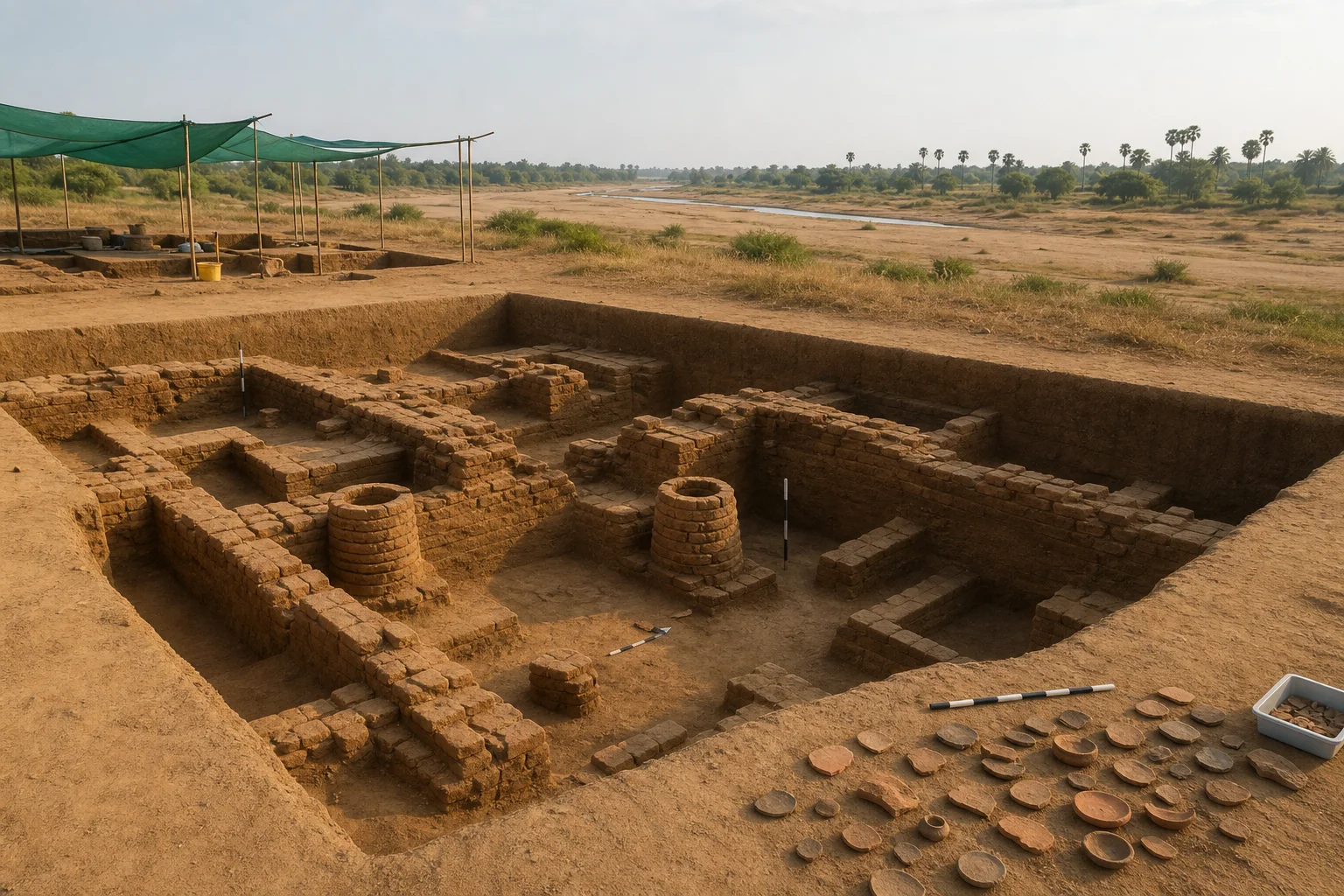
A practical guide to what excavated walls, pottery, ring wells, inscriptions and laboratory dates can tell us, and where interpretation must remain cautious.
Adichanallur to Korkai: Reading the Tamiraparani Archaeology Landscape
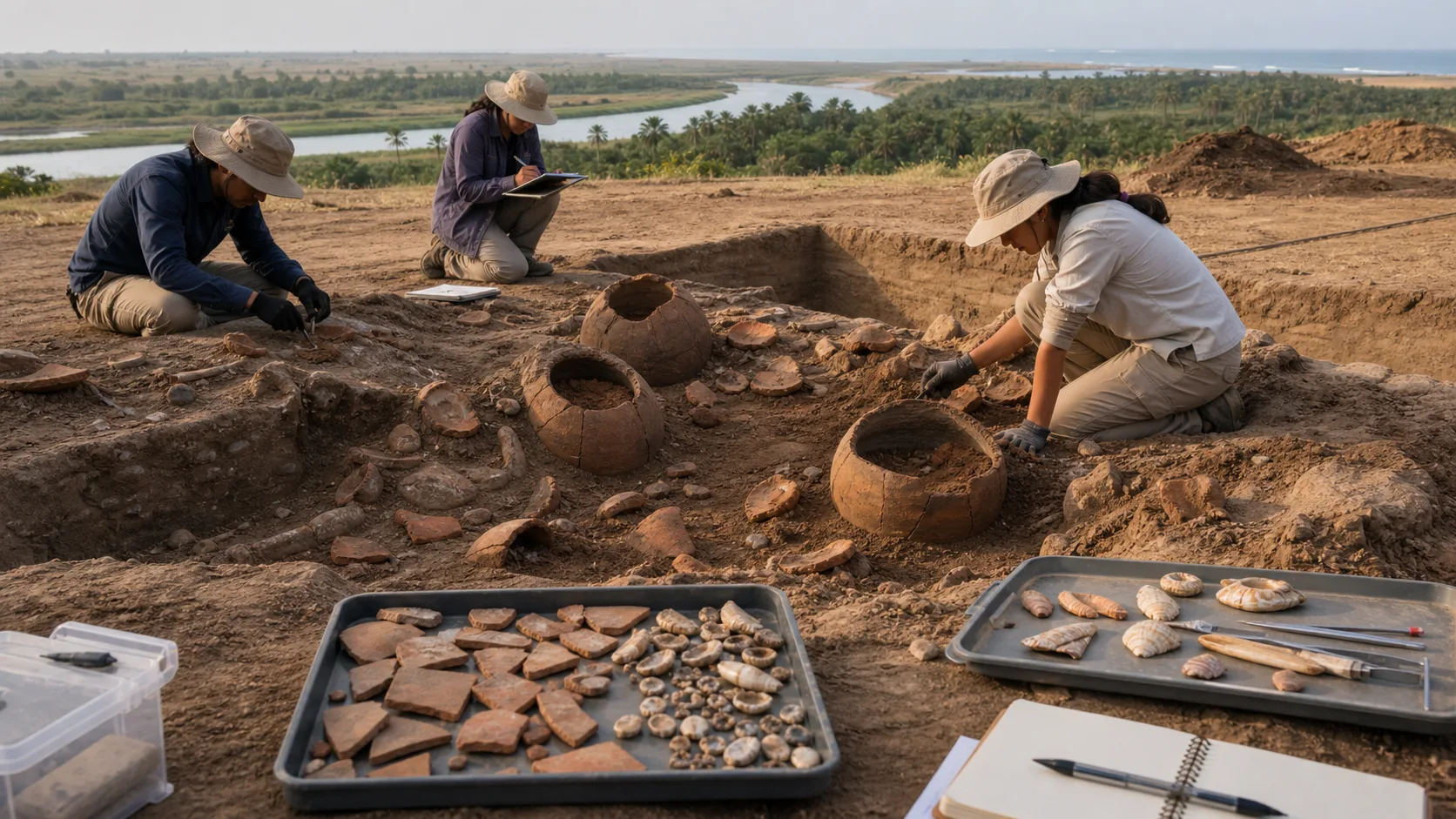
An evidence-first guide to a river-to-coast archaeological landscape where burial, habitation, craft and maritime activity answer different questions.
Frequently asked questions
Can every Government Museum gallery be visited now?
Do not assume so. Confirm current gallery access, renovation status, hours and tickets directly with the museum.
Is the museum only about Tamil Nadu archaeology?
No. It is a multipurpose museum with several collection fields, though South Indian archaeology and bronzes are major strengths.
How much should a first-time visitor try to see?
Choose one main collection and one contrasting section, with time to read labels and rest.
Editorial attribution
Prepared and reviewed by My Tamil Nadu Editorial Desk. Modified 1 September 2026.