Why Keezhadi keeps returning to public attention
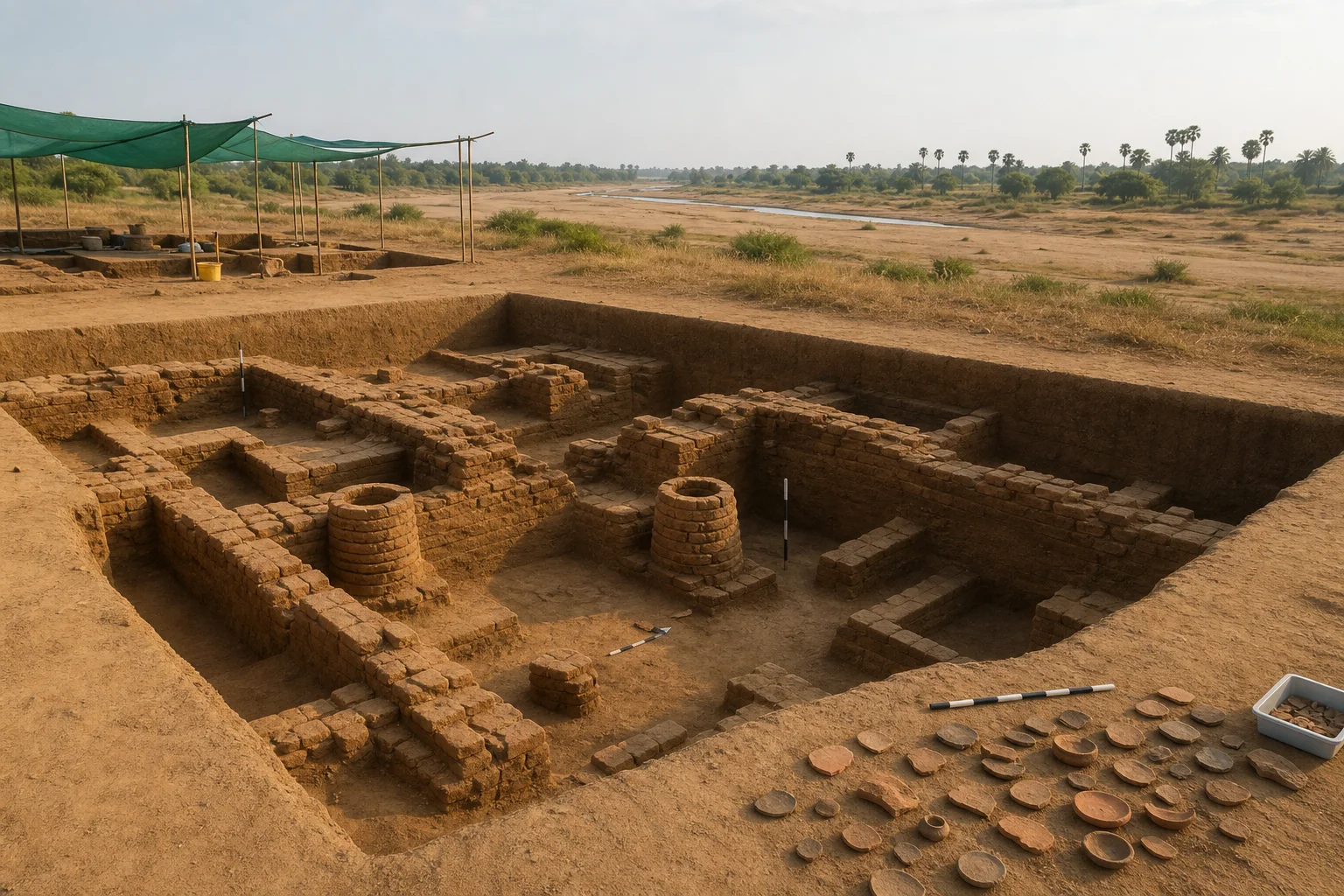
Keezhadi, also written Keeladi in some official material, lies in Sivaganga district within the wider Vaigai river region. Excavation by the Archaeological Survey of India and later the Tamil Nadu Department of Archaeology brought brick structures, pottery, craft material, inscribed sherds and other finds into a major discussion about early historic settlement in Tamil Nadu. The importance comes from patterns across the site, not from one spectacular object.
Public discussion often moves faster than archaeological publication. A trench photograph may be shared as proof of a complete city, a potsherd may be detached from its layer, or one date may be applied to everything recovered nearby. The more useful question is not whether a headline sounds exciting. It is how the evidence was found, recorded, analysed and compared with other sites.
Sources for this section: Keezhadi, State excavations.
Begin with context, not the isolated object
Archaeologists excavate by controlled units and record where material appears horizontally and vertically. A bead, roof tile or inscribed potsherd becomes more informative when its layer, neighbouring features and relationship to a floor, wall, pit or drain are known. Objects moved by later activity can complicate that relationship. This is why a display case can show the find, while an excavation report explains its context.
Brick alignments and ring wells also need restraint. A wall establishes construction activity, but its complete function may require more exposure and comparison. A ring well can contribute to understanding water use or drainage, yet its role depends on setting. Official notices describing exposed features are valuable first records; they are not substitutes for a final synthesis of every season.
Sources for this section: Keezhadi, Keezhadi ring wells.
A laboratory date belongs to a sample and context
Radiocarbon dating estimates the age of once-living material. At Keezhadi, the state archaeology department reports accelerator mass spectrometry results from carbon samples and relates them to the site's cultural sequence. A date applies first to the tested sample. Archaeologists then assess whether its layer and association support a broader chronological argument.
The result should not be turned into an exact birthday for a wall, script or entire settlement. Each claim has a different evidential path. Ceramic sequence, stratigraphy, inscriptions, material analysis and comparable sites can strengthen or challenge an interpretation. Good reporting states what was tested, the range or context involved and which conclusion is an inference.
Sources for this section: Keezhadi, Radiocarbon laboratory.
Inscribed sherds require both language and archaeology
Tamil-Brahmi inscribed pottery is central to public interest in Keezhadi. The state department reports inscribed sherds from its excavations and places them within a discussion of literacy and early historic society. Reading that evidence requires palaeography, language study and archaeological context together. A short personal name or mark does not by itself reveal the beliefs, politics or complete literary life of a settlement.
Graffiti marks and letters must also be distinguished. Specialists examine form, direction, firing stage and parallels before proposing a reading. Online images may be reversed, incomplete or detached from scale. Readers should prefer catalogues and reports that identify the object and excavation context, and should treat confident social conclusions as interpretation rather than direct transcription.
Sources for this section: Keezhadi, ASI excavation archive.
The strongest story is often ordinary life
Pottery, spindle whorls, beads, iron objects, animal remains, floors and water-related structures can illuminate production, consumption and daily organization. No single category tells the whole story. Craft evidence does not automatically prove a particular political capital, and imported or imitated ceramic forms need specialist identification before they become evidence for a trade route.
Keezhadi is especially useful when read with nearby and comparable sites across the Vaigai region. Settlement archaeology asks how places related through movement, resources and exchange. Administrative boundaries today do not define ancient cultural systems, but they still matter for responsible travel: Keezhadi is in Sivaganga district, while Madurai is a nearby city context rather than the site's district.
Sources for this section: Keezhadi, Archaeology policy note.
Visit as a learner, not a collector
Use the museum or officially presented site interpretation to understand excavated material. Do not enter active trenches, touch exposed features or remove even an apparently common sherd. Archaeological context is destroyed when an object is displaced. Photography rules, museum hours, excavation visibility and transport arrangements are current information and must be checked with the responsible authority close to travel.
When a new claim appears, look for the publishing institution, excavation season, sample or object, analytical method and whether a full report is available. It is reasonable for interpretations to change as evidence grows. Archaeology becomes more interesting, not less, when uncertainty is visible and when the reader can follow the path from soil layer to historical argument.
Sources for this section: Keezhadi, State excavations.
Sources & Further Reading
These authoritative references support the historical, geographic, or seasonal context in this story. Current conditions and operating details still require a fresh official check.
- Keezhadi · Tamil Nadu Department of Archaeology
- Excavations · Tamil Nadu Department of Archaeology
- Ring-wells Exposed in the Ongoing Archaeological Excavation at Keezhadi · Tamil Nadu Department of Archaeology
- Tourism, Culture and Religious Endowments Department Policy Note · Government of Tamil Nadu
- Excavation and Exploration Archive · Archaeological Survey of India
- Radiocarbon Dating Laboratory · Birbal Sahni Institute of Palaeosciences
Related Stories

Beyond the Cholas: Exploring Pallava Heritage Across Tamil Nadu
Follow Pallava heritage from Kanchipuram's sacred city to Mamallapuram's coastal stone workshop, learning to compare form, material and evidence.

A Journey Through Chola Heritage in Tamil Nadu
Follow a thoughtful route through three living Chola temple landscapes, learning to read architecture, inscriptions, patronage, and place without rushing.
Adichanallur to Korkai: Reading the Tamiraparani Archaeology Landscape
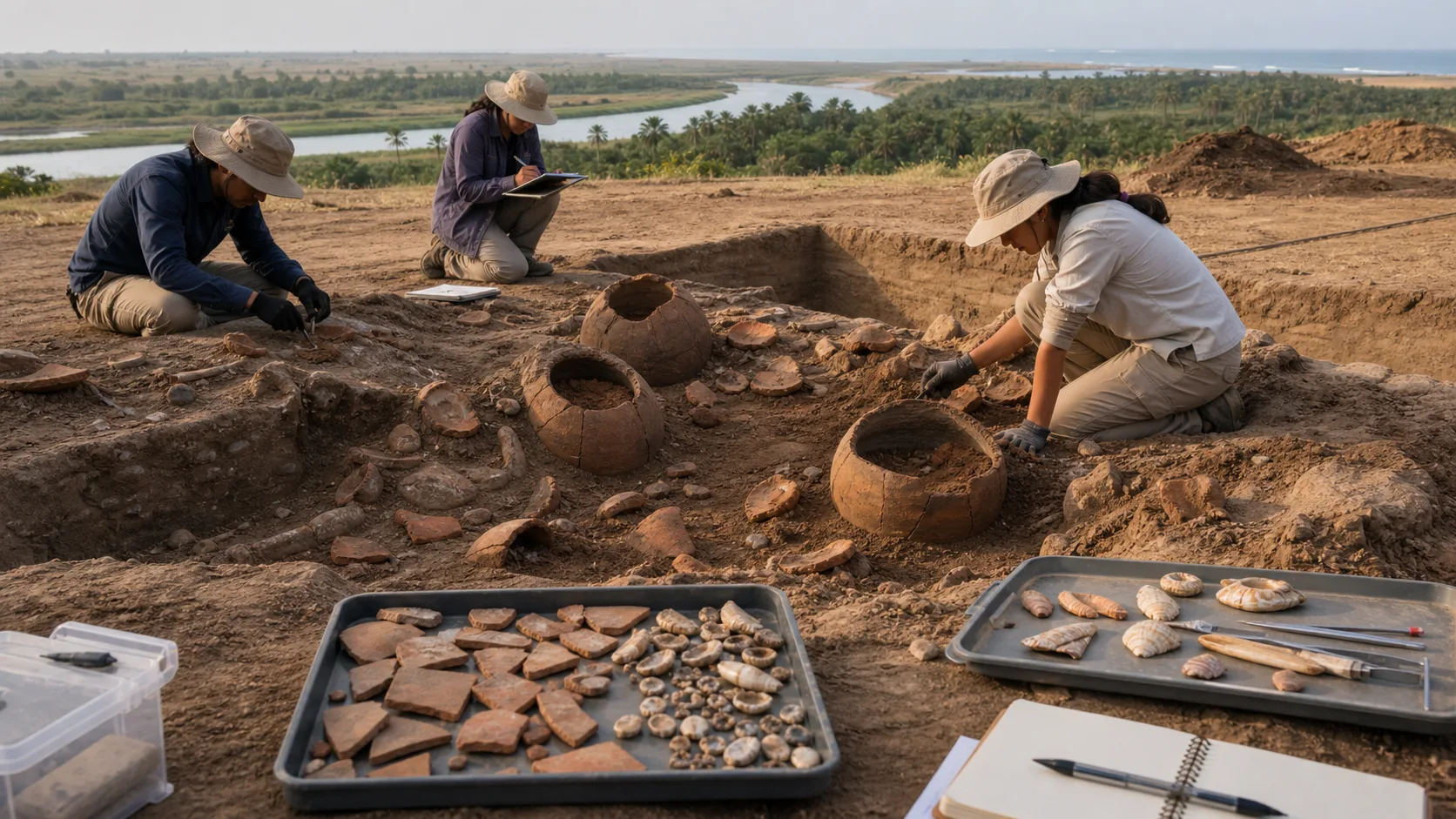
An evidence-first guide to a river-to-coast archaeological landscape where burial, habitation, craft and maritime activity answer different questions.

Chennai Government Museum: Read a Campus of Collections
A first-visit method for reading the Egmore museum as an evolving campus of architecture, archaeology, bronzes, inscriptions and public education.
Sittannavasal: Read a Jain Hill Through Paint and Stone
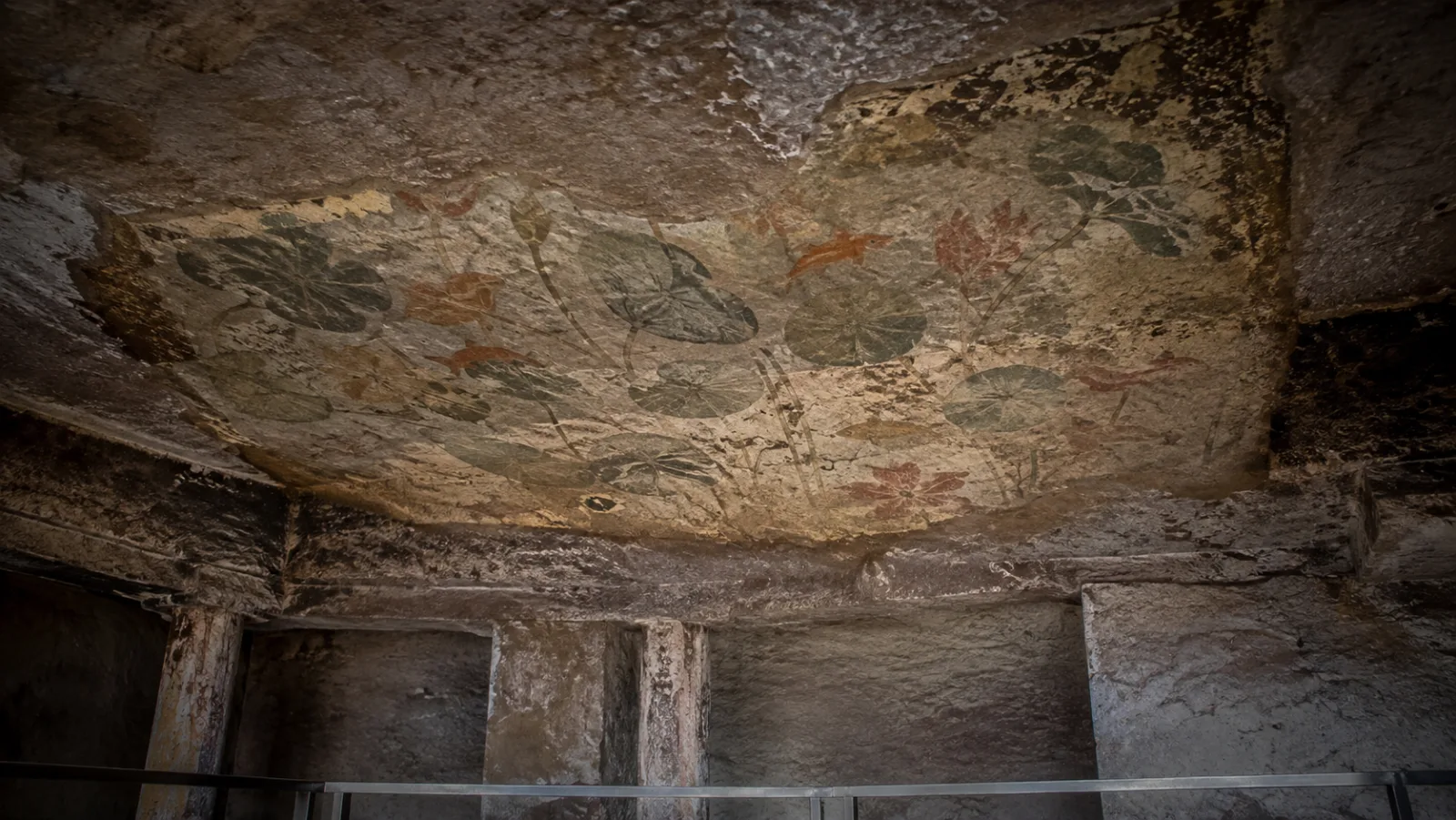
A conservation-first guide connecting Sittannavasal's Jain cave, fragmentary paintings, rock beds and inscriptions without forcing them into one date.
Kondagai Lake: How Mud Records Monsoon and Landscape Change
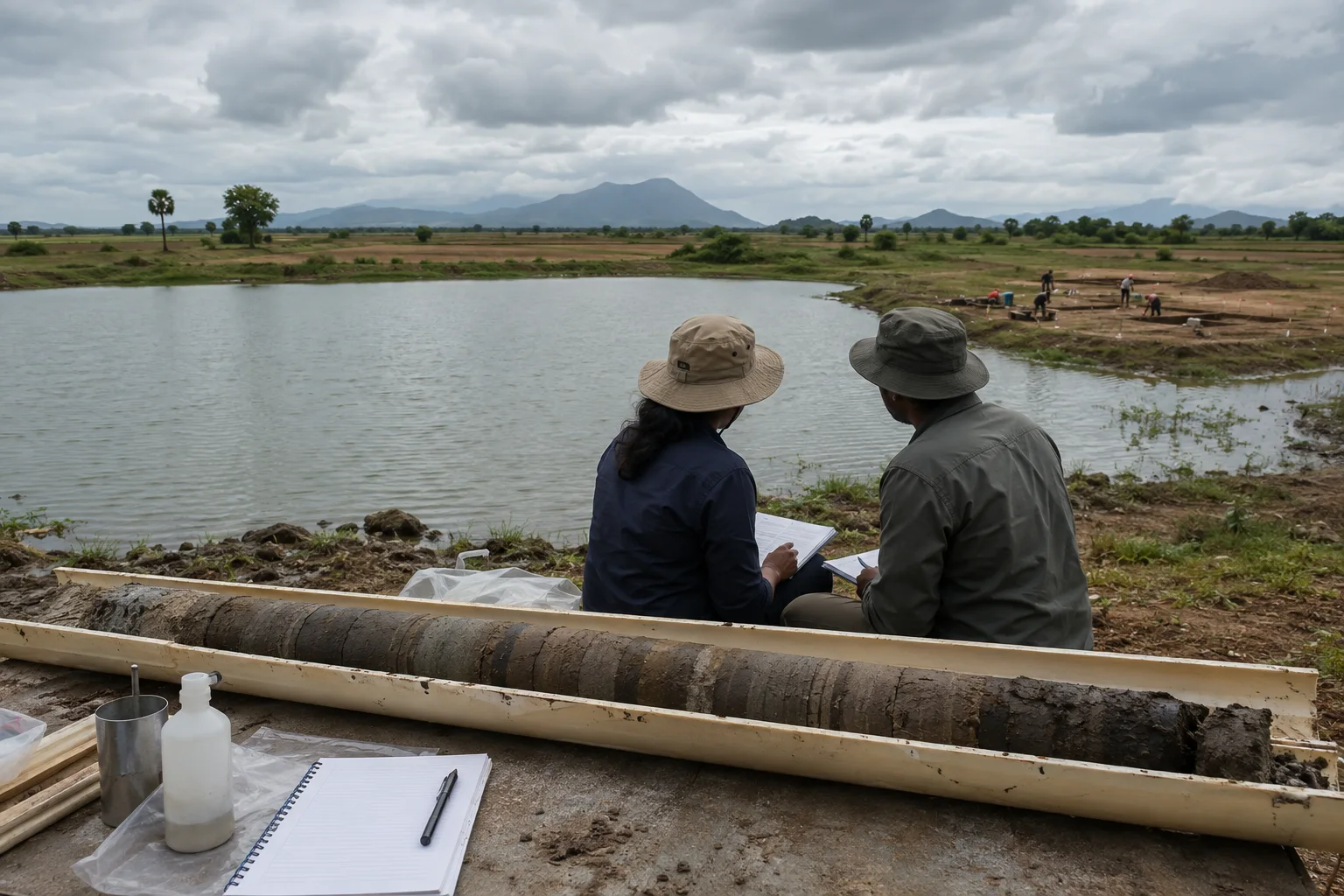
An evidence-first guide to reading a dated lake-sediment record without turning environmental correlation into an archaeological conclusion.
Frequently asked questions
Are Keezhadi and Keeladi different places?
No. Both spellings are used in English for the same archaeological site; this site uses Keezhadi while linking to official sources that may use Keeladi.
Does one carbon date date every object at Keezhadi?
No. A laboratory result dates its sample; the wider interpretation depends on stratigraphy, association and other evidence.
Can visitors see an active excavation?
Do not assume it. Excavation access, museum hours and photography rules require current confirmation from the responsible authority.
Editorial attribution
Prepared and reviewed by My Tamil Nadu Editorial Desk. Modified 26 August 2026.