Choose the first base before building the wish list
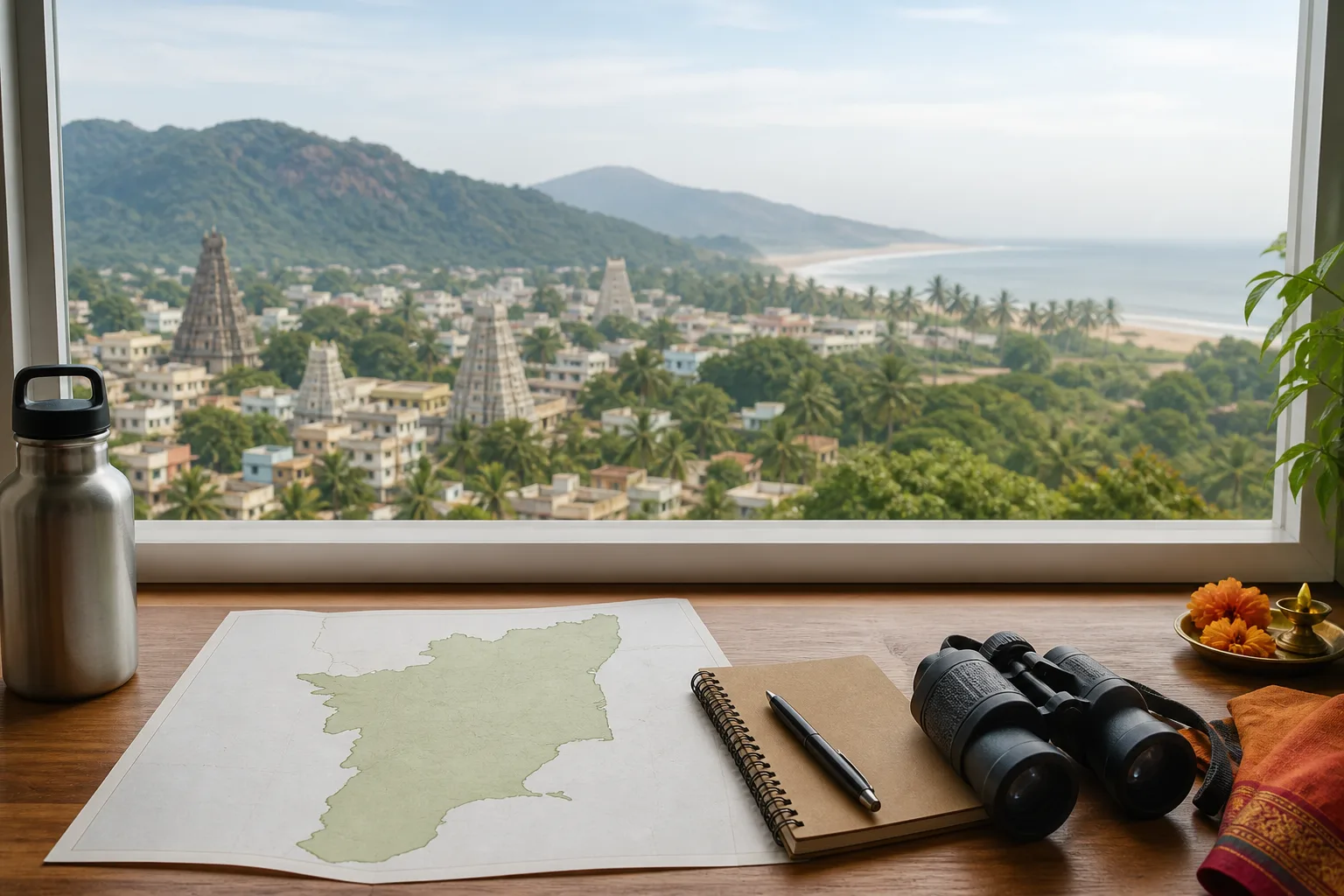
Tamil Nadu is large enough that a list of famous places can conceal the real shape of a journey. Chennai, Madurai, Coimbatore and Tiruchirappalli are not interchangeable dots. Each gives access to a different cluster of cities, sacred places, food traditions, landscapes and transport connections. Choosing where the trip begins and where several nights can be spent is therefore more useful than ranking twenty attractions.
This base-first method complements the existing story that helps travellers choose among heritage, temples, hills, coast and food. Here the question is geographic: which gateway can carry most of your priorities with the fewest disruptive moves? The answer depends on arrival point, nights available, mobility, weather tolerance and what can remain for another journey.
Sources for this section: Official Tamil Nadu overview.
Set a transfer budget in nights, not imagined road hours
Count the nights that can be slept in each base and the number of times luggage must move. A short trip with three hotels can lose attention to checkout, station access, waiting and orientation even when each line on a map looks reasonable. This article does not publish travel times because traffic, schedules, stops, road work and individual pace are current variables. It asks whether each transfer earns the disruption it creates.
For a brief visit, one base with one optional outward day is often more legible than a statewide circuit. A longer visit can support a second region when the connection is meaningful. Keep arrival and departure days honest, include recovery and avoid making every later booking depend on an exact earlier arrival. Current rail, bus, flight and local transport information belongs to the responsible operator.
Sources for this section: Official Tamil Nadu overview.
Choose Chennai for metropolitan layers and two distinct outward directions
Chennai supports a first trip centred on museums, neighbourhoods, temples, colonial and civic heritage, coast and metropolitan food. From that base, the Pallava coast around Mamallapuram offers one coherent heritage direction. Kanchipuram offers a different inland direction shaped by sacred-city and textile contexts. They can both fit a longer journey, but a short visit does not become more complete by forcing them together.
Choose Chennai when a major urban base is part of the experience rather than merely an airport. Keep beach activity separate from permission to enter the sea, and keep monument or museum hours outside an evergreen plan. The Attractions and Things to Do hubs can reveal several starting points without requiring a fixed itinerary.
Sources for this section: Official Tamil Nadu overview, IMD Chennai.
Choose Madurai for a living temple city and the deep south
Madurai works when the journey's centre is a dense living city where sacred space, markets, palace history, museums and southern food traditions can be read together. The city itself deserves time before an outward direction is added. Depending on interests and current access, a later extension might point toward archaeology, Chettinad, the far south or Rameswaram, but these are different journeys rather than interchangeable add-ons.
A temple-led base requires respect for worship and changing arrangements. Current entry, dress, queue and photography rules must come from the institution. Madurai also helps a first visitor understand that food does not sit outside history: work hours, pilgrimage, markets, migration and household traditions shape what appears in public service.
Sources for this section: Official Tamil Nadu overview, HR&CE Temple Guide.
Choose Coimbatore or Tiruchirappalli for a regional gateway
Coimbatore can anchor a western journey that combines a working city and Kongunadu context with one carefully chosen hill or nature direction. Ooty, Anamalai and other upland names should not be treated as equally simple excursions: roads, elevation, forest boundaries, weather and current permissions differ. Wildlife is never guaranteed, and a forest-oriented day must remain conditional on official access.
Tiruchirappalli can anchor a central journey through the Cauvery landscape, Srirangam and nearby heritage directions. It can also support a later connection toward Thanjavur without turning every Chola site into one hurried day. Choose between western nature and central sacred-heritage depth according to the trip's main question, not because both gateways appear on a statewide checklist.
Sources for this section: Tamil Nadu Forest Department, Official Tamil Nadu overview.
Match one outward direction to the experience you cannot replace
Heritage travellers might pair Chennai with Mamallapuram or Tiruchirappalli with Thanjavur. Temple-focused travellers can stay longer in Madurai, Kanchipuram or the Cauvery region rather than counting shrines across the state. Food-led visitors gain more by comparing markets, tiffin, meals and regional context within two places than by collecting a dish in every city. Hills, wildlife and coast need greater weather and access flexibility.
Ask what would still make the trip worthwhile if one exposed activity were unavailable. A city with museums, sacred places, food and neighbourhood context is resilient. A journey dependent on one waterfall, safari, beach entry or viewpoint is brittle. Trip Types can help express the desired style, while Attractions and Things to Do reveal established public options around the chosen base.
Sources for this section: Tamil Nadu Forest Department, ASI visitor guidance.
Use season to refine the direction, not choose it alone
A month name cannot tell you whether one coast, hill road, forest activity or city day will work. Tamil Nadu's coast, plains, delta, far south and western uplands respond differently to heat, rain, wind and visibility. First choose a journey that makes geographic sense, then compare the relevant By Month guidance and current forecast. Seasonal context is a question set, not a booking guarantee.
Keep current information in its own layer. Weather warnings, transport status, temple arrangements, forest access, monument controls and event programmes can change after publication. My Tamil Nadu Today provides transparent handoffs, but the named official authority remains the final check. If conditions undermine the outward direction, stay with the base rather than replacing it with an unofficial route.
Sources for this section: IMD Chennai.
Use a map to understand clusters, not to certify a route
Maps are excellent for seeing whether chosen places form a cluster and whether a second base creates a genuine new region. They are less reliable as evidence of access. A line can cross a road that is unsuitable, restricted or affected by present conditions; a place pin can mark private, sacred or protected land. Use the map to simplify geography, then verify movement and entry independently.
Begin with the site's reviewed map references and hand the chosen places to current navigation only near travel. Keep a written accommodation address, transport details and an offline fallback. Do not preserve a generated route as though it were permanent. A first trip benefits from confidence, but good confidence comes from knowing which decisions remain open.
Sources for this section: Official Tamil Nadu overview.
Commit to less and understand more
A useful first journey can be summarised in four choices: one gateway, one transfer budget, one outward direction and one fallback that remains meaningful. Put the highest-priority experience near the base rather than at the end of a fragile chain. Leave space for meals, worship, rest and ordinary city movement. Those intervals are not empty; they often reveal the place more clearly than another attraction.
The Trip Planner can organise the chosen interests and days, but it should not overrule geography or live conditions. Return to permanent destination guides for depth and official sources for current facts. Tamil Nadu does not need to be completed on a first visit. The best decision framework is one that makes a return feel possible rather than making the present trip feel insufficient.
Sources for this section: Official Tamil Nadu overview.
Sources & Further Reading
These authoritative references support the historical, geographic, or seasonal context in this story. Current conditions and operating details still require a fresh official check.
- Tamil Nadu · Ministry of Tourism, Government of India
- Regional Meteorological Centre Chennai · India Meteorological Department
- Temple Guide · Hindu Religious and Charitable Endowments Department, Government of Tamil Nadu
- Visitor guidance for protected monuments and sites · Archaeological Survey of India
- Forests and wildlife administration · Tamil Nadu Forest Department
Related Stories

Choosing Your First Tamil Nadu Trip: Heritage, Temples, Hills or Coast?
A decision framework for choosing the kind of Tamil Nadu journey you want before choosing a long list of destinations.
Tamil Nadu in the Late Southwest Monsoon: Where to Travel in August and September
A weather-aware way to choose between Tamil Nadu's hills, heritage cities, waterfalls, and coast during August and September.
A Heritage Weekend from Chennai: How to Choose a Meaningful Route
A practical way to shape a heritage weekend from Chennai around one good question, a measured pace, and a choice between city and nearby extensions.
Ooty, Coonoor or Kotagiri: How to Choose a Nilgiris Base
A practical, non-ranking comparison of the Nilgiris' three best-known hill towns for first visits, slower stays, rail interest and landscape-led travel.
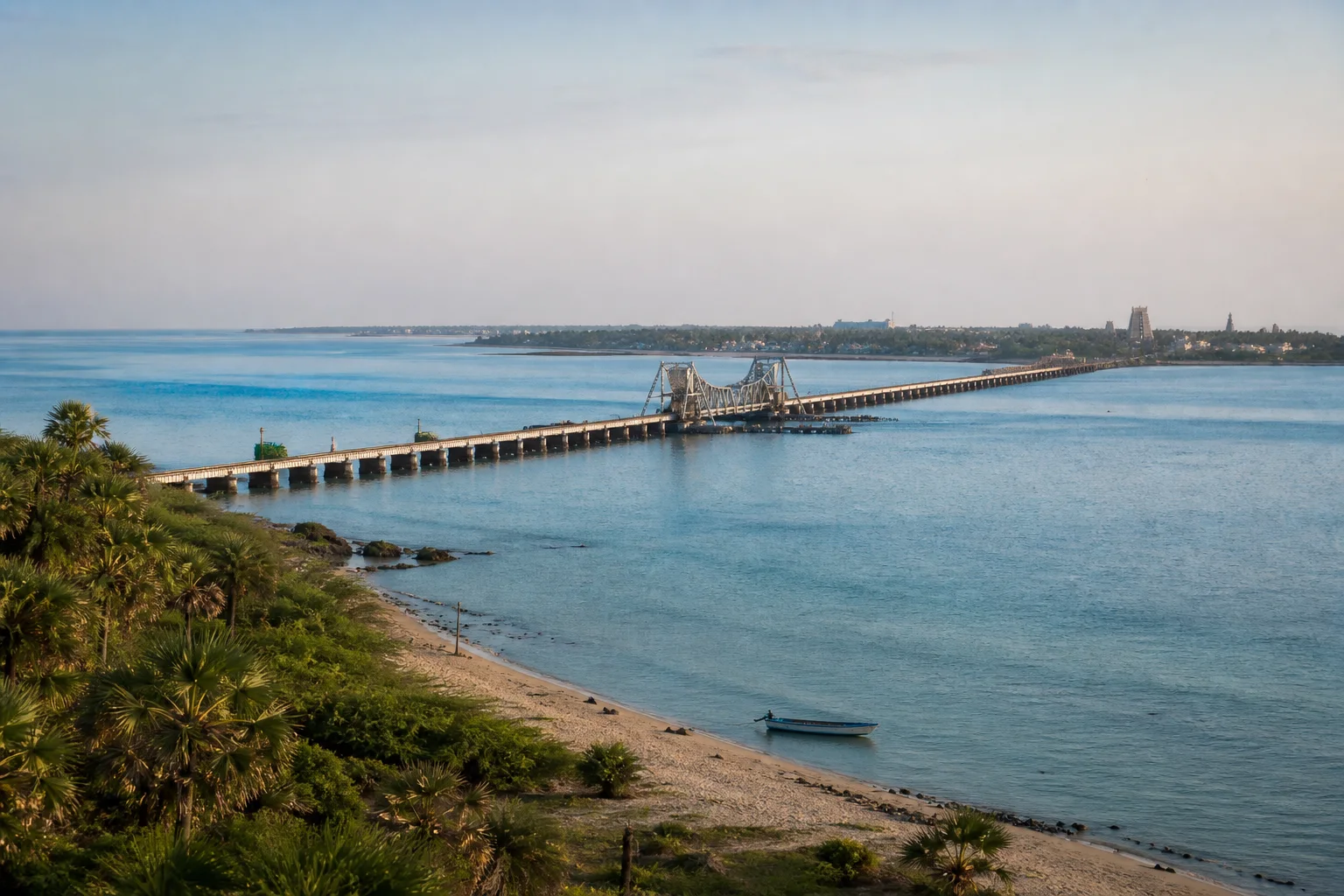
Rameswaram as an Island: Temple, Pamban, Dhanushkodi and the Sea
A connected reading of Rameswaram's sacred town, mainland crossing, exposed eastern coast and protected marine context rather than four unrelated stops.
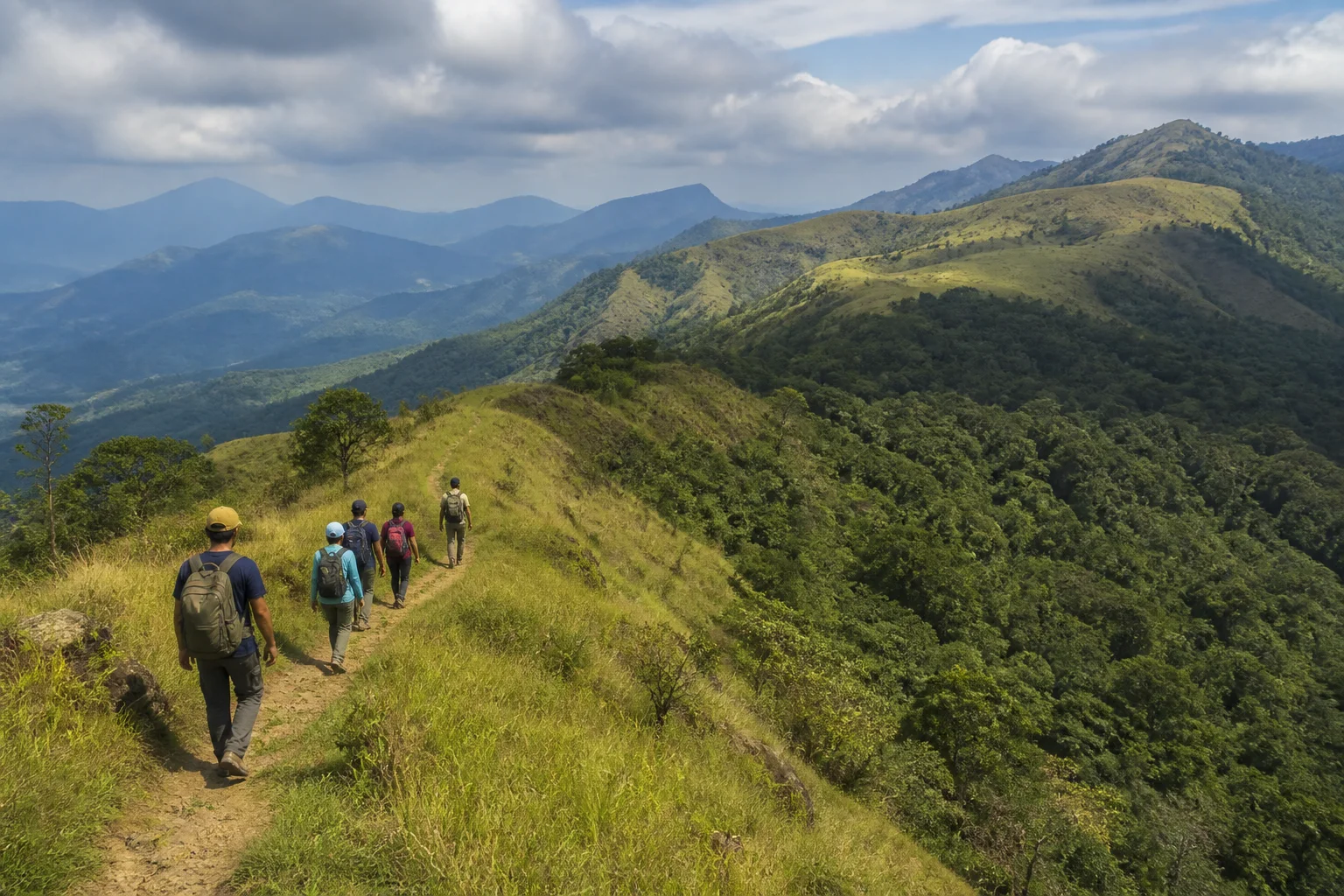
Trek Tamil Nadu: How to Choose Your First Official Trail
A decision guide for matching fitness, terrain and expectations to the official guided trekking framework in Tamil Nadu's forest landscapes.

Velankanni: Reading a Pilgrimage Town Beside the Sea
A first-visit guide to the relationship between the Shrine Basilica, pilgrim movement, town services and an exposed Bay of Bengal coast.

Madras Day Beyond One Date: How to Walk Chennai's Layers
A practical way to turn Madras Day curiosity into year-round neighbourhood reading without reducing Chennai's history to one fort or founding story.

Staying in Chettinad: Reading a Mansion from the Courtyard
How to choose a mansion stay for its architecture, setting and stewardship rather than treating Chettinad as a generic luxury backdrop.
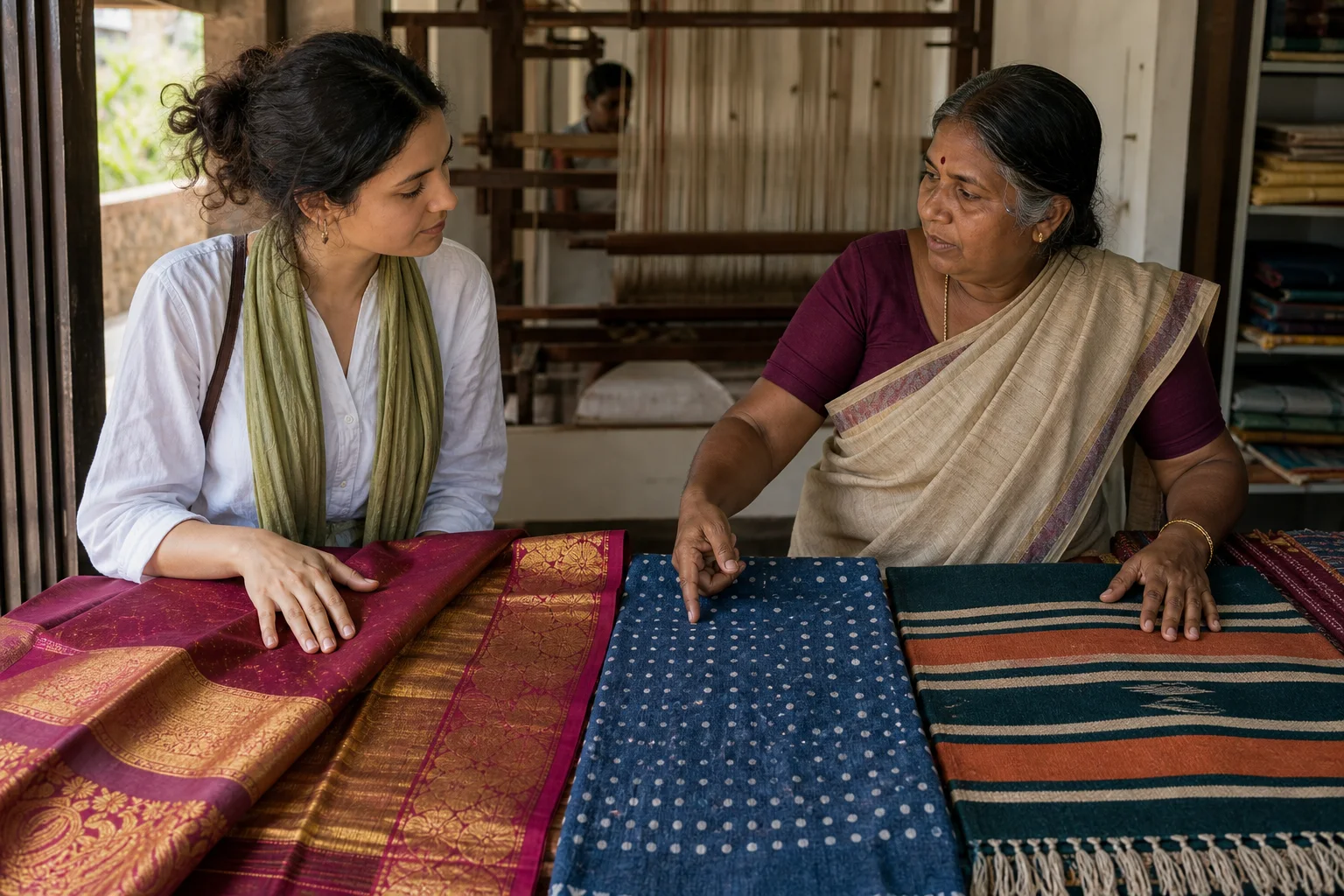
Buying Tamil Handloom: Ask About Fibre, Place and Proof
A practical festival-season guide to asking what a textile is, where it comes from and what a label actually proves before price or colour takes over.
Editorial attribution
Prepared and reviewed by My Tamil Nadu Editorial Desk. Modified 20 August 2026.