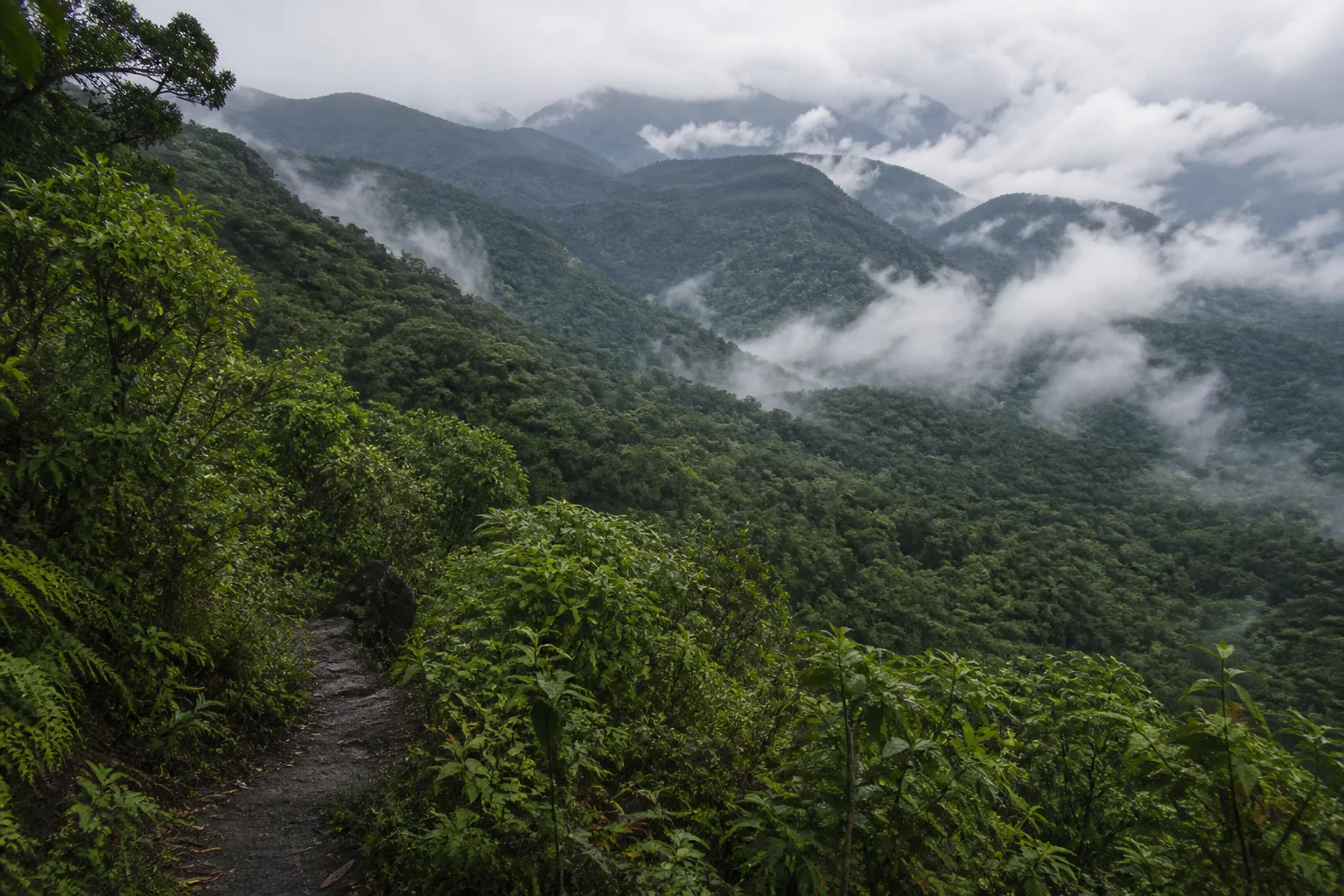
What the Union Budget actually announced
The Union Budget 2026-27 placed Podhigai Malai in a national tourism proposal for ecologically sustainable trekking and hiking. Paragraph 69 of the Finance Minister's speech named mountain trails in northern India and nature-trail development at Araku Valley in the Eastern Ghats and Podhigai Malai in the Western Ghats. A Ministry of Tourism release issued the same day repeated that direction and connected it with sustainable tourism, skills and local economic opportunity.
That is the verified news hook. The Budget speech does not publish a route map, trail length, carrying capacity, project authority, environmental appraisal, completion date, ticket price or opening notice for Podhigai. It does not turn the name of an ecologically important mountain landscape into unrestricted visitor access. Those details would need later plans, approvals and operating notices from the responsible authorities.
A March 2026 Press Information Bureau account of an official event in Madurai again referred to ecotourism initiatives around Podhigai Malai and Lake Pulicat. Repetition at a public event confirms policy attention, but it still is not evidence that a particular trail is ready. For travellers, the accurate tense remains proposed until an implementing agency publishes something more specific.
Sources for this section: Union Budget speech, Tourism Budget release, Madurai infrastructure address.
Podhigai belongs to a larger mountain system
Podhigai, also written Pothigai, refers to the southern Western Ghats landscape associated with the Agasthyamalai ranges. Place names, cultural meanings and geographic usage do not always follow one administrative boundary. A responsible travel explanation therefore starts with the mountain system rather than drawing an invented line around a single tourism object.
UNESCO describes the Agasthyamala Biosphere Reserve as a 3,500-square-kilometre landscape spanning parts of Tamil Nadu and Kerala. On the Tamil Nadu side it includes tropical forest ecosystems in Tirunelveli and Kanniyakumari districts; the wider reserve also extends into Thiruvananthapuram and Kollam districts in Kerala. UNESCO's Man and the Biosphere recognition dates to 2016.
This biosphere-reserve designation is different from the Western Ghats World Heritage property, even though they overlap in conservation geography. UNESCO's World Heritage listing is a serial property made up of defined components. Its Agasthyamalai sub-cluster includes the Kalakkad-Mundanthurai Tiger Reserve component in Tamil Nadu. A general reference to Podhigai should not be used to imply that every slope, town or proposed path has identical legal status.
Sources for this section: Agasthyamala Biosphere Reserve, Western Ghats World Heritage, Western Ghats component table.
Protected-area context must shape any future trail
The Tamil Nadu Forest Department's 2025-26 policy note records Kalakad-Mundanthurai as a tiger reserve spanning Tirunelveli, Tenkasi and Kanniyakumari districts, with notified core and buffer areas. The reserve's own official site describes vegetation ranging from dry thorn and deciduous forest to wet evergreen forest at higher elevations, and it emphasizes the river systems originating in the reserve.
These facts explain why ecological sustainability cannot be decorative wording. A route near a protected landscape can affect wildlife movement, water, soil, waste, fire risk, noise and local livelihoods. Route selection, group size, season, guide systems, safety arrangements and monitoring would all need to be grounded in site-specific evidence and the applicable legal framework.
They also explain why this article does not publish unofficial coordinates, shortcuts or sensitive wildlife locations. The Budget proposal should be judged later by whether it protects ecological limits, uses lawful access and benefits communities without turning conservation areas into a promise of guaranteed sightings or unrestricted recreation.
Sources for this section: Forest policy note, About KMTR, Western Ghats World Heritage.
Three labels that should not be collapsed into one
Agasthyamala Biosphere Reserve, Western Ghats World Heritage property and Kalakad-Mundanthurai Tiger Reserve describe related but different systems. A biosphere reserve under UNESCO's Man and the Biosphere Programme is a framework for reconciling conservation and sustainable use across zones and communities. World Heritage inscription recognizes the outstanding universal value of defined property components. A tiger reserve is governed through India's wildlife-conservation framework with notified core and buffer geography.
The names can appear together because the landscapes overlap, but one label is not a casual substitute for another. UNESCO identifies Kalakad-Mundanthurai as one component of the Western Ghats serial property and also lists the reserve within the larger Agasthyamala Biosphere Reserve. The Forest Department records the tiger reserve's own notified extent and district coverage.
This distinction matters when a tourism proposal is discussed. A future trail's exact alignment determines which permissions, limits and management arrangements apply. Until that alignment and authority are published, readers should avoid saying the proposed trail is inside a particular zone, reaches a protected peak or provides access to a World Heritage component.
Sources for this section: Agasthyamala Biosphere Reserve, Western Ghats World Heritage, Western Ghats component table, Forest policy note.
What ecologically sustainable trail development should answer
The Budget speech supplies an ambition, not a design standard for this specific site. Later project documents should answer practical questions: Who is the implementing authority? Where is the route? What baseline ecological study supports it? What is the carrying capacity? How are monsoon damage, waste, sanitation, rescue and emergency communication handled? Which places remain off limits?
Community participation also needs more than a passing promise. The Agasthyamala Biosphere Reserve is a living cultural landscape, and UNESCO notes Indigenous community presence and dependence on biological resources. Public storytelling should not turn community knowledge into a tourism commodity or speak for residents without consent. Local benefit, decision-making and cultural safeguards deserve explicit evidence in any detailed plan.
A credible project should make it easy for visitors to do the right thing: use an authorized route, travel with trained local support where required, stay within a published group size, carry waste out, avoid playback and wildlife disturbance, and accept closures without seeking workarounds. Sustainability becomes meaningful when limits are visible and enforced.
Sources for this section: Union Budget speech, Agasthyamala Biosphere Reserve, Trek Tamil Nadu.
Do not confuse the proposal with existing official treks
Tamil Nadu already has a Forest Department-backed trekking platform. Trek Tamil Nadu describes itself as the recognized channel for trekking in forest and wildlife areas and publishes currently offered routes, difficulty information and booking steps. Its existence shows what operational evidence looks like: a named route on an official platform with a current booking and visitor-information layer.
An existing trail elsewhere in Tirunelveli, Tenkasi or Kanniyakumari is not automatically the Podhigai Malai trail announced in the Budget. Nor does a familiar road, waterfall approach or pilgrimage path prove that a forest trek is open. Similar geography and shared mountain names can create false equivalence when social posts remove the management context.
Use the official platform at the time of planning and confirm the named route, date, eligibility, difficulty, weather policy and instructions shown there. If Podhigai is later added through an authorized programme, the current operator notice should take priority over this article. We deliberately do not preserve a live price, slot count or seasonal availability here.
Sources for this section: Trek Tamil Nadu, Forest policy note.
Read the gateway landscapes without inventing a trailhead
Tirunelveli, Tenkasi and Kanniyakumari offer useful geographic context for the southern Western Ghats, but this article does not designate any town as the trailhead for the Budget proposal. Tirunelveli District's official pages place Papanasam and Agasthiyar Falls in the foothill and Tamiraparani landscape. Tenkasi District places Courtallam against the Western Ghats. These are established places with their own access conditions, not proof of the proposed route.
A visitor can learn a great deal before any new trail opens by reading rivers, rainfall, forest edges, temple and settlement histories, and the difference between a public destination and a protected interior. Existing district guides help connect the mountains to present administration and transport planning without flattening Podhigai into a single photo stop.
Waterfall access is especially changeable during rain and high flow. Use district, police, disaster-management and Forest Department notices close to travel. Never infer that a falls page, map pin or older travel video authorizes onward movement into forest land.
Sources for this section: Agasthiyar Falls, Courtallam, Forest policy note.
How to follow the project without spreading false certainty
Start with the wording in the Budget speech: development is proposed. Then look for a later notification or project document naming the implementing authority, exact route, safeguards, approvals and operating model. Confirm whether the information comes from the Ministry of Tourism, Tamil Nadu Tourism, Tamil Nadu Forest Department, a district administration or another competent body.
Treat renderings, political speeches and media summaries as leads rather than proof of completion. A construction update is not an opening notice; a route survey is not a public booking; a map is not permission; and a budget allocation is not evidence that every project element has been delivered. Record the publication date because route and access information can age quickly.
For an actual trip, finish with a same-week check of the authorized platform and local advisories. Confirm weather, transport, fitness, accessibility, guide requirements and cancellation rules. Until a specific Podhigai trail is officially published, choose an existing authorized experience or explore the region through lawful public destinations. The mountains do not need an invented shortcut to be worth understanding.
Sources for this section: Union Budget speech, Tourism Budget release, Trek Tamil Nadu, Forest policy note.
Sources & Further Reading
These authoritative references support the historical, geographic, or seasonal context in this story. Current conditions and operating details still require a fresh official check.
- Budget Speech 2026-27, paragraph 69 · Ministry of Finance, Government of India
- Union Budget 2026-27 Delivers Boost to Tourism, Culture and Heritage · Press Information Bureau, Ministry of Tourism
- Prime Minister's Address at Infrastructure Works in Madurai · Press Information Bureau
- Agasthyamala - Man and the Biosphere Programme · UNESCO
- Western Ghats · UNESCO World Heritage Centre
- Western Ghats Nomination Dossier: Serial Sites · UNESCO World Heritage Centre
- Environment, Climate Change and Forests Department Policy Note 2025-26 · Tamil Nadu Forest Department
- About Kalakad Mundanthurai Tiger Reserve · Kalakkad Mundanthurai Tiger Conservation Foundation
- Trek Tamil Nadu Official Platform · Tamil Nadu Forest Department and Tamil Nadu Wilderness Experiences Corporation
- Agasthiyar Falls - Papanasam · Tirunelveli District Administration
- Courtallam · Tenkasi District Administration
Related Stories
The Western Ghats of Tamil Nadu: Through Hills, Forests and Living Landscapes
A mountain journey through the Nilgiris, Anamalai and Palani Hills, reading elevation, forest, water, wildlife habitat and human settlement as one connected landscape.
Tenkasi and Courtallam: Where Temple Town, Waterfalls and Western Ghats Meet
A connected regional story of Tenkasi's sacred urban identity, Courtallam's seasonal waters and the Western Ghats landscape that holds them together.
Trek Tamil Nadu: How to Choose Your First Official Trail
A decision guide for matching fitness, terrain and expectations to the official guided trekking framework in Tamil Nadu's forest landscapes.
Frequently asked questions
Is the Podhigai Malai eco trail open now?
The Union Budget proposed development, but the cited announcement does not provide an opening notice, route or booking process. Use current Tamil Nadu Forest Department and authorized trekking information before planning.
Where is Podhigai Malai?
The name is associated with the Agasthyamalai landscape in the southern Western Ghats. The wider biosphere reserve spans parts of Tamil Nadu and Kerala, while legal designations follow their own defined boundaries.
Is Podhigai Malai a UNESCO World Heritage Site?
The Western Ghats is a serial World Heritage property, and Kalakad-Mundanthurai is a component in its Agasthyamalai sub-cluster. Do not assume every place called Podhigai lies within that defined component.
Can I use an online map to enter the forest?
No. A map pin or user-created track is not permission. Forest and wildlife-area visits must follow current authorized routes, bookings, closures and official instructions.
Does the proposal guarantee wildlife sightings?
No. Responsible nature travel never guarantees sightings, and wildlife should not be approached, called, fed or tracked through sensitive-location posts.
What should I verify before a future visit?
Confirm the named official route, operating authority, current booking, weather and closure status, difficulty, guide requirements, accessibility and transport from authoritative sources close to departure.
Editorial attribution
Prepared and reviewed by My Tamil Nadu Editorial Desk. Modified 7 September 2026.