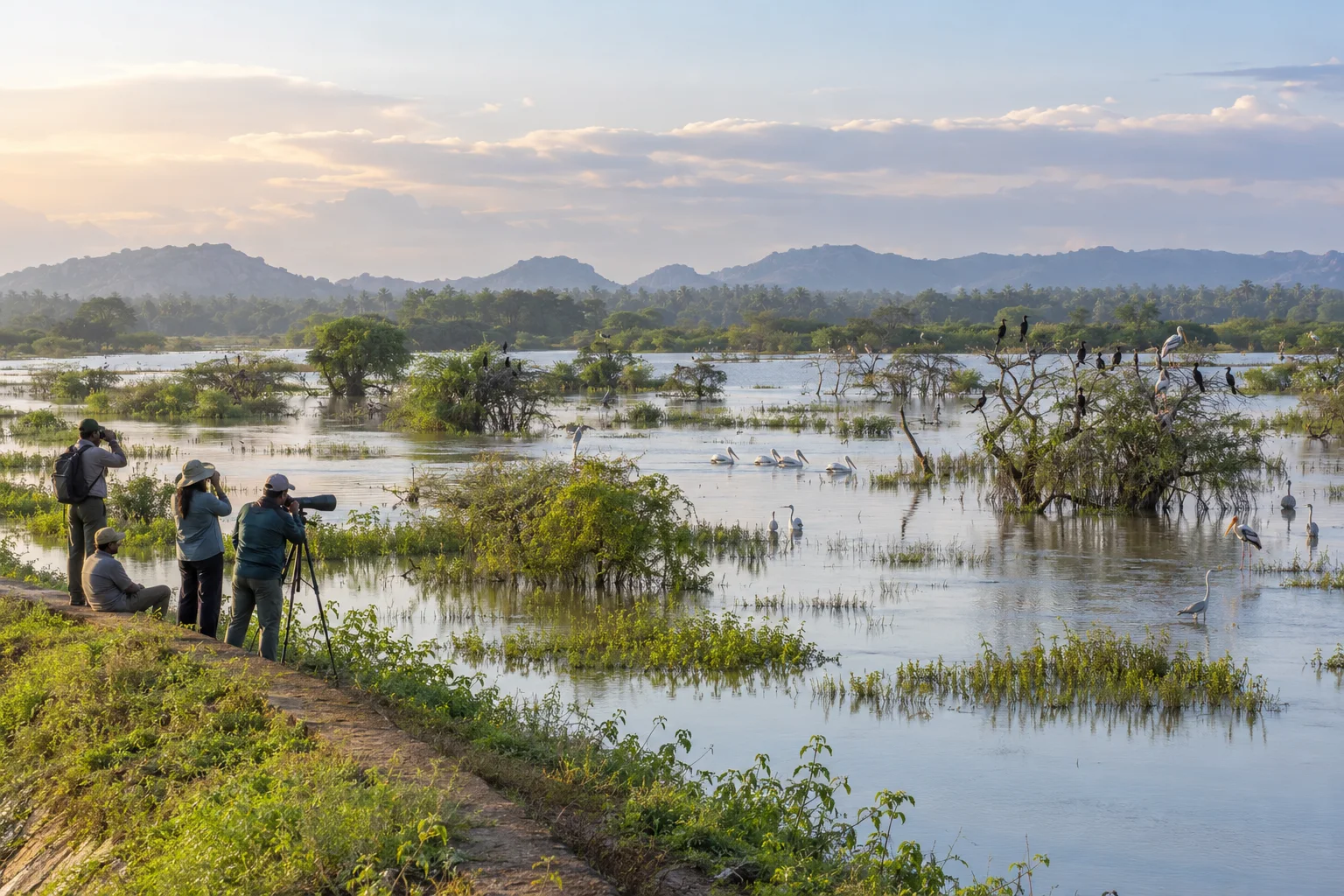
The season is a window, not an opening switch
Official district pages commonly describe October to March as a useful period for migratory-bird visits in Tamil Nadu. That is a broad planning window, not a promise that every sanctuary will hold the same water, species or numbers on the same weekend. Many protected wetlands in the state are irrigation tanks or seasonally flooded systems. Their ecological rhythm depends on northeast-monsoon rain, canal supply, local water use, vegetation and conditions across the migration route.
The Tamil Nadu State Wetlands Authority's 2026 list identifies a network of bird sanctuaries across Chengalpattu, Sivagangai, Ramanathapuram, Tiruvarur, Tirunelveli, Ariyalur, Erode and other districts. The list establishes protected status and location. It does not function as a live sightings board, gate-status page or visitor-facility guarantee. Contact the responsible Forest Department or district source before a long journey, especially after heavy rain or during a dry spell.
A good visit begins with habitat. Water depth, exposed mud, submerged trees, reed edges and nearby agriculture attract different feeding and nesting behaviour. If the expected star species is absent, the wetland can still reward patient observation of movement, feeding, calls and relationships among resident and migratory birds.
Sources for this section: Tamil Nadu bird sanctuaries, Tamil Nadu Ramsar sites.
Vedanthangal and Karikili: a practical pair near Chennai
Vedanthangal is Tamil Nadu's best-known compact bird sanctuary and an accessible first choice from Chennai. The Chengalpattu district page describes birds nesting on branches of submerged trees and identifies October to March, especially November to March, as the broad season. Viewing from the bank or watchtower makes the relationship between water level, nesting trees and colonial waterbirds easy to understand without entering the habitat.
Karikili lies nearby but is not simply an overflow version of Vedanthangal. The Wetlands Authority describes two rain-fed, non-perennial irrigation tanks and a bund extending through the sanctuary. Pairing the two can reveal how neighbouring wetlands differ in water spread, vegetation and bird use. It also reduces the temptation to crowd one observation point while chasing a single photograph.
For a day trip, verify whether both sites are open and practical before assuming a two-sanctuary circuit. Begin early, carry water, use subdued clothing and keep the middle of the day flexible. If one wetland has limited water or restricted access, spend longer at the other or add a non-wildlife stop rather than entering an unofficial edge.
Sources for this section: Vedanthangal sanctuary, Karikili wetland.
Karaivetti: choose it for an irrigation-wetland landscape
Karaivetti in Ariyalur district is much larger than the compact image many first-time visitors associate with a bird sanctuary. The district administration describes an irrigation tank of about 453.7 hectares that receives water from the Mettur system through the Pullambadi canal, supplemented by northeast-monsoon rain. It identifies October to March as the broad birdwatching period, with another official district page highlighting November and December as months of greater bird population.
That hydrological context should shape the visit. The sanctuary is not a zoo enclosure in which named species wait beside a platform. Scan open water, shallow feeding edges and vegetation gradually. Large numbers in a historical record describe ecological importance; they do not guarantee a count on your morning. Wind, water spread and disturbance can move birds far from the nearest viewpoint.
Ariyalur also offers geological, archaeological and temple context, so Karaivetti can sit inside a district journey rather than carry the full pressure of a wildlife checklist. This is particularly useful for a mixed-interest group: one careful morning at the wetland can be paired with a slower cultural stop after the strongest birding light has passed.
Sources for this section: Karaivetti sanctuary, Karaivetti biodiversity, Tamil Nadu Ramsar sites.
Udayamarthandapuram: read the Cauvery-delta water story
Udayamarthandapuram in Tiruvarur district is a seasonal wetland linked to irrigation and northeast-monsoon water. The district page says birds begin arriving from September and identifies November and December as a peak period, while February and March can have a different emphasis. Its Ramsar information describes a floodplain and agricultural setting connected to canals and the wider delta landscape.
This makes the sanctuary especially valuable for understanding that bird habitat and farming water are not separate stories. Observe from designated public areas, keep village access clear and do not treat nearby fields as an extension of the visitor zone. A bird flying over private or cultivated land does not grant permission to follow it.
Tiruvarur and the Muthupet side of the delta can tempt travelers into an overfilled wetland circuit. Resist that. Road time, light, weather and fatigue reduce observation quality. One sanctuary studied patiently is often more meaningful than three names collected before lunch.
Sources for this section: Udayamarthandapuram sanctuary, Udayamarthandapuram Ramsar information.
Example 1: a Chennai family chooses one realistic first sanctuary
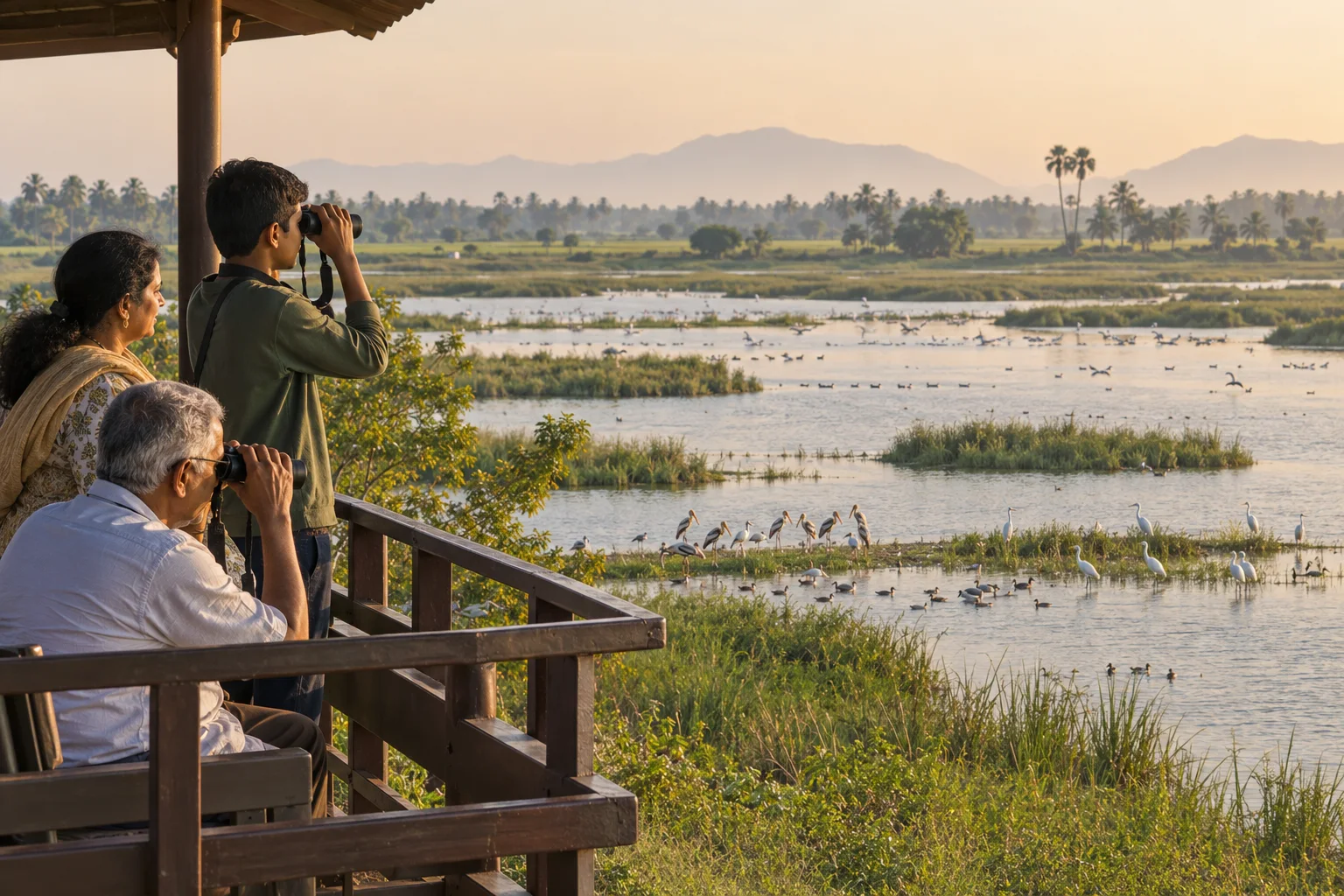
A family in Chennai wants to introduce a teenager and an older adult to birdwatching. They choose Vedanthangal because the official district information describes bank and watchtower viewing and the road journey is manageable. The evening before, they confirm current access and weather instead of relying on a photograph posted earlier in the season.
They carry two binoculars, water, hats and a small notebook. The teenager wants to identify every bird immediately, but the family begins with shape, feeding behaviour and location in the habitat. They keep voices low, avoid playing calls and leave the narrowest viewing point when another group arrives. The older adult uses a stable observation area rather than walking every available edge.
Karikili remains an optional second stop, not an obligation. If heat, rain or fatigue makes the second wetland unwise, the family ends the birding session and chooses lunch or a district heritage stop. The success of the day is measured by careful observation and comfort, not by sanctuary count.
Sources for this section: Vedanthangal sanctuary, Karikili wetland.
Example 2: experienced birders plan Karaivetti without a sightings promise
Three experienced birders travel toward Ariyalur after checking current sanctuary access. They know Karaivetti's official seasonal range and ecological importance, but they do not advertise a guaranteed bar-headed goose, pelican or exact count. Their plan has one primary observation period at first light and a second short scan only if access and weather remain suitable.
The group shares one spotting scope to reduce equipment spread, stays on the visitor side of the habitat and records approximate observations without publishing a sensitive roost or nest coordinate. When birds are distant, they accept the distance rather than moving into a restricted area. Identification uncertainty is written down instead of converted into a confident social-media claim.
After the wetland, the group visits an Ariyalur heritage site and supports a local food stop. The sanctuary is therefore part of a place-based journey rather than an extractive search for photographs. If water or bird activity is limited, the district still has value and the travelers do not pressure staff to produce a sighting.
Sources for this section: Karaivetti sanctuary, Karaivetti biodiversity.
Make distance, silence and uncertainty part of the method
Birdwatching becomes harmful when the photograph matters more than the bird's behaviour. Stay on authorised paths and platforms, obey barriers, keep voices and group size low, and never use playback to draw a bird closer. Drones, flash near roosts, feeding and crowding a nest can disturb the very activity a sanctuary protects. A long lens does not create a right to approach.
Do not publish precise nest, roost or rare-species locations in real time. Share the sanctuary or broad habitat when appropriate, and allow managers or established recording systems to handle sensitive detail. If another visitor behaves badly, avoid a confrontation that creates more disturbance; alert staff when possible and move your own group away.
Identification should also remain honest. Seasonal lists help preparation, but plumage, distance and light can make certainty difficult. Record what you observed, consult a field guide and leave some entries unresolved. A careful 'possible' protects the quality of the record better than a dramatic but unsupported name.
- Observe from designated public areas.
- Keep a generous distance from feeding, nesting and roosting birds.
- Never use call playback, bait, drones or flash to force an encounter.
- Keep sensitive locations off real-time public posts.
- Accept uncertain identification and absent target species.
Sources for this section: Tamil Nadu bird sanctuaries, Tamil Nadu Ramsar sites.
Choose the sanctuary with a simple decision sequence
First choose the journey scale. Vedanthangal and Karikili suit a Chennai-based day when current access is confirmed. Karaivetti suits an Ariyalur district plan with more road commitment. Udayamarthandapuram belongs to a delta journey where irrigation, agriculture and seasonal water are central to the landscape. Other sanctuaries may be equally appropriate, but adding names without checking conditions does not improve the plan.
Next check current water, weather and access through the responsible official source. Heavy rain can make a road or viewing area unsafe, while a dry period can reduce water spread. Carry binoculars before considering a camera upgrade; observation skill matters more than equipment price. Wear muted clothing, bring sun and rain protection, and keep food away from the viewing edge.
Finally, build a no-sighting version of the day. Add a district museum, temple, town walk, local meal or landscape stop that does not depend on wildlife. This removes pressure to chase birds, trespass or stay through unsafe weather. The strongest migratory-season guide is not the one with the longest species list. It is the one that helps a visitor recognise a living wetland and leave it quieter than they found it.
Sources for this section: Tamil Nadu bird sanctuaries, Vedanthangal sanctuary, Karaivetti sanctuary, Udayamarthandapuram sanctuary.
Sources & Further Reading
These authoritative references support the historical, geographic, or seasonal context in this story. Current conditions and operating details still require a fresh official check.
- Bird Sanctuaries in Tamil Nadu, as on 14 May 2026 · Tamil Nadu State Wetlands Authority
- List of Ramsar Sites in Tamil Nadu · Tamil Nadu State Wetlands Authority
- Vedanthangal Bird Sanctuary · Chengalpattu District Administration, Government of Tamil Nadu
- Karikili Bird Sanctuary · Tamil Nadu State Wetlands Authority
- Karaivetti Bird Sanctuary · Ariyalur District Administration, Government of Tamil Nadu
- Karaivetti Birds Sanctuary: Forest Department · Ariyalur District Administration, Government of Tamil Nadu
- Udayamarthandapuram Birds Sanctuary · Tiruvarur District Administration, Government of Tamil Nadu
- Ramsar Information Sheet: Udhayamarthandapuram Bird Sanctuary · Tamil Nadu State Wetlands Authority
Related Stories
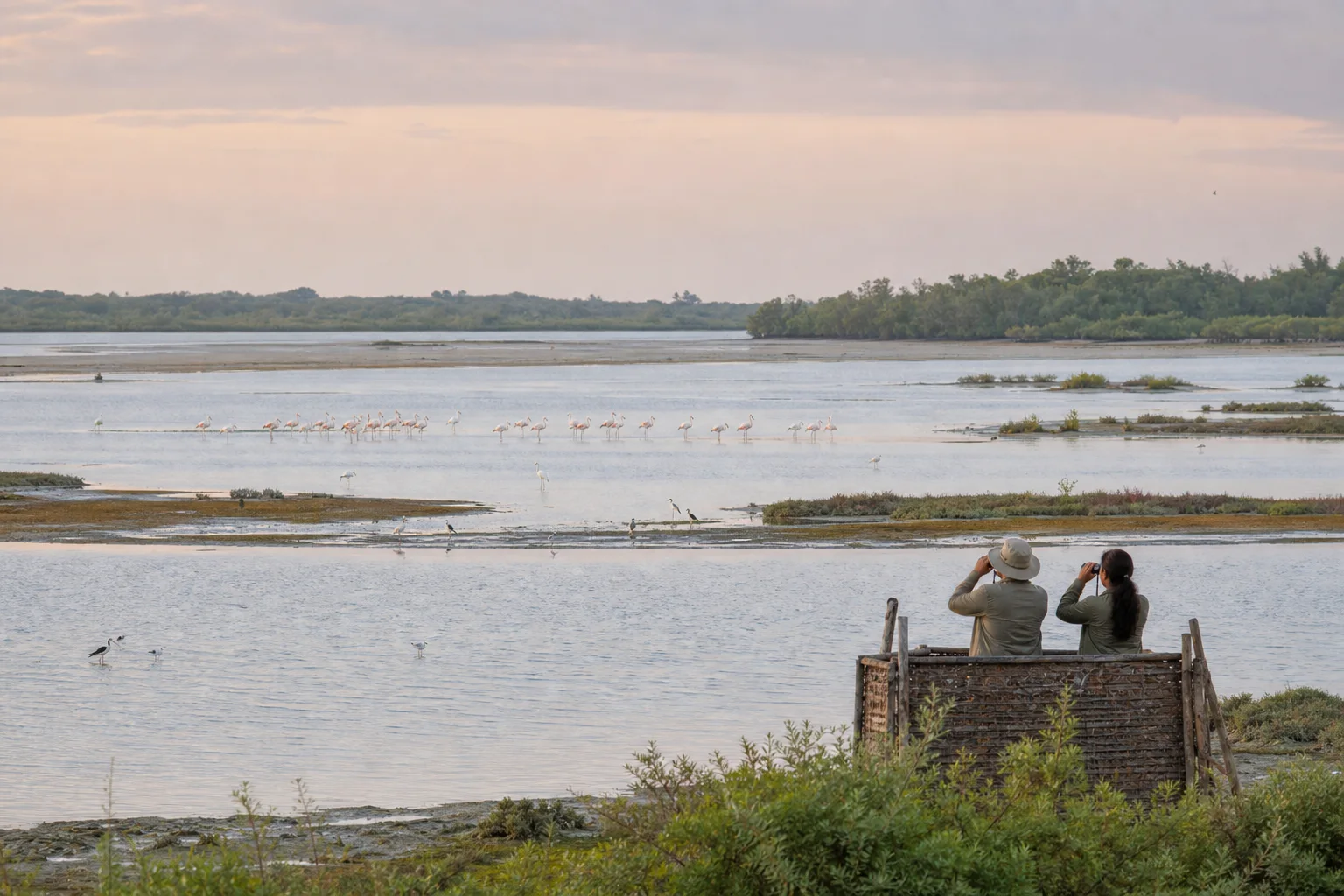
Point Calimere: A Wetland-First Birdwatching Journey
How to read mudflats, saline lagoons, forest, salt pans and coast before looking for a species list at Kodikkarai in Nagapattinam district.
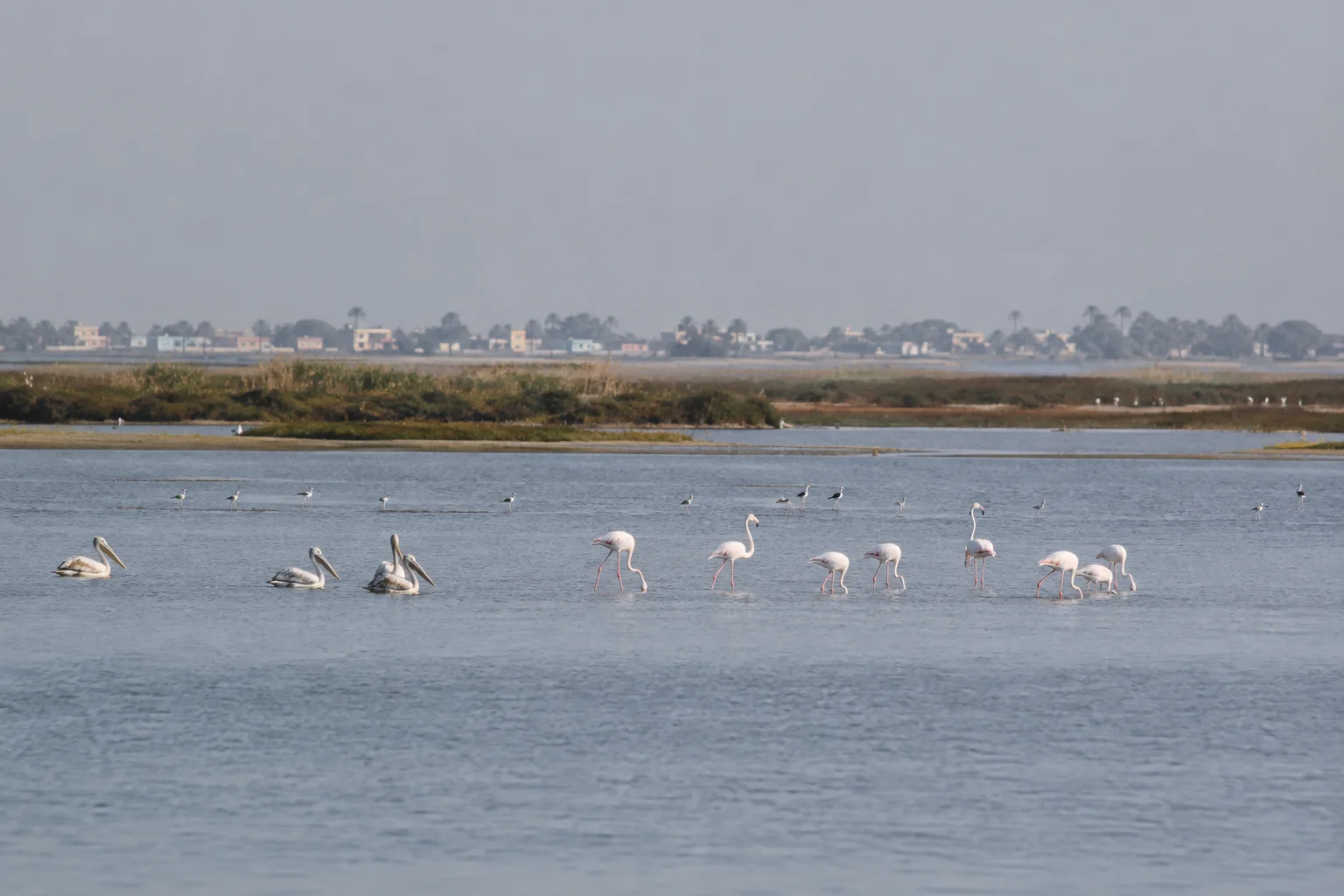
Pulicat Lagoon: Birdwatching Across Water, Weather and Boundaries
A lagoon-first guide to Pulicat that separates habitat, sanctuary status, seasonal possibility and respectful observation from wildlife promises.
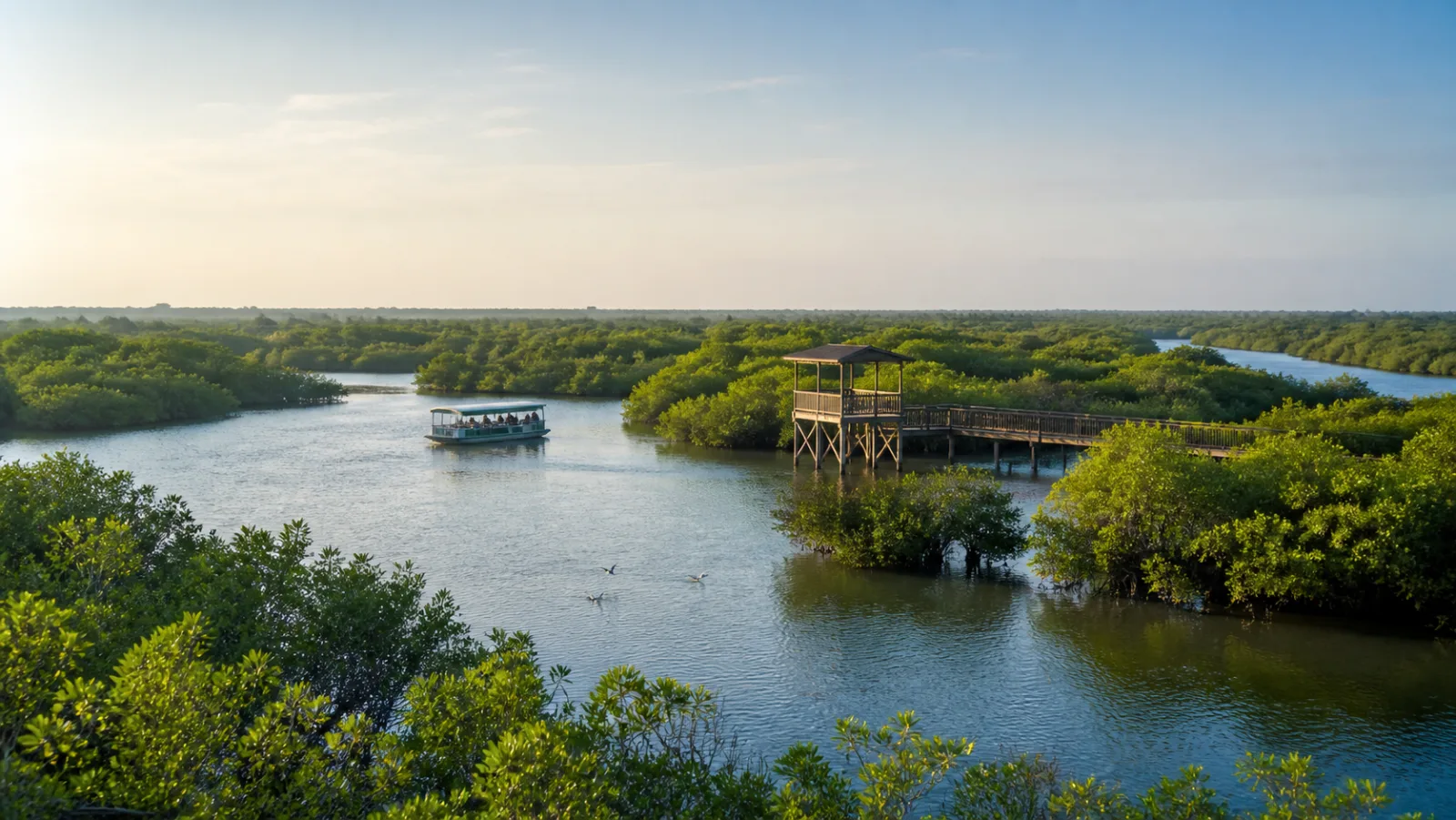
Muthupet Mangroves: Read the Lagoon Before Taking the Trail
A wetland-first guide to Muthupet's mangroves, lagoon, tidal channels, bird observation and the limits of any current boating or access promise.
Frequently asked questions
When is migratory-bird season in Tamil Nadu?
Official district sources commonly identify October to March as a broad window, with some sanctuaries highlighting November and December. Water, weather and bird presence still vary by site and year.
Which bird sanctuary is easiest to visit from Chennai?
Vedanthangal is a practical first choice, and nearby Karikili can be considered as a second stop when current access and conditions are suitable.
Does Ramsar status guarantee visitor facilities?
No. Ramsar designation recognises a wetland of international importance. It does not guarantee that every gate, watchtower, road or service is open on a particular day.
Are bird sightings guaranteed during the official season?
No. Seasonal guidance describes a broad ecological pattern. Water level, weather, food, disturbance and migration timing affect what is present and visible.
Can I visit Karaivetti as a day trip?
It can be planned from Ariyalur or Tiruchirappalli with sufficient road time, but current access, weather and the wider district itinerary should be checked first.
What should a first-time birdwatcher carry?
Binoculars, water, sun and rain protection, subdued clothing, a notebook and a field guide are enough. A large camera is not required.
Can I use bird-call playback to identify a species?
Do not use playback in a sanctuary to draw birds closer. It can disturb feeding, nesting and territorial behaviour.
Should I publish the exact location of a rare bird?
Avoid real-time precise locations for nests, roosts and sensitive species. Share observations through responsible channels and follow local guidance.
What if the wetland has little water when I arrive?
Respect the current condition, observe what is present and use your non-wildlife district plan. Do not enter restricted areas in search of another pool.
Can children and older adults enjoy a sanctuary visit?
Yes, when the chosen site has a suitable public observation area and the visit is short, quiet and weather-aware. Verify accessibility and facilities before travel.
Editorial attribution
Prepared and reviewed by My Tamil Nadu Editorial Desk. Modified 25 October 2026.